


CNC Machining Mechanical Parts Company
Introduction to CNC Machining Mechanical Parts Companies
Role of CNC Machining Mechanical Parts Companies - CNC Machining Mechanical Parts Company plays an important role in the modern manufacturing ecosystem. These companies produce high-precision mechanical components that are used in many industries, including automotive, aerospace, medical devices, electronics, and industrial machinery.
For example, in the automotive industry, engine components such as shafts, pistons, and gearbox parts must be manufactured with extreme precision to ensure smooth performance and safety. In electronics, small connectors and housings must fit perfectly to ensure stable electrical connections. Even a tiny error in machining can lead to product failure, performance issues, or safety risks.
This is why industries around the world rely heavily on professional CNC machining providers to deliver consistent accuracy and reliability.
What to Look for in a CNC Machining Mechanical Parts Company
Technical Expertise
Technical expertise of CNC mechanical parts companies is one of the most important factors when selecting a supplier. A reliable company should have strong knowledge of multiple machining processes, including milling, turning, drilling, grinding, and multi-axis machining.
They should also be experienced in working with a wide range of materials such as aluminum, stainless steel, carbon steel, titanium, brass, engineering plastics, and composite materials.
High-quality CNC machining requires tight tolerance control, often within ±0.05mm or even tighter depending on the application. To evaluate technical capability, you can:
Request machining samples from similar industries
Review past project case studies
Check the qualifications and experience of their engineering team
Ask about CAD/CAM software and machining equipment used
A strong technical foundation ensures stable production quality and fewer manufacturing risks.
Quality Assurance System
A professional CNC machining mechanical parts company must have a strict quality control system. Quality is not only checked at the end but throughout the entire production process.
Many reliable companies follow ISO 9001 quality management standards or similar international certifications. These systems ensure that every production step is controlled and traceable.
Typical quality assurance processes include:
Incoming material inspection
In-process inspection during machining
Precision measurement using calipers, micrometers, and CMM (Coordinate Measuring Machine)
Final inspection before shipment
Non-conforming parts should be clearly marked, isolated, and reworked or scrapped according to a documented procedure. This ensures consistent product reliability.
Production Capacity and Lead Time
Production capacity is another key factor when choosing a CNC machining partner. A capable company should support both small-batch prototyping and large-scale production without compromising quality.
When evaluating capacity, consider:
Number of CNC machines and automation level
Shift operation (single shift vs. 24-hour production)
Ability to handle urgent or expedited orders
Historical on-time delivery performance
Lead time is equally important. A reliable CNC machining mechanical parts company should provide realistic delivery schedules and maintain transparency if delays occur. Fast response and flexible production planning are strong advantages in competitive industries.
Services Offered by CNC Machining Mechanical Parts Companies
Custom Machining Services
One of the main services offered by CNC machining mechanical parts firms is custom machining. These companies can produce parts based on customer drawings, 3D models, or even conceptual designs.
Using CAD/CAM software, engineers convert designs into precise machining programs. This allows complex geometries to be manufactured with high accuracy.
Custom machining is widely used in industries such as automotive prototyping, robotics, medical devices, and industrial equipment manufacturing.
Prototyping Services
Prototyping is a critical service for product development. CNC machining companies can quickly produce small quantities of prototype parts for testing and validation.
This helps customers evaluate:
Fit and assembly
Mechanical performance
Design accuracy
Material suitability
Prototype production usually takes a short time, depending on complexity and material. Feedback from testing can be used to refine the design before mass production, reducing overall development risk and cost.
Value-Added Services
Many CNC machining companies also offer additional processing services to deliver fully finished parts. These include:
Heat treatment – improves hardness, strength, and durability
Surface finishing – such as anodizing, plating, polishing, or powder coating
Assembly services – combining multiple parts into a finished product
These value-added services help reduce the need for multiple suppliers, saving time and improving supply chain efficiency.
Benefits of Choosing the Right CNC Machining Mechanical Parts Company
Precision and High Quality
The benefits of choosing CNC machining mechanical parts companies include consistent precision and high-quality output. Advanced equipment, skilled engineers, and strict inspection systems ensure parts meet exact specifications.
High-precision components improve product performance, reduce failure rates, and increase overall system reliability in industries such as aerospace, automotive, and medical technology.
Cost-Effectiveness
Although CNC machining may appear expensive at first, the right partner can significantly reduce total costs. Experienced companies optimize machining strategies to reduce material waste, shorten production time, and improve efficiency.
They may also suggest design improvements such as simplifying geometry or selecting alternative materials to lower production costs without sacrificing performance.
Technical Support and Innovation
A strong CNC machining partner does more than manufacture parts. They also provide technical support during design and development stages.
This includes advice on:
Design for manufacturability (DFM)
Material selection
Process optimization
Some companies also invest in new technologies such as multi-axis machining, automation systems, and digital manufacturing tools. This helps improve accuracy, reduce lead time, and support innovation in customer products.
Case Studies of CNC Machining Mechanical Parts Companies
Case Study 1: Aerospace Precision Component
A customer in the aerospace industry required a complex structural component with extremely tight tolerances and high strength requirements. The part geometry included multiple curved surfaces and deep cavities, making machining difficult.
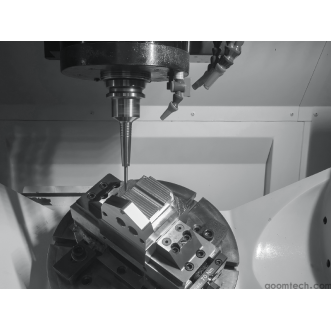
The CNC machining company used advanced 5-axis machining centers and developed a specialized toolpath strategy to ensure precision. Throughout production, in-process inspections were carried out using CMM equipment to maintain accuracy.
The final part met all aerospace standards and was delivered on schedule, helping the customer complete their assembly project without delays.
Case Study 2: Electronics Device Housing
An electronics manufacturer needed a custom metal housing for a new portable device. The part required both functional accuracy and a high-quality surface finish for aesthetic appeal.
The CNC machining company worked closely with the client to refine the design for manufacturability. After machining, anodizing was applied to improve corrosion resistance and appearance.
The result was a lightweight, durable, and visually appealing housing that improved the product’s market competitiveness.
Tips for Working with CNC Machining Mechanical Parts Companies
Effective Communication
Clear communication is essential for successful collaboration. Customers should provide detailed technical drawings, material requirements, tolerances, and expected delivery schedules.
Regular updates during production help prevent misunderstandings and ensure smooth project progress. Many issues in CNC manufacturing can be avoided simply through early clarification and feedback.
Building Long-Term Partnerships
Developing a long-term relationship with a CNC machining supplier can bring significant advantages. Over time, the company gains a better understanding of your requirements, improving efficiency and consistency.
Long-term cooperation often leads to better pricing, faster response times, and priority production scheduling. It also encourages continuous improvement and innovation from both sides.
Conclusion
Choosing the right CNC Machining Mechanical Parts Company is essential for ensuring product quality, reducing costs, and improving manufacturing efficiency. By evaluating technical capability, quality systems, production capacity, and value-added services, businesses can select a reliable long-term partner.
With the right supplier, companies can achieve higher precision, better performance, and stronger competitiveness in today’s global manufacturing market.
 Process of Custom High-Precisi
 CNC Machining Parameter Settin
 5 Key Tips for CNC Machining o
 Small-batch Precision Parts 5-