


Mass Production Manufacturer of CNC Machined Aluminum Parts
Mass Production Manufacturer of CNC Machined Aluminum Parts plays a key role in modern manufacturing industries. These manufacturers help produce large quantities of precision aluminum components used in automotive, aerospace, electronics, and many other fields. This article explains what these manufacturers do, what capabilities they offer, how their production processes work, and what benefits they provide to customers worldwide.
Introduction to Mass Production Manufacturers of CNC Machined Aluminum Parts
Significance of Mass-produced CNC Machined Aluminum Parts
Mass-produced CNC machined aluminum parts are essential in many industries because aluminum is lightweight, strong, and resistant to corrosion. These properties make it ideal for high-performance applications.
In the automotive industry, aluminum parts are widely used in engine blocks, transmission housings, and suspension components. In aerospace, aircraft wing structures and internal brackets rely on precision-machined aluminum parts to reduce weight and improve fuel efficiency. In consumer electronics, smartphone casings, laptop frames, and heat sinks are commonly made from CNC-machined aluminum for durability and thermal performance.
Capabilities of Mass Production Manufacturers
High-volume Production Capacity
A reliable manufacturer must have strong production capacity to handle large-scale orders. This includes a sufficient number of CNC machines, trained operators, and efficient workflows.
To evaluate production capacity, customers can ask about monthly or annual output for similar CNC aluminum parts. Manufacturers with optimized scheduling systems can run multiple machines simultaneously, ensuring stable output and fast delivery for bulk orders.
Advanced CNC Machining Technology
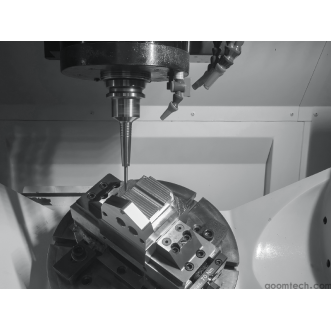
Modern manufacturers use advanced CNC systems such as 3-axis, 4-axis, and 5-axis machining centers. These machines allow complex shapes to be produced with high accuracy and consistency.
For example, five-axis CNC machines can process multiple surfaces in one setup, reducing repositioning errors and improving efficiency. High-speed spindle systems and automatic tool changers also reduce production time while maintaining tight tolerances.
These technologies significantly improve both quality and efficiency in mass production environments.
Customization Capabilities
Even in large-scale production, customization is still possible. Manufacturers use CAD/CAM software to convert customer designs into precise machining instructions.
This allows flexible production of different dimensions, surface finishes, and functional features. For example, one customer may require anodized smartphone frames, while another may need precision automotive brackets with tight tolerances. A strong manufacturer can handle both within the same production system.
Production Processes in Mass Production of CNC Machined Aluminum Parts
Pre-production Planning
Pre-production planning is critical for efficient mass manufacturing. It includes material sourcing, design review, and production scheduling.
High-quality aluminum materials are selected from reliable suppliers to ensure consistency. Engineers review part designs to identify potential machining difficulties and improve manufacturability. Production schedules are carefully planned to meet delivery deadlines and avoid machine downtime.
CNC Machining Operations
The main machining operations include milling, turning, drilling, and boring. In mass production, these processes are optimized for speed and efficiency.
For example, high-speed milling reduces cutting time while maintaining precision. In turning operations, gang tooling may be used to reduce tool change time. Proper selection of cutting speed, feed rate, and tooling ensures stable and repeatable production quality.
Quality Control in Mass Production
Strict quality control is essential in mass production environments. Manufacturers use Statistical Process Control (SPC) to monitor production stability and detect variations early.
In-process inspections are performed using tools such as calipers, micrometers, and Coordinate Measuring Machines (CMMs). Final inspections ensure that all finished parts meet required tolerances, surface finish standards, and functional requirements.
Benefits of Choosing a Mass Production Manufacturer for CNC Machined Aluminum Parts
Cost-effectiveness
One of the biggest advantages is reduced cost per unit. Mass production allows manufacturers to achieve economies of scale by purchasing materials in bulk and optimizing machine usage.
Efficient workflows also reduce machining time, which lowers overall production costs. This makes large orders significantly more affordable compared to small-batch manufacturing.
Consistent Quality
Standardized processes and strict quality systems ensure that every part meets the same specifications. This consistency is critical for industries where parts must fit together perfectly and perform reliably.
Consistent quality also reduces assembly errors, improves product performance, and minimizes rework costs for customers.
Timely Delivery
Mass production manufacturers use structured scheduling and logistics systems to ensure on-time delivery. Many also use Just-in-Time (JIT) inventory strategies to align production with customer demand.
This is especially important for industries with continuous production lines, where delays can cause significant financial losses.
Case Studies of Successful Mass Production Manufacturers
Case Study 1: Automotive Industry Application
A manufacturer received a large order for aluminum engine components used in passenger vehicles. The challenge was to produce over 50,000 units within a strict deadline while maintaining tight tolerances.
The company used automated CNC machining lines and optimized tool paths to increase efficiency. In-process SPC monitoring helped maintain consistent quality. As a result, the order was completed two weeks ahead of schedule with a defect rate below 0.5%.
Case Study 2: Aerospace Industry Application
Another project involved producing high-precision aluminum structural brackets for aerospace applications. The parts required complex geometries and strict compliance with aerospace standards.
The manufacturer used five-axis CNC machines and advanced simulation software to ensure machining accuracy. Each part underwent full CMM inspection before delivery. The customer achieved improved structural performance and reduced assembly time due to high part accuracy.
Tips for Working with Mass Production Manufacturers of CNC Machined Aluminum Parts
Clear Communication
Clear and detailed communication is essential for successful collaboration. Customers should provide complete technical drawings, tolerances, material requirements, and surface finish specifications.
Using CAD files and 3D models helps reduce misunderstandings and ensures both sides have a shared understanding of the product requirements.
Long-term Partnership
Building a long-term relationship with a manufacturer can improve efficiency and reduce costs over time. As both sides become more familiar with each other’s processes, production becomes smoother and faster.
Long-term cooperation also encourages better pricing, improved priority scheduling, and continuous product improvement through shared feedback.
Conclusion
A Mass Production Manufacturer of CNC Machined Aluminum Parts provides essential capabilities for industries that require large volumes of high-precision components. With advanced CNC technology, strong production capacity, strict quality control, and efficient processes, these manufacturers deliver reliable, cost-effective, and high-quality solutions.
Understanding the capabilities of mass-production CNC aluminum part manufacturers, the production processes in mass-produced CNC-machined aluminum parts, and the benefits of choosing mass-production manufacturers for CNC-machined aluminum parts helps businesses make better sourcing decisions and build stronger supply chains.
 Process of Custom High-Precisi
 CNC Machining Parameter Settin
 5 Key Tips for CNC Machining o
 Small-batch Precision Parts 5-