


How to Choose a Suitable Supplier for Mold CNC Machining
Choosing the right manufacturing partner is one of the most important decisions in tool and mold production. When it comes to How to Choose a Suitable Supplier for Mold CNC Machining, the supplier you select directly affects product quality, cost, delivery time, and long-term production stability. A reliable supplier helps you achieve stable mold performance and efficient production, while a poor choice can lead to delays, rework, and unexpected expenses.
This article explains the key factors you should evaluate when selecting a mold CNC machining supplier, using simple and practical guidance for global readers.
Importance of Selecting the Right Supplier
A mold is the foundation of mass production. If the mold is not precise, every product made from it will carry defects. A good supplier ensures high accuracy, stable quality, and on-time delivery. In contrast, an inexperienced supplier may deliver molds with poor tolerances or weak durability.
For example, in the consumer goods industry, a delayed mold delivery can postpone a full product launch, affecting marketing campaigns and sales. In automotive manufacturing, poor mold accuracy can lead to repeated rework of parts, increasing production costs and causing supply chain disruption.
This is why evaluating suppliers carefully is essential before starting any mold project.
Technical Capabilities of the Supplier
CNC Machine Types and Capacities
One of the most important factors in technical capabilities in choosing a mold CNC machining supplier is the type and capacity of their equipment. Different molds require different machining technologies.
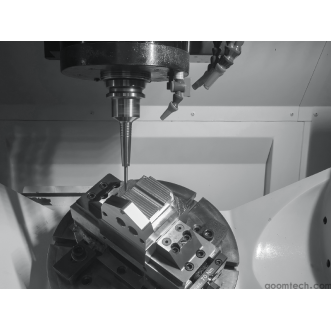
Five-axis CNC machines are needed for complex mold geometries
High-speed milling machines improve efficiency and surface finish
EDM machines are required for deep cavities and fine details
You should ask suppliers for a full list of their CNC equipment, including:
Maximum working envelope (machine size capacity)
Spindle speed (affects cutting efficiency and surface quality)
Feed rate (affects production speed)
A capable supplier should have both advanced machines and enough capacity to handle your project size without delays.
Expertise in Mold Design and Engineering
A strong supplier does more than just machining. They also provide engineering support. Experienced engineers can improve mold design to reduce production risks and increase mold lifespan.
Look for suppliers that:
Have in-house mold design engineers
Use professional CAD/CAM software
Can optimize design for manufacturability
You can evaluate this by asking for previous mold design samples or case studies. Suppliers with strong engineering ability often help reduce costs and improve final mold performance.
Ability to Handle Different Mold Materials
Mold materials affect machining difficulty and tool selection. Common materials include P20, H13 steel, aluminum, and other tool steels. Each material requires different cutting strategies.
A reliable supplier should demonstrate experience with:
Hard steels for high-durability molds
Aluminum for fast prototype molds
Special alloys for high-temperature applications
You can verify this by reviewing case studies or asking about their tooling systems for different materials.
Quality Assurance of the Supplier
Quality Management System
A professional supplier must have a structured quality system. This is a key part of quality assurance when choosing a mold machining supplier.
Look for ISO 9001 certification or similar standards. A strong quality system should include:
Incoming material inspection
In-process quality control
Final mold inspection
Corrective action procedures
This ensures that any defects are detected early and corrected before delivery.
Precision Measuring Instruments
Accuracy is essential in mold manufacturing. Suppliers should use advanced measuring tools such as:
Coordinate Measuring Machines (CMM)
Micrometers and calipers
Optical measuring systems
These tools ensure that every mold dimension matches design requirements. You can request sample inspection reports or ask about calibration frequency to confirm measurement reliability.
Production Capacity and Lead Time
Production Capacity Assessment
Before choosing a supplier, evaluate whether they can handle your production volume. A supplier with limited capacity may struggle with large or urgent orders.
Key questions to ask include:
How many CNC machines are available?
What is the monthly mold output?
Do they have backup machines for breakdowns?
A strong supplier should be able to manage multiple projects at the same time without reducing quality.
Lead-time Reliability
On-time delivery is critical in manufacturing. Delays in mold delivery can stop entire production lines.
When evaluating suppliers, check:
Past delivery performance
Customer references
Project tracking systems
You should also include clear lead-time terms in your contract to avoid misunderstandings.
Cost-effectiveness of the Supplier
Cost Structure Understanding
Understanding pricing is a key part of cost-effectiveness of mold CNC machining suppliers. A good supplier provides a transparent breakdown of costs, including:
Material costs
Machining costs
Finishing and polishing costs
Additional service charges
Be cautious of very low quotes, as they may hide extra costs later in the process.
Cost-saving Suggestions
A professional supplier should also help you reduce costs without reducing quality. For example:
Suggesting alternative materials with similar performance
Improving mold design to reduce machining time
Adjusting structure for easier production
These suggestions show that the supplier is focused on long-term cooperation, not just one-time profit.
Customer Service and Communication
Responsiveness and Communication Channels
Good communication is essential in complex mold projects. A reliable supplier responds quickly and clearly to questions.
They should offer multiple communication channels such as email, phone, and messaging platforms. Poor communication can lead to design errors, delays, and misunderstandings.
After-sales Service
After delivery, support is still important. A good supplier provides warranty and after-sales services such as:
Mold repair and maintenance
Technical support during production
Replacement for defective parts
You should always check warranty terms and ask for customer references before making a decision.
Conclusion
Understanding How to Choose a Suitable Supplier for Mold CNC Machining is essential for achieving stable quality, efficient production, and cost control. The right supplier should demonstrate strong technical capability, reliable quality assurance, sufficient production capacity, fair pricing, and excellent communication.
By carefully evaluating these factors, you can reduce risks, improve product quality, and ensure long-term manufacturing success. A well-chosen partner is not just a supplier, but a key part of your production chain.
 Process of Custom High-Precisi
 CNC Machining Parameter Settin
 5 Key Tips for CNC Machining o
 Small-batch Precision Parts 5-