


Mass Production CNC Machining of Parts
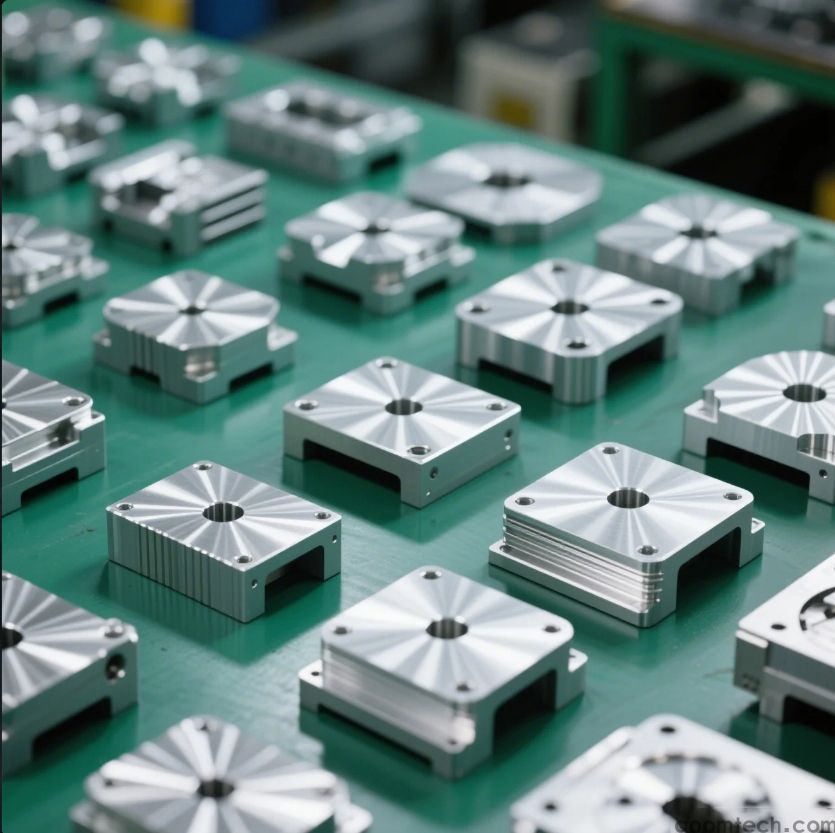
Mass Production CNC Machining of Parts is a manufacturing approach used to produce large quantities of identical components with high speed, stable quality, and low per-unit cost. It is widely used in industries such as automotive, aerospace, electronics, and industrial machinery. The main goal is to maintain consistent precision while reducing production time and waste.
1. Understanding Mass Production in CNC Machining
Mass production in CNC machining means producing thousands or even millions of identical parts using computer-controlled machines. Unlike small-batch production, the focus here is not only precision but also efficiency, repeatability, and cost control.
The key challenges include:
Keeping consistent quality across all parts
Reducing cycle time per part
Minimizing tool wear and machine downtime
Maintaining stable production over long periods
To solve these problems, manufacturers rely on automation, optimized programming, and strict process control.
2. Material Selection for Mass Production CNC Parts
Material selection for mass - production CNC parts is one of the most important decisions. The material affects cost, machining speed, tool life, and final product performance.
Common materials used:
Aluminum alloys – Lightweight, easy to machine, widely used in automotive and electronics
Carbon steel and stainless steel – Strong and durable, used in mechanical and industrial parts
Engineering plastics (ABS, POM, Nylon) – Low cost, corrosion-resistant, suitable for electrical and consumer products
Key selection factors:
Material cost and global availability
Machinability (how easily it can be cut)
Strength and durability requirements
Heat resistance and wear resistance
In mass production, even small material cost differences can significantly impact total production cost, so careful evaluation is essential.
3. Machining Processes in Mass Production CNC Machining
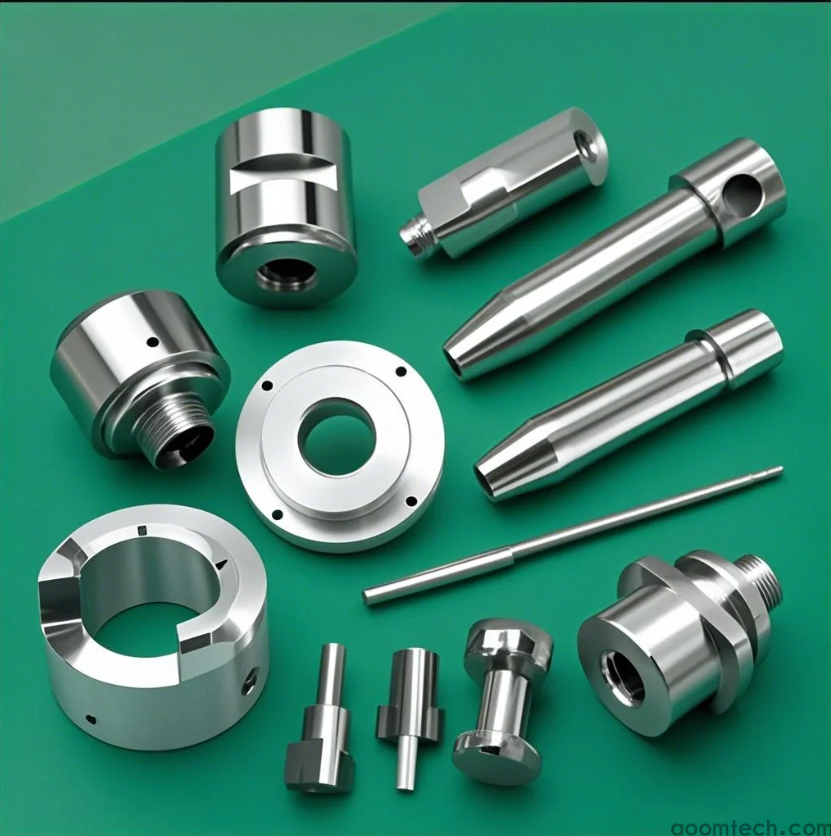
Machining processes in mass - production CNC machining are designed for speed, automation, and repeatability. The most common processes include milling, turning, and drilling.
Optimized machining strategies:
Milling – Used for complex shapes and flat surfaces
Turning – Ideal for cylindrical and rotational parts
Drilling – Used for holes and fastening features
To improve efficiency, manufacturers often use multi-axis CNC machines that reduce the number of setups required. This reduces handling time and improves accuracy.
Automation systems in mass production:
Automatic tool changers (ATC) for continuous operation
Robotic arms for loading and unloading parts
Conveyor systems for material flow
Pallet systems for quick fixture changes
These systems allow machines to run 24/7 with minimal human intervention.
4. Tooling for Mass Production CNC Parts
Tooling for mass - production CNC parts plays a critical role in maintaining productivity and reducing downtime. Tools must be durable, precise, and consistent across long production cycles.
Important tooling considerations:
Tool material – Carbide tools are commonly used due to high hardness and wear resistance
Tool coating – Coatings like TiN, TiAlN, and DLC reduce friction and extend tool life
Tool geometry – Optimized cutting angles improve chip removal and reduce heat
Tool wear management:
Regular tool inspection schedules
Predictive replacement based on cutting time
In-machine tool monitoring systems
Unexpected tool failure can stop entire production lines, so predictive maintenance is essential in mass production environments.
5. Programming for Mass Production CNC Machining
Programming for mass - production CNC machining focuses on efficiency, repeatability, and minimal machine idle time. CNC programs must be stable and easy to reuse across multiple production runs.
Key programming strategies:
Modular programming – Reusable code blocks for different part families
Optimized tool paths – Reduce unnecessary movements and cutting time
High-speed machining (HSM) techniques for faster cycle times
Simulation testing to prevent collisions and errors before production
Advanced CAD/CAM software is widely used to generate optimized tool paths automatically. This reduces programming errors and improves consistency.
6. Quality Control in Mass Production CNC Parts
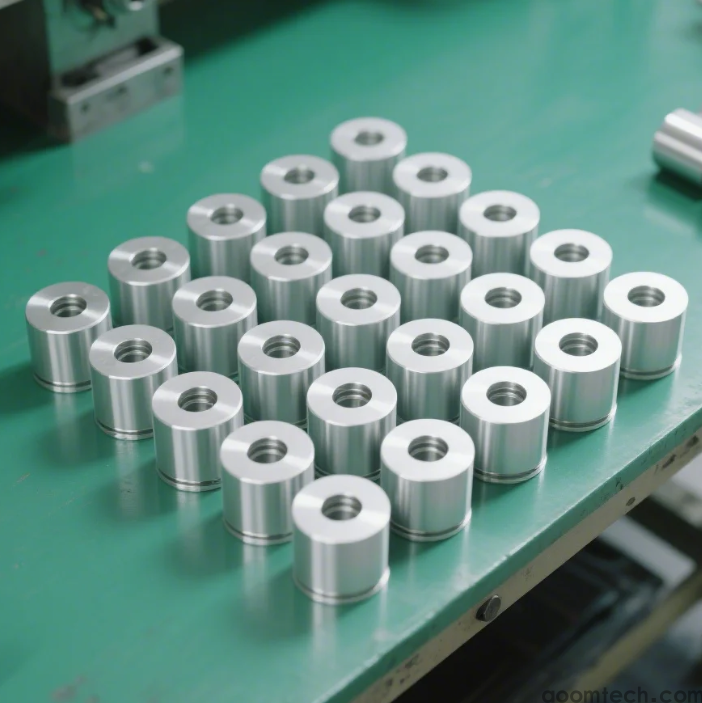
Quality control in mass - production CNC parts ensures that every part meets the required specifications, even after long production runs.
Main quality control methods:
In-line inspection systems – Measure parts during production without stopping machines
Coordinate Measuring Machines (CMM) – High-precision dimensional inspection
Statistical Process Control (SPC) – Tracks process variation over time
Automated vision systems – Detect surface defects and shape errors
SPC is especially important in mass production because it helps detect small process changes before they become major defects.
7. Improving Efficiency and Reducing Cost
In mass production, even small improvements can lead to significant cost savings. Manufacturers focus on reducing cycle time, improving tool life, and increasing machine utilization.
Practical optimization methods:
Reduce setup time using standardized fixtures
Use high-performance cutting tools
Improve chip evacuation to prevent tool damage
Balance machine workloads for continuous production
Lean manufacturing principles are often applied to eliminate waste and improve production flow.
8. Industry Standards and Best Practices
Reliable mass production CNC machining follows internationally recognized standards to ensure safety and quality. Common references include:
ISO 9001 – Quality management systems
ISO 2768 – General tolerances for machining
ASME Y14.5 – Geometric dimensioning and tolerancing (GD&T)
According to manufacturing guidelines from organizations such as NIST (National Institute of Standards and Technology) and SME (Society of Manufacturing Engineers), process control and repeatability are essential for scalable production success.
Conclusion
Mass Production CNC Machining of Parts is a highly efficient manufacturing method that combines automation, precision engineering, and advanced quality control systems. Success depends on smart material selection, optimized machining processes, durable tooling, efficient programming, and strict quality monitoring.
When all these elements work together, manufacturers can achieve high output, low cost, and consistent product quality, even at extremely large production scales.
References
ISO 9001 Quality Management Systems Guidelines
ISO 2768 General Tolerances for Machining
ASME Y14.5 Geometric Dimensioning and Tolerancing Standard
National Institute of Standards and Technology (NIST) Manufacturing Research
Society of Manufacturing Engineers (SME) Technical Publications
 Process of Custom High-Precisi
 CNC Machining Parameter Settin
 5 Key Tips for CNC Machining o
 Small-batch Precision Parts 5-