


Mass Production of Small Parts via CNC Machining
Mass Production of Small Parts via CNC Machining is a key manufacturing approach used across modern industries to produce high-precision components in large quantities. These small parts are essential in products such as smartphones, medical devices, automotive systems, and industrial equipment. By using CNC (Computer Numerical Control) technology, manufacturers can achieve high consistency, efficiency, and accuracy even when producing thousands or millions of identical parts.
This article explains what the process of mass-producing small parts by CNC machining involves, why it is important, the main production steps, common challenges in mass CNC machining of small parts, and how companies can ensure long-term success.
Introduction to Mass Production of Small Parts via CNC Machining
The Significance of Mass-Producing Small Parts via CNC Machining
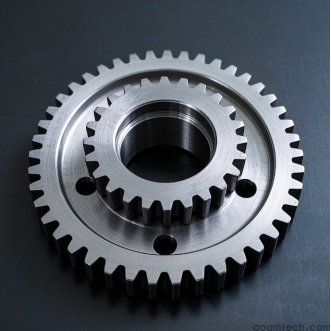
Small parts may look simple, but they are critical to the performance of complex products. In smartphones, tiny connectors ensure stable signal transmission. In automotive systems, precision gears and shafts ensure smooth mechanical movement. In medical devices, miniature components can directly affect patient safety and treatment accuracy.
Mass Production of Small Parts via CNC Machining allows manufacturers to produce these components with consistent quality and tight tolerances. Unlike manual machining, CNC systems ensure every part follows the same digital instructions, reducing variation and defects.
Industries that rely heavily on this process include:
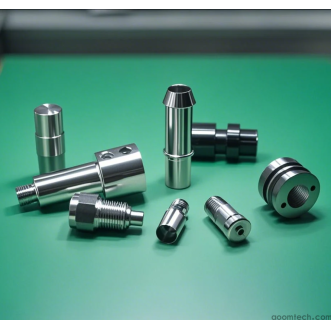
Electronics (micro-connectors, sensor housings)
Automotive (fuel system components, precision shafts)
Medical devices (surgical tool components, implants)
Aerospace (miniature structural and control parts)
These CNC-machined small parts improve product reliability, reduce assembly errors, and help control manufacturing costs through scalability.
The Process of Mass Production of Small Parts via CNC Machining
Design and Programming
The production process begins with digital design. Engineers create a detailed 3D model using CAD (Computer-Aided Design) software. This model defines every dimension, tolerance, and surface requirement of the part.
Next, the model is converted into machine instructions using CAM (Computer-Aided Manufacturing) software. This step defines toolpaths, spindle speeds, feed rates, and cutting strategies. These instructions are executed by : machines.
Accurate programming is essential. Even small errors can lead to incorrect dimensions, poor fit, or assembly failure in mass production runs.
Material Selection and Preparation
Material choice depends on the function of the part. For example:
Aluminum: lightweight and corrosion-resistant, widely used in electronics
Copper: excellent electrical conductivity for electronic components
Stainless steel: strong and corrosion-resistant for medical and industrial use
Titanium: high strength and biocompatibility for aerospace and implants
After selection, raw materials are cut into suitable blanks. Some materials may also undergo heat treatment or annealing to improve machinability and reduce internal stress.
CNC Machining Operations
Milling
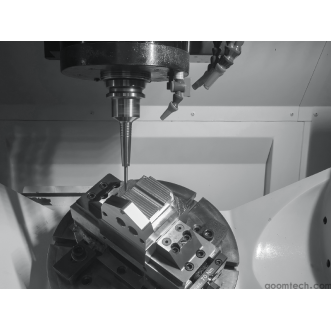
Milling is widely used in the production of small parts. A rotating cutting tool removes material to form shapes such as slots, holes, and complex 3D features.
For precision small parts, carbide micro end mills are commonly used. High spindle speeds help achieve smooth finishes, but operators must carefully balance speed and tool durability.
Consistency in cutting parameters is critical in mass production to ensure identical results across thousands of parts.
Turning
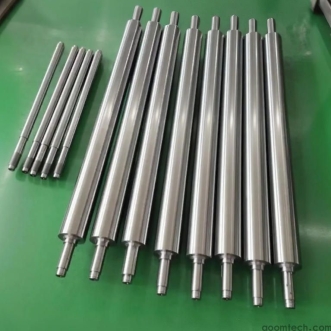
Turning is used to produce cylindrical components such as pins, shafts, and connectors. The workpiece rotates while a cutting tool removes material.
Maintaining concentricity and surface finish is essential, especially for applications like watch components or automotive precision shafts. Micro carbide inserts are often used for high accuracy.
Improper feed rates or spindle speeds can lead to chatter, poor finish, or dimensional errors.
Drilling and Micro-Machining
Drilling creates precise holes in small parts. In many modern applications, micro-drilling is required, where extremely small drill bits are used.
These operations demand high precision because even slight misalignment can cause assembly failure in electronic boards or medical devices.
Micro end mills and specialized drilling tools are commonly used, along with optimized cutting speeds to prevent tool breakage.
Quality Control
Quality control is a core part of Mass Production of Small Parts via CNC Machining. Manufacturers must ensure every part meets strict dimensional and surface standards.
Inspection tools include:
Micro-calipers for precise measurements
Optical microscopes for surface inspection
Coordinate Measuring Machines (CMM) for dimensional verification
Statistical Process Control (SPC) is often used to monitor production trends and detect deviations early, reducing scrap rates and improving consistency.
Automation and Production Flow
Automation plays a major role in modern CNC production. Robotic systems can load and unload parts automatically, reducing labor requirements and improving cycle time.
Efficient production flow includes minimizing setup changes, optimizing tool paths, and ensuring continuous material supply. These improvements significantly increase output and reduce production costs.
Challenges in Mass Production of Small Parts via CNC Machining
Tool Wear and Breakage
Small tools are more fragile and wear out faster, especially under high-speed machining conditions. Tool wear can reduce accuracy and increase defect rates.
To solve this, manufacturers use high-quality carbide tools, real-time tool monitoring systems, and optimized machining paths that reduce tool stress.
Heat Generation and Dimensional Stability
Heat generated during machining can cause material expansion, affecting part accuracy. This is especially critical in long production runs of small parts.
Cooling systems, optimized cutting speeds, and controlled machining environments help maintain dimensional stability and reduce thermal deformation.
Cost-Effectiveness and Efficiency
Although mass production reduces unit cost, factors like tool replacement, machine downtime, and material waste can still increase overall expenses.
Efficient planning, preventive maintenance, and material optimization are key to maintaining profitability in CNC machining operations.
Ensuring Success in Mass Production of Small Parts via CNC Machining
Collaboration with Suppliers
Reliable suppliers for raw materials, cutting tools, and machine components are essential for stable production. Strong supplier relationships ensure consistent quality and timely delivery.
Companies should conduct supplier evaluations, maintain communication, and negotiate long-term partnerships to improve supply chain stability.
Continuous Improvement
Continuous improvement is vital in competitive manufacturing environments. Companies should regularly review production data, update machining strategies, and adopt new technologies.
Key performance indicators (KPIs) such as defect rate, production speed, and cost per part help measure success and identify areas for improvement.
Meeting Regulatory Requirements
Industries such as aerospace and medical manufacturing require strict compliance with international standards. Meeting these regulations ensures product safety, reliability, and market approval.
Staying updated with regulatory changes and investing in quality management systems helps manufacturers maintain compliance and trust.
Conclusion
Mass Production of Small Parts via CNC Machining is a highly efficient and precise manufacturing method that supports modern industry. Through careful design, material selection, machining optimization, and strict quality control, manufacturers can produce reliable small components at scale.
By addressing challenges such as tool wear, heat generation, and cost efficiency, and by focusing on continuous improvement and supplier collaboration, businesses can achieve stable, high-quality production outcomes.
In today’s competitive manufacturing environment, mastering the process of mass-producing small parts by CNC machining is essential for delivering innovative, cost-effective, and high-performance products.
 Process of Custom High-Precisi
 CNC Machining Parameter Settin
 5 Key Tips for CNC Machining o
 Small-batch Precision Parts 5-