


Price Guide for Mass Custom CNC Machined Parts
Introduction to Price Guide for Mass Custom CNC Machined Parts
Understanding the Price Guide for Mass Custom CNC Machined Parts is important for businesses, engineers, and product developers who need large volumes of customized components. Clear price knowledge helps with budgeting, supplier comparison, and smarter purchasing decisions.
When price expectations are wrong, companies may face budget overruns, delayed projects, or poor quality parts caused by choosing low-cost but unreliable suppliers. On the other hand, overestimating costs can lead to missed opportunities or unnecessary spending.
This guide explains the main cost factors, how pricing is calculated, and how to get accurate quotations for mass custom CNC machining projects.
Factors Affecting the Price of Mass Custom CNC Machined Parts
Material-related Factors in Mass Custom CNC Machining
Material choice is one of the biggest cost drivers in CNC machining. Different materials have different raw costs, machining difficulty, and tool wear levels.
Aluminum (e.g., 6061, 7075) – Approx. $2–$6 per kg Lightweight and easy to machine. 6061 is cheaper and widely used, while 7075 (high strength) is more expensive.
Stainless Steel (e.g., 304, 316) – Approx. $3–$10 per kg More durable and corrosion-resistant, but harder to machine, increasing machining time and cost.
Plastics (e.g., ABS, POM, Nylon) – Approx. $2–$8 per kg Generally low machining cost, but engineering plastics like POM or Nylon can vary in price.
Titanium (e.g., Grade 5 / Ti-6Al-4V) – Approx. $20–$60 per kg Very strong and lightweight, but difficult to machine, requiring special tools and slower cutting speeds.
In addition to material type, machinability plays a key role. Harder materials or those with poor thermal conductivity require slower cutting speeds and more tool changes, increasing overall cost.
Part Complexity
Complex designs significantly increase machining time and cost. Parts with deep cavities, thin walls, or complex 3D surfaces require advanced programming and multiple machining steps.
For example, a simple flat bracket may take minutes to machine, while a part with curved surfaces and multiple precision holes may require several setups and hours of machining.
A useful way to assess complexity includes:
Number of machining features (holes, slots, threads)
Depth and accessibility of cavities
Level of 3D surface curvature
Number of machine setups required
Batch Quantity
Batch size has a direct impact on unit price in mass production. This is known as batch-quantity-based pricing for mass custom parts.
Fixed costs such as programming, machine setup, and tooling are shared across all parts. As quantity increases, unit price decreases.
10 pcs – High unit cost due to setup being spread over few parts
100 pcs – Moderate cost reduction
1000+ pcs – Significant cost reduction due to economies of scale
However, after a certain point, price reduction becomes smaller due to material consumption, machine time limits, and logistics constraints. Some manufacturers may also set a minimum order quantity (MOQ).
Machining Operations and Equipment
Different machining processes affect cost. CNC milling, turning, drilling, tapping, and surface finishing all add to the total price.
Machine type also matters:
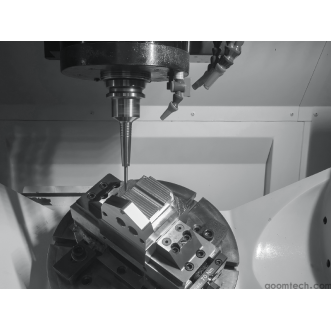
3-axis CNC machines – Lower cost, suitable for simple parts
4-axis CNC machines – Moderate cost, better for angled features
5-axis CNC machines – Higher cost, ideal for complex geometries and precision parts
Typical machine hourly rates may range from $20 to $120+ depending on region, machine type, and precision level.
Tolerance and Surface Finish Requirements
Tighter tolerances increase machining time and inspection effort. Similarly, high-quality surface finishes require extra polishing or secondary processing.
Standard tolerance (±0.1 mm) – Lower cost
Precision tolerance (±0.01 mm) – Higher cost due to slower machining and inspection
Standard finish – Basic machining marks allowed
Mirror or polished finish – Requires additional finishing processes
Price Estimation and Quotation Process
Providing Detailed Specifications
To receive an accurate estimate, customers must provide complete technical data. This includes CAD files, technical drawings, material selection, tolerance requirements, surface finish, and any special treatments such as anodizing or heat treatment.
Incomplete information often leads to inaccurate quotations, delays, and unexpected costs later in production.
Requesting Multiple Quotes
A key part of cost evaluation is comparing multiple suppliers. Different manufacturers may have different equipment, labor costs, and efficiency levels.
To improve accuracy:
Send the same specifications to all suppliers
Request quotes at the same time
Set a clear deadline for responses
Compare based on total cost, not just unit price
Understanding the Quote Breakdown
A professional quotation should clearly show cost structure, including:
Raw material cost
Machining time cost
Setup and programming fees
Tooling and consumables
Surface finishing and secondary processes
Understanding this breakdown helps identify hidden costs and opportunities for optimization.
Cost-saving Strategies for Mass Custom CNC Machined Parts
Design Optimization
Good design can significantly reduce manufacturing costs. This is a key part of cost-saving strategies for mass custom CNC-machined parts.
Reduce unnecessary complex features
Use standard hole sizes and radii
Design parts that require fewer setups
Choose materials that are easier to machine when possible
Even small design changes can reduce machining time and improve production efficiency.
Negotiation and Long-term Partnerships
Building long-term relationships with CNC suppliers often leads to better pricing and priority production scheduling.
Effective negotiation strategies include:
Offering larger or repeat orders
Agreeing on long-term supply contracts
Negotiating payment terms
Consolidating multiple projects into one batch
Conclusion
A clear understanding of the Price Guide for Mass Custom CNC Machined Parts helps businesses control costs, improve planning, and select reliable manufacturing partners.
By considering material choice, part complexity, batch quantity, machining methods, and tolerance requirements, you can better predict pricing and avoid unexpected expenses. With proper design optimization and supplier communication, it is possible to achieve both cost efficiency and high-quality production results.
 Process of Custom High-Precisi
 CNC Machining Parameter Settin
 5 Key Tips for CNC Machining o
 Small-batch Precision Parts 5-