


Price of Custom CNC Machined Parts
Introduction to the Price of Custom CNC Machined Parts
Importance of Understanding Pricing
Understanding the Price of Custom CNC Machined Parts is essential for businesses, engineers, and individual buyers. Whether you are developing a prototype, ordering small-batch production, or planning large-scale manufacturing, cost awareness helps you control your budget and avoid unexpected expenses.
For example, a startup that underestimates machining costs may run out of funding before completing product testing. On the other hand, overestimating costs may lead to rejecting good manufacturing opportunities. Accurate price understanding supports better decisions, stable project planning, and improved product quality control.
Factors Affecting the Price of Custom CNC Machined Parts
Part Complexity
One of the most important factors affecting custom CNC part prices is part complexity. The more complex a part is, the more time, tools, and machine operations are required.
Complex parts may include:
Intricate 3D surface geometries
Tight tolerances (e.g., ±0.01 mm or tighter)
Deep cavities or internal channels
Fine threads or micro-features
For example, a simple flat bracket may only require basic milling and drilling. However, a complex aerospace component with curved surfaces and precision holes may require multi-axis machining, multiple setups, and specialized tools.
To evaluate complexity, consider:
Number of machining steps required
Precision level and tolerance requirements
Surface finish requirements
Design features that require special tooling
Higher complexity directly increases machining time and labor cost, raising the overall price.
Material Selection
Material choice has a major impact on pricing. Different materials vary not only in raw cost but also in machining difficulty.
Common materials include:
Aluminum – low cost, easy to machine, widely used
Mild steel – moderate cost, strong but harder than aluminum
Stainless steel – higher cost, corrosion resistant, more difficult to machine
Titanium and Inconel – expensive, used in aerospace and medical industries
Harder materials increase tool wear and machining time, which raises production costs. Some materials also require slower cutting speeds or special cooling systems.
When selecting materials, balance performance and cost by considering:
Mechanical strength requirements
Corrosion resistance needs
Heat resistance
Final application environment
Production Volume
Production quantity significantly influences the cost estimation for custom CNC machined parts. CNC machining has setup costs, programming costs, and tooling preparation costs that are fixed per job.
As production volume increases, the cost per part decreases due to economies of scale.
For example:
1–5 pieces (prototype stage): high cost per unit
50–200 pieces: moderate cost per unit
500–1000+ pieces: significantly lower cost per unit
Manufacturers often offer volume discounts because setup costs are distributed across more parts. This makes large orders much more cost-effective.
Machining Processes and Equipment
The type of machining process used also affects pricing. Different machines have different operating costs and capabilities.
Common CNC processes include:
3-axis milling
4-axis milling
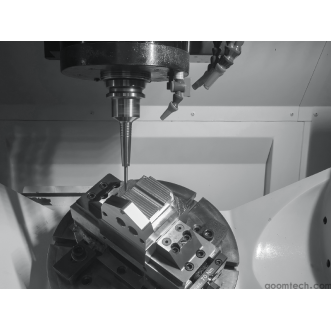
5-axis machining
CNC turning (lathe work)
Electrical Discharge Machining (EDM)
Advanced processes like 5-axis machining or EDM are more expensive because they require highly skilled operators and expensive equipment. However, they are necessary for complex or high-precision parts.
Cost Estimation for Custom CNC Machined Parts
Requesting Quotes
To accurately estimate the Price of Custom CNC Machined Parts, requesting detailed quotes from manufacturers is essential.
To get an accurate quote, provide:
Technical drawings (2D or 3D CAD files)
Material specifications
Required tolerances
Surface finish requirements
Production quantity
Delivery timeline
A reliable manufacturer should provide a cost breakdown including:
Material cost
Machining cost
Tooling and setup cost
Post-processing (anodizing, polishing, coating)
Clear communication reduces misunderstandings and helps avoid unexpected expenses.
Using Cost-Estimation Tools
Some online platforms and CAD-integrated tools provide preliminary estimates for CNC machining projects. These tools typically require inputs such as:
Part dimensions
Material type
Quantity
Machining complexity
However, these tools only provide rough estimates. They cannot fully consider real-world factors such as machine availability, regional labor costs, or special engineering requirements. A final manufacturer quote is always necessary for accurate pricing.
Tips for Getting Cost-Effective Custom CNC Machined Parts
Design Optimization
Design optimization is one of the most effective ways to achieve cost-effective custom CNC machining. Small design changes can significantly reduce machining time and cost.
Best practices include:
Avoid unnecessary complex shapes
Use standard hole sizes and threads
Minimize deep cavities and thin walls
Reduce tight tolerance areas where not needed
For example, changing a sharp internal corner to a radius can reduce tool wear and machining time.
Collaboration with manufacturers during the design phase often leads to better manufacturability and lower costs.
Negotiation and Long-Term Partnerships
Building long-term relationships with suppliers can significantly reduce costs over time. Manufacturers are more likely to offer better pricing to repeat customers.
Effective negotiation strategies include:
Discussing long-term or repeat orders
Requesting volume-based discounts
Considering flexible delivery schedules
Maintaining fair and consistent communication
A stable partnership often results in priority production, better pricing, and improved service quality.
Case Studies on the Price of Custom CNC Machined Parts
Case Study 1: Aerospace Prototype Component
An aerospace company needed a lightweight aluminum bracket with high precision and complex geometry. The initial quote was high due to tight tolerances and 5-axis machining requirements.
Key factors influencing cost:
Complex curved surfaces
Tight tolerance of ±0.01 mm
Small production volume (10 pieces)
Cost optimization actions:
Design simplification to reduce unnecessary features
Relaxing non-critical tolerances
Switching to a standard aluminum grade
The final cost was reduced by approximately 30%, while maintaining functional requirements.
Case Study 2: Industrial Steel Parts for Mass Production
A manufacturer required 1000 stainless steel mechanical connectors for industrial machinery.
Key pricing factors:
High production volume
Moderate complexity design
Material: stainless steel
CNC turning and milling combination
Challenges:
Tool wear due to stainless steel hardness
Maintaining consistent surface finish in large batches
Solutions:
Optimized machining tool paths
Batch production scheduling for efficiency
Long-term supply agreement with supplier
As a result, the per-unit cost dropped significantly compared to prototype pricing, demonstrating the advantage of large-scale production.
Conclusion
The Price of Custom CNC Machined Parts depends on multiple interconnected factors, including part complexity, material selection, production volume, and machining processes. Understanding these elements helps businesses improve budgeting accuracy and avoid unnecessary costs.
By applying smart design optimization, clear communication with manufacturers, and strategic sourcing decisions, companies can achieve high-quality results while maintaining strong cost estimation for custom CNC machined parts control and long-term profitability.
 Process of Custom High-Precisi
 CNC Machining Parameter Settin
 5 Key Tips for CNC Machining o
 Small-batch Precision Parts 5-