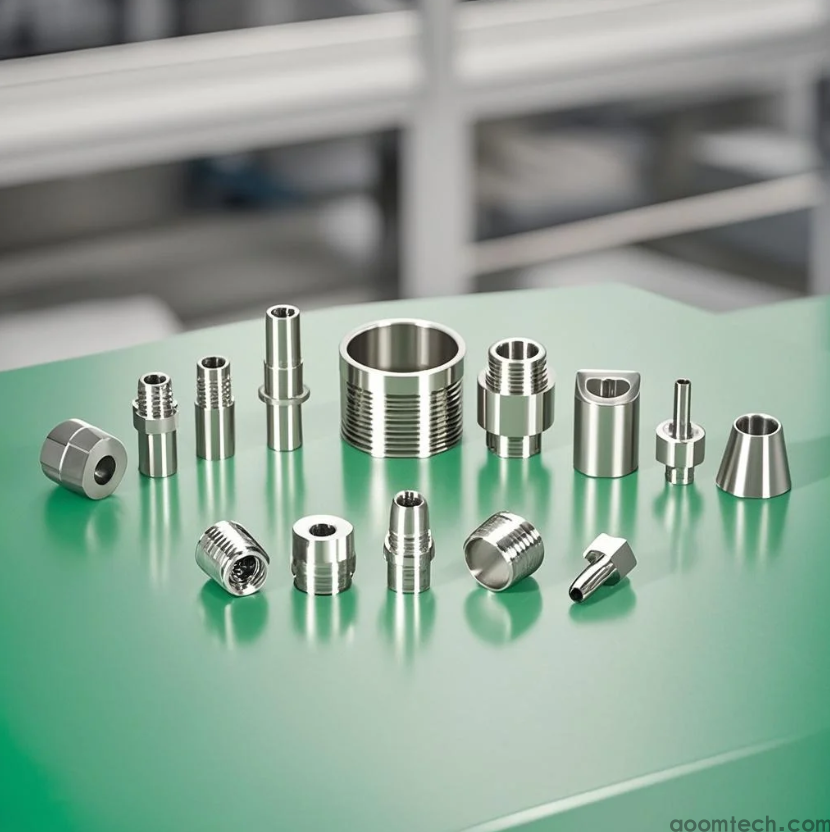
CNC Machining Communication Parts
CNC Machining Communication Parts
Introduction to CNC Machining Communication Parts
CNC Machining Communication Parts refers to the manufacturing process of producing high-precision components used in communication devices through Computer Numerical Control (CNC) technology. These parts are widely used in smartphones, routers, base stations, satellites, and network equipment. As modern communication systems become faster and more compact, the need for accurate, reliable, and miniaturized components continues to grow.
The process of CNC machining communication components ensures that even very small and complex parts can be manufactured with tight tolerances. This is important because communication devices depend on stable signal transmission and mechanical reliability.
The Significance of CNC Machining in Communication Parts
In the communication industry, performance depends heavily on precision engineering. CNC machining plays a key role by enabling the production of parts with consistent accuracy and high repeatability. Even a minor defect can cause signal loss, poor connectivity, or device failure.
For example, PCB connectors, antenna housings, RF shielding components, and heat sinks all require high precision. A poorly machined antenna housing can reduce signal strength, while inaccurate connectors may lead to unstable electrical contact. CNC machining helps prevent these issues by ensuring every part meets strict design requirements.
The CNC Machining Process for Communication Parts
Design and Engineering
The process begins with CAD (Computer-Aided Design) software, where engineers create detailed 3D models of communication parts. These designs consider space limitations, electrical performance, thermal management, and mechanical strength.
Accurate design is critical. Any small error may lead to signal interference or assembly failure. For instance, a misaligned connector housing can affect data transmission in high-speed networking devices.
Material Selection
Material selection is based on the function of the communication part. Common materials include aluminum, copper, stainless steel, and engineering plastics.
Copper: Excellent electrical conductivity for connectors and shielding parts
Aluminum: Lightweight and good heat dissipation for housings
Engineering plastics: Electrical insulation and structural support
Selecting the right material also depends on machinability, cost, and durability under operating conditions.
CNC Programming
Once the CAD model is ready, it is converted into CNC code using CAM (Computer-Aided Manufacturing) software. This code defines toolpaths, cutting speeds, and feed rates.
Precise programming is essential for producing accurate communication parts. Incorrect toolpaths can cause dimensional errors, poor surface finish, or malfunctioning components.
Machine Setup and Tooling
CNC machines are prepared by selecting suitable cutting tools and fixtures. Communication parts often require micro tools and high-precision fixtures to ensure stability during machining.
Carbide tools are commonly used for metals, while diamond-coated tools are used for high-performance plastics. Proper setup ensures accuracy and reduces production errors.
Machining Operations
Milling
Milling is widely used to create complex shapes, flat surfaces, and fine features. Small-diameter tools are often required for communication components such as connector housings and shielding covers.
Turning
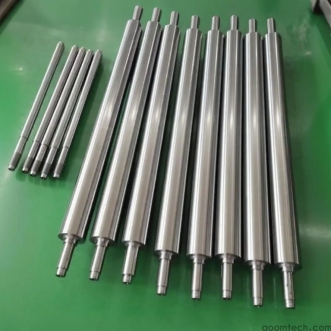
Turning is used for cylindrical components like connector pins or shafts. Maintaining concentricity and surface smoothness is critical for ensuring stable electrical performance.
Drilling and Boring
Drilling creates precise holes for screws, pins, and electrical vias. Boring improves hole accuracy. In communication parts, even slight misalignment can cause assembly problems or electrical failure.
Quality Control
Quality control is essential in CNC Machining Communication Parts. Manufacturers use tools such as optical comparators, coordinate measuring machines (CMM), and electrical testing systems to ensure accuracy.
Parts that do not meet specifications are either reworked or rejected. This ensures reliability in communication devices where failure is not acceptable.
Finishing and Surface Treatment
After machining, parts undergo finishing processes such as deburring, polishing, anodizing, or coating. These treatments improve appearance, prevent corrosion, and enhance electrical performance.
Benefits of CNC Machining Communication Parts
High Precision
CNC machining provides extremely tight tolerances, which is essential for high-speed communication systems. Even small dimensional improvements can reduce signal loss and improve device performance.
Customization
One of the key benefits of CNC for communication parts is flexibility. Manufacturers can produce custom-designed components for specific devices, including antennas, connectors, and RF modules.
Cost-Effective for Small Batch Production
CNC machining is ideal for prototypes and small production runs. It reduces tooling costs and allows faster product development, helping companies bring communication devices to market quickly.
Challenges in CNC Machining Communication Parts
Miniaturization and High Precision Requirements
Modern communication devices are becoming smaller while more powerful. This increases the difficulty of machining tiny, complex parts with high accuracy. Advanced micro-machining tools and skilled operators are required.
Material Compatibility and Electrical Performance
Different materials must work together without causing corrosion or signal interference. Machining fluids and processes must be carefully selected to avoid affecting electrical properties.
High-Volume Production Efficiency
While CNC is excellent for precision work, scaling to high-volume production requires automation, tool optimization, and efficient programming to reduce cycle times and maintain consistency.
Ensuring High-Quality CNC Machining Communication Parts
Partnering with Experienced Manufacturers
Choosing an experienced CNC manufacturer is critical. Reliable suppliers understand the strict requirements of communication components and follow international quality standards.
Continuous Process Improvement
Manufacturers should regularly upgrade equipment, optimize machining strategies, and train operators. This improves efficiency, reduces errors, and ensures stable product quality.
Collaboration with Designers
Close cooperation between engineers and machinists improves manufacturability. Early design feedback helps reduce production difficulty and ensures the final part meets both functional and manufacturing requirements.
Conclusion
CNC Machining Communication Parts plays a vital role in modern electronics and communication systems. From design and material selection to machining and quality control, every step is important for ensuring performance and reliability.
By understanding the challenges in CNC machining communication products and applying advanced manufacturing methods, companies can produce high-quality components that support faster, more stable, and more efficient communication systems worldwide.
RELATED PRODUCTS
-
Metal Parts CNC Machining
-
CNC Machining Services for Flashlight Ho
-
Metal Parts CNC Machining Services
-
Brass Parts CNC Machining Services
-
Roller CNC Machining Services
-
CNC machining of high-precision parts
-
CNC Machining for Sprockets
-
CNC Machining for Turbine Parts
-
CNC Machining Service for Crankshafts
-
CNC Machining Service for Copper Blocks