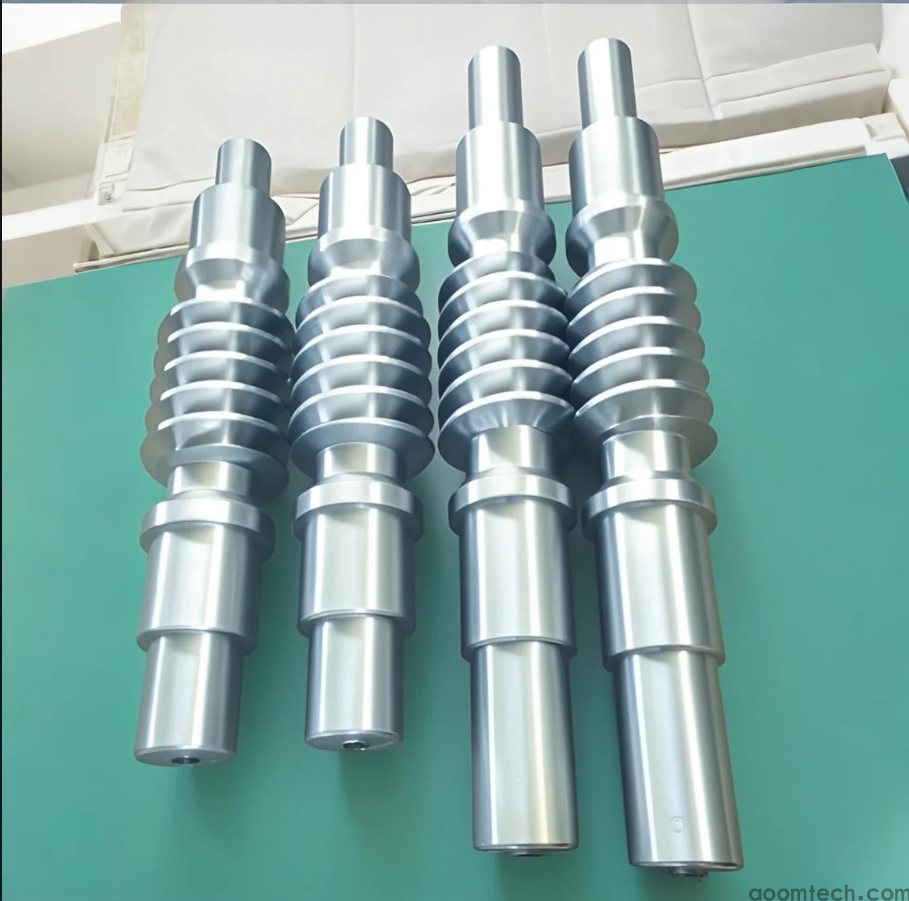
CNC Machining of Worm Gears
CNC Machining of Worm Gears: Process, Benefits, Challenges, and Quality Control
CNC Machining of Worm Gears plays a critical role in modern mechanical engineering. Worm gears are widely used in machines that require high torque and precise motion control, such as conveyor systems, elevators, industrial reducers, and robotics. Because these components directly affect power transmission efficiency and system stability, precision manufacturing is essential.
This article explains the process of CNC machining worm gears, key technical factors, benefits, challenges, and practical methods to ensure high-quality production in real industrial environments.
Introduction to CNC Machining of Worm Gears
The Significance of CNC Machining for Worm Gears
Worm gears are unique gear systems that transmit motion at a 90-degree angle while achieving very high reduction ratios. This makes them ideal for applications requiring smooth motion control and compact design.
CNC Machining of Worm Gears ensures high accuracy in tooth profile, spacing, and surface finish. Without CNC technology, achieving the required precision would be extremely difficult and inconsistent.
For example, in a robotic arm, worm gears help control slow, precise rotation. If the gear is poorly manufactured, the robot may experience vibration, positioning errors, or even mechanical failure. In elevator systems, high-quality worm gears ensure safe and stable lifting performance.
The CNC Machining Process of Worm Gears
Material Selection and Preparation
Material selection is the foundation of high-quality worm gear production. Common materials include carbon steel, alloy steel, and bronze.
Steel: High strength and durability, suitable for heavy-duty applications
Alloy steel: Improved wear resistance and toughness
Bronze: Excellent anti-friction performance, often used in worm wheels
In many cases, the worm (screw) is made of hardened steel, while the worm wheel is made of bronze to reduce friction and wear.
Before machining, the raw material is often forged to improve internal structure. Heat treatment such as normalizing is applied to reduce internal stress. A rough machining allowance of about 2–3 mm is usually left for finishing operations.
Lathe Operations
Lathe machining is the first major step in shaping worm gear blanks. CNC lathes are used to machine the outer diameter and end faces of the gear blank.
During this stage, controlling dimensional accuracy and surface roughness is essential. Incorrect turning parameters can affect all subsequent processes.
Typical machining settings depend on material hardness and size:
Spindle speed: Adjusted based on diameter and material (e.g., lower for hardened steel, higher for bronze)
Feed rate: Balanced to ensure surface quality and efficiency
Cutting depth: Controlled to avoid deformation and tool overload
Proper lathe operations ensure a stable foundation for the next gear-forming process.
Gear Milling Process
The gear milling stage is the most critical part of the process of CNC machining worm gears. A special worm gear milling cutter is used, and spiral interpolation is applied to form the tooth profile.
This process is usually divided into two stages:
Rough milling: Removes most of the material, leaving about 0.3 mm allowance
Finishing milling: Achieves final accuracy and surface quality
Typical parameters include:
Rough milling spindle speed: 800–1200 rpm
Finishing spindle speed: around 1500 rpm
Rough feed rate: 0.1–0.15 mm/r
Finishing feed rate: about 0.05 mm/r
Tool entry and exit should follow a tangential direction to avoid visible marks on the gear surface.
Deburring and Post-Machining Treatment
After machining, burrs often remain on the edges of worm gears. These burrs can affect assembly accuracy and cause mechanical noise or wear.
Deburring is performed using manual tools or specialized equipment. After that, the parts are cleaned thoroughly and coated with anti-rust oil to prevent corrosion during storage or transport.
Key Factors in CNC Machining of Worm Gears
Tool Selection
Tool selection directly affects machining efficiency and surface quality. For rough machining, cemented carbide end mills are commonly used due to their strength and wear resistance.
For finishing, specialized worm gear cutters or hobs are required. High-precision tools help ensure smooth tooth profiles and accurate geometry.
Choosing the right tool is one of the most important key factors in worm gear CNC machining.
CNC Programming
Accurate CNC programming is essential for controlling the complex spiral motion of worm gears. Tool path planning must ensure smooth interpolation and avoid sudden direction changes.
Key programming considerations include:
Spiral interpolation for tooth formation
Tangential tool entry and exit to reduce tool marks
Simulation to check for collisions or interference
Before mass production, the first sample should always be measured and adjusted if necessary.
Accuracy Control
Worm gears require very tight tolerances to ensure smooth meshing and long service life.
Tooth profile error: within 0.02 mm
Surface roughness: Ra 1.6 or better
Gear measuring centers are used to check pitch error and profile accuracy. Tool wear must also be monitored carefully. If flank wear exceeds 0.2 mm (VB value), the tool should be replaced immediately.
Benefits of CNC Machining for Worm Gears
High Precision
One of the main benefits of CNC for worm gear production is extremely high precision. CNC systems ensure repeatability and reduce human error.
High-precision worm gears result in smoother motion, reduced vibration, and lower noise levels in gearboxes and industrial machines.
Customization
CNC machining allows manufacturers to produce worm gears with customized specifications such as different modules, helix angles, or reduction ratios.
This flexibility supports a wide range of industries, from robotics to heavy industrial machinery, where standard gear designs may not be sufficient.
Cost-Effectiveness for Medium to Large Production
Once CNC programs are developed, they can be reused for batch production. This significantly reduces unit cost and increases production efficiency.
For medium and large production runs, CNC machining offers an excellent balance between cost and quality.
Challenges in CNC Machining of Worm Gears
Complex Tooth Profile Machining
The spiral geometry of worm gears makes machining difficult. Precise synchronization between tool movement and workpiece rotation is required.
Advanced CNC programming and simulation tools are often necessary to achieve accurate results.
Tool Wear and Breakage
Hard materials and continuous cutting can cause rapid tool wear. If not controlled, this may lead to tool breakage and production delays.
Solutions include using high-quality cutting tools, monitoring wear regularly, and applying proper cutting parameters.
Meeting Tight Tolerances
Maintaining tight tolerances is always a challenge in worm gear manufacturing. Even small deviations can affect system performance.
To solve this, manufacturers use continuous inspection, machine calibration, and operator training.
Ensuring High-Quality CNC Machining of Worm Gears
Skilled Operators and Engineers
Experienced engineers and operators are essential for successful worm gear production. They must understand CNC programming, gear geometry, and precision measurement tools.
Regular Equipment Maintenance
CNC machines must be regularly maintained to ensure accuracy and stability. Maintenance includes lubrication, calibration, and inspection of key components.
A well-maintained machine produces more consistent and reliable worm gears.
Quality Control Measures
Quality control is essential throughout the entire production process. This includes in-process inspection and final testing.
Key inspection points include:
Dimensional accuracy
Tooth profile accuracy
Surface finish quality
Non-conforming parts should be identified early and corrected to avoid large-scale production defects.
Conclusion
CNC Machining of Worm Gears is a highly precise and technically demanding process that supports many critical industrial applications. By understanding the process of CNC machining worm gears, controlling key parameters, and applying strict quality control, manufacturers can achieve high-performance gear systems with long service life and stable operation.
As industries continue to demand higher efficiency and precision, CNC technology will remain the backbone of worm gear manufacturing, enabling innovation and reliability across mechanical systems worldwide.
RELATED PRODUCTS
-
Metal Parts CNC Machining
-
CNC Machining Services for Flashlight Ho
-
Metal Parts CNC Machining Services
-
Brass Parts CNC Machining Services
-
Roller CNC Machining Services
-
CNC machining of high-precision parts
-
CNC Machining for Sprockets
-
CNC Machining for Turbine Parts
-
CNC Machining Service for Crankshafts
-
CNC Machining Service for Copper Blocks