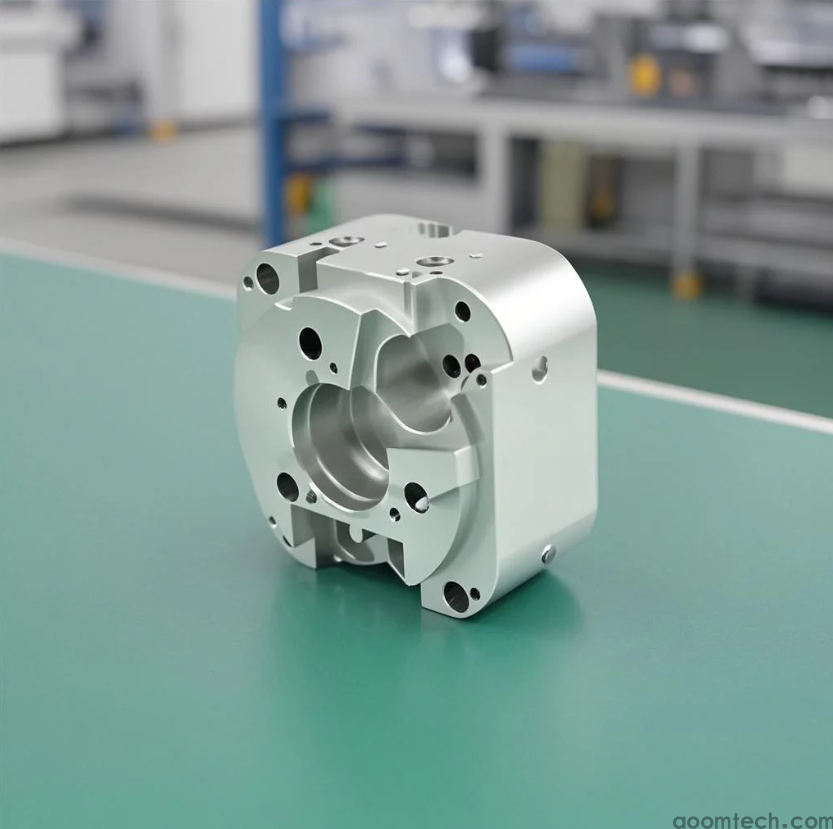
CNC Machining Small Aluminum Parts
CNC Machining Small Aluminum Parts: Process, Considerations, and Benefits
CNC Machining Small Aluminum Parts plays a critical role in modern manufacturing industries where precision, consistency, and lightweight performance are required. From electronics and automotive systems to aerospace components, small aluminum parts are widely used due to aluminum’s excellent machinability, corrosion resistance, and strength-to-weight ratio.
This article explains the full CNC machining workflow for small aluminum parts, including key steps, technical considerations, benefits, and common challenges. It is written to help engineers, buyers, and beginners clearly understand how high-quality parts are produced in real manufacturing environments.
Introduction to CNC Machining of Small Aluminum Parts
The significance of CNC machining for small aluminum parts lies in its ability to produce highly accurate and repeatable components at scale. Aluminum is widely used because it is lightweight, easy to machine, and resistant to corrosion. These properties make it ideal for precision parts used in demanding industries.
For example, in smartphones, small aluminum parts help improve heat dissipation while keeping devices lightweight. In aerospace systems, they contribute to structural efficiency without adding unnecessary weight. In automotive electronics, they ensure stable performance under vibration and temperature changes.
The CNC Machining Process for Small Aluminum Parts
Initial Material Considerations
The first step in machining is material inspection. High-quality production starts with verifying the aluminum alloy grade, hardness, and surface condition. Commonly used alloys such as 6061-T651 are preferred due to their stable internal stress and excellent machinability.
Manufacturers often use spectrometers to verify element composition, ensuring the material meets required standards. Incoming inspection helps prevent defects later in the process and ensures consistency across batches.
Rough Machining
Rough machining is used to quickly remove excess material and release internal stress within the aluminum. During this stage, cutting tools remove large volumes of material using controlled parameters.
Typically, an emulsion coolant is applied for heat control. Cutting allowance is usually kept between 0.5–1 mm, while cutting depth does not exceed 2 mm per pass. After rough machining, parts are left to rest for at least 2 hours to stabilize internal stress and reduce deformation risk in later stages.
Stress-Relief Aging
After rough machining, parts undergo natural stress-relief aging. They are placed in a controlled workshop environment at 22±2°C to allow internal stress to dissipate naturally.
Aging time depends on part thickness, typically ranging from 4 to 12 hours. This step is essential to prevent deformation during semi-finishing and finishing processes, ensuring dimensional stability in precision manufacturing.
Semi-Finishing
Semi-finishing prepares the part for final machining by refining key features and improving accuracy. A four-axis CNC machining center is often used to complete multiple surfaces in a single setup, including outer diameters, end faces, and reference holes.
Typical machining parameters include:
Cutting allowance: 0.15–0.2 mm
Spindle speed: 12,000–15,000 rpm
Tool type: Carbide-coated tools
Cooling method: Minimum Quantity Lubrication (MQL)
This stage ensures stable cutting forces and prepares the part for final high-precision finishing.
Finishing
Finishing is the most critical stage in CNC Machining Small Aluminum Parts, as it determines final accuracy and surface quality. A five-axis CNC machine is often used to complete all surfaces in a single clamping, reducing alignment errors.
Typical finishing requirements include:
Tolerance control: ±0.005 mm
Surface roughness: Ra ≤ 0.4 μm
Spindle speed: 18,000–20,000 rpm
Feed rate: 0.05–0.08 mm/tooth
Cutting depth: 0.05–0.1 mm
Deburring
After machining, burrs must be removed to ensure safety and functionality. The process typically includes chamfering with a 0.3 mm tool, followed by magnetic grinding for internal burr removal.
Finally, each part is inspected under a high-power microscope to ensure no sharp edges or residual burrs remain that could affect assembly or performance.
Precision Inspection
Precision inspection ensures all parts meet strict dimensional requirements. This is carried out in a controlled environment at 22±1°C to reduce measurement errors caused by thermal expansion.
A Coordinate Measuring Machine (CMM) with 0.0015 mm accuracy is used for full dimensional inspection. First Article Inspection (FAI) typically includes at least 30 key characteristics. During production, In-Process Quality Control (IPQC) is performed with sampling every 2 hours, supported by SPC (Statistical Process Control) data tracking.
Surface Treatment
Surface finishing improves both appearance and performance. Common methods include anodizing and sandblasting.
For example, black anodizing is often used in optical applications to reduce light reflection. Key parameters such as anodized film thickness (8–12 μm) and color variation (ΔE ≤ 1.5) must be tightly controlled to ensure consistency.
Considerations in CNC Machining Small Aluminum Parts
Tool Selection
Choosing the correct tool is essential for machining efficiency and quality. Different operations such as roughing, semi-finishing, and finishing require different tool geometries and coatings. Carbide tools are commonly used due to their durability and heat resistance.
Heat Generation and Control
Heat is a major challenge in aluminum machining. Excessive heat can cause dimensional errors and poor surface finish. Manufacturers use emulsions during roughing and MQL during semi-finishing to control temperature. Optimizing cutting speed and feed rate also helps reduce heat buildup.
Clamping and Fixturing
Small aluminum parts are sensitive to deformation, so proper fixturing is critical. Incorrect clamping force can distort the part and affect final accuracy. Precision fixtures are used to ensure stable positioning without damaging the material.
Benefits of CNC Machining for Small Aluminum Parts
High Precision
CNC machining enables extremely tight tolerances, making it ideal for industries requiring accuracy and reliability. Aerospace and electronics industries rely on this precision to ensure product performance and safety.
Customization
CNC technology allows manufacturers to produce highly customized parts based on specific design requirements. This flexibility supports innovation in product development across multiple industries.
Cost-Effectiveness for Medium to Large Production
Once programming is complete, CNC machines can repeatedly produce identical parts with minimal variation. This reduces per-unit cost and improves efficiency in medium and large production runs.
Challenges in CNC Machining Small Aluminum Parts
Meeting Tight Tolerances
Maintaining extremely tight tolerances is challenging due to machine limitations, tool wear, and thermal expansion. Regular calibration and skilled operation are essential to maintain accuracy.
Surface Finish Requirements
Achieving smooth surface finishes requires optimized cutting parameters and high-quality tools. Even minor vibration or incorrect feed rates can affect the final surface quality.
Material Variability
Even within the same alloy grade, small variations in material properties can affect machining behavior. Proper material testing and parameter adjustments are necessary to ensure consistent results.
Conclusion: Mastering CNC Machining Small Aluminum Parts
Understanding CNC Machining Small Aluminum Parts requires knowledge of every stage, from material selection to final inspection. Each step plays an important role in ensuring precision, stability, and surface quality.
Key takeaways include the importance of stress control, proper tool selection, and strict quality inspection. Manufacturers that follow disciplined processes can consistently produce high-quality aluminum parts that meet demanding industrial standards.
For best results, continuous improvement, updated machining techniques, and strong material control systems are essential in modern CNC manufacturing.
RELATED PRODUCTS
-
Metal Parts CNC Machining
-
CNC Machining Services for Flashlight Ho
-
Metal Parts CNC Machining Services
-
Brass Parts CNC Machining Services
-
Roller CNC Machining Services
-
CNC machining of high-precision parts
-
CNC Machining for Sprockets
-
CNC Machining for Turbine Parts
-
CNC Machining Service for Crankshafts
-
CNC Machining Service for Copper Blocks