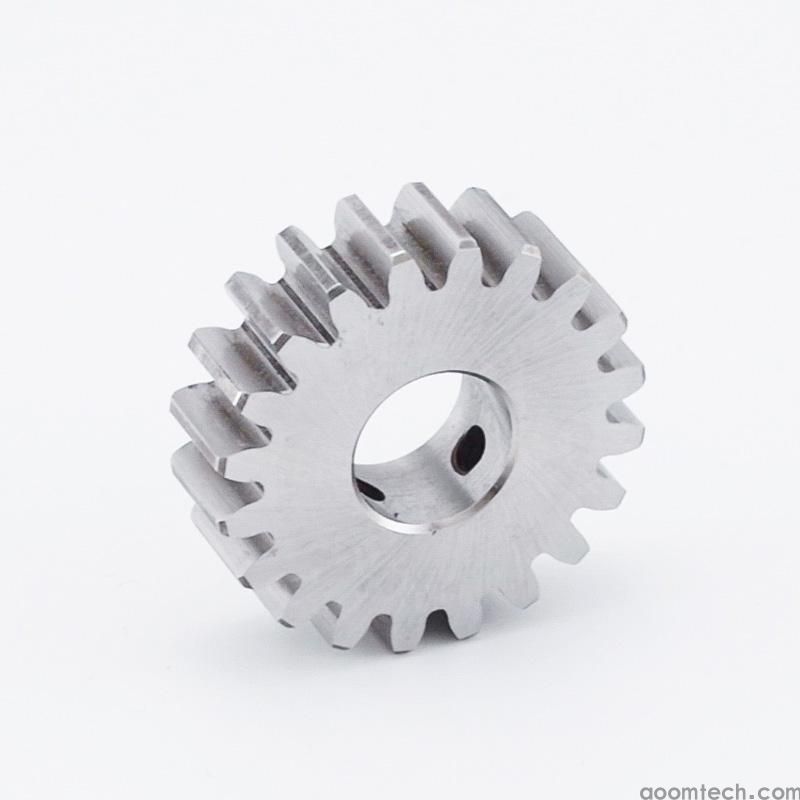
CNC Machining Small Gear Parts
CNC Machining Small Gear Parts: Process, Benefits, and Key Industry Insights
CNC Machining Small Gear Parts plays a critical role in modern precision manufacturing. Small gears are essential components in devices where accuracy, smooth motion, and reliable power transmission are required. From wristwatches and cameras to robotics and medical instruments, these tiny parts ensure systems function correctly and efficiently.
Introduction to CNC Machining of Small Gear Parts
The Significance of CNC Machining for Small Gear Parts
Small gears are widely used in many industries, including consumer electronics, precision machinery, automotive systems, and robotics. Because of their size, even the smallest machining error can affect performance.
CNC (Computer Numerical Control) machining enables manufacturers to produce small gear parts with extremely high precision and repeatability. This ensures smooth operation, accurate torque transfer, and long service life.
For example, in a wristwatch, precisely machined gears control timekeeping accuracy. In a compact robotic arm, they help achieve controlled, smooth, and repeatable movement. Without high-quality gear machining, these devices would suffer from noise, wear, and mechanical failure.
The CNC Machining Process of Small Gear Parts
Design and Engineering
The process begins with CAD (Computer-Aided Design) software, where engineers create a detailed 3D model of the gear. This includes tooth profile, pitch diameter, module, and pressure angle.
The design stage also considers load capacity, rotational speed, noise reduction, and assembly compatibility. Engineers optimize the design for manufacturability to ensure it can be efficiently produced using CNC equipment.
Even minor design flaws in gear geometry can result in vibration, poor meshing, or premature wear, making this stage extremely important in the process of CNC machining small gear components.
Material Selection
Material choice directly affects gear performance and machining behavior. Common materials include:
Alloy steel – High strength and wear resistance for heavy-duty applications
Brass – Good machinability and corrosion resistance for light loads
Engineering plastics – Lightweight and low-cost solutions for low-load systems
Key material factors include hardness, fatigue strength, and friction coefficient. For high-speed gears, materials with low friction and strong fatigue resistance are preferred. Material selection also impacts cutting speed, tool wear, and heat treatment requirements.
CNC Programming
Once the design is finalized, CAM (Computer-Aided Manufacturing) software converts the CAD model into machine code (G-code).
This program defines toolpaths, spindle speed, feed rate, and cutting depth. Because small gears require extremely precise tooth profiles, programming must be highly accurate.
Incorrect programming can lead to mismatched gear teeth, noise during operation, or complete mechanical failure. This step is central to ensuring precision in small gear parts CNC machining.
Machine Setup and Tooling
CNC machines are configured with suitable fixtures and cutting tools. For small gear machining, typical tools include micro end mills, gear hobs, and precision drills.
Machine parameters such as spindle speed and feed rate are carefully adjusted according to material type and design requirements.
Proper setup is essential. Poor fixture alignment or incorrect tooling can result in dimensional errors, poor surface finish, or tool breakage.
Machining Operations
Gear Cutting
Gear cutting is the most important operation. Common methods include hobbing, shaping, and broaching:
Hobbing – Ideal for mass production of standard small gears
Gear shaping – Suitable for custom or low-volume production
Broaching – Used for precise internal gear profiles
Maintaining accurate tooth geometry is critical for smooth meshing and efficient power transfer.
Turning and Milling
Before gear cutting, turning is often used to create the gear blank. Milling may also be used to create flats, keyways, or mounting features.
These operations require careful control of cutting parameters to ensure dimensional accuracy and prevent deformation of small parts.
Heat Treatment (If Required)
Heat treatment improves mechanical properties such as hardness, toughness, and fatigue resistance.
Common processes include quenching, tempering, and case hardening. For example, quenching increases hardness, while tempering reduces brittleness.
Improper heat treatment can cause cracking, distortion, or reduced durability, affecting the overall performance of small gears.
Quality Control
Quality inspection is essential in CNC machining of small gear parts due to tight tolerance requirements.
Manufacturers use tools such as gear measuring machines, micrometers, calipers, and surface roughness testers to verify accuracy.
Parts that do not meet specifications are reworked or rejected to ensure system reliability and safety.
Finishing and Surface Treatment
Finishing processes such as grinding, polishing, and deburring improve surface quality and remove sharp edges.
Surface treatments like coating, plating, or shot peening enhance corrosion resistance and fatigue strength.
For example, shot peening introduces compressive stress on the surface, improving resistance to fatigue failure in high-speed applications.
Key Considerations in CNC Machining Small Gear Parts
High-Precision Requirements
Small gears require extremely tight tolerances. Even minor deviations can cause noise, vibration, or poor meshing.
Achieving precision requires calibrated machines, advanced measuring tools, and skilled operators.
Tool Wear and Breakage
Due to small cutting tools and hard materials, tool wear is a major concern in gear machining.
Manufacturers reduce wear by optimizing cutting parameters and using high-quality carbide tools. Regular tool monitoring helps prevent unexpected breakage.
Contamination Control
Contamination such as chips, dust, or coolant residue can affect gear performance.
A clean machining environment with proper chip removal systems is essential to ensure smooth operation and long service life.
Benefits of CNC Machining Small Gear Parts
High Precision and Consistency
CNC machining ensures consistent accuracy across large production batches. This is essential for smooth gear engagement and reliable mechanical performance.
Customization Capability
CNC technology allows manufacturers to create customized gear designs, including special tooth profiles, sizes, and materials. This is valuable for robotics, medical devices, and specialized machinery.
Customization is a key advantage in the benefits of CNC for small gear part production.
Cost Efficiency in Production
For medium and large production volumes, CNC machining reduces cost per unit due to automation and repeatability. It also reduces material waste and human error.
Challenges in CNC Machining Small Gear Parts
Meeting Strict Tolerances
Achieving micron-level precision is difficult and requires advanced equipment and highly skilled technicians.
Handling Small-Scale Components
Small gears are difficult to fixture and machine. Issues such as heat buildup, tool deflection, and chip evacuation become more significant at smaller scales.
Material and Tool Cost
High-quality materials and precision tools can be expensive. Manufacturers must balance cost efficiency with performance requirements.
Ensuring High-Quality CNC Machining of Small Gear Parts
Skilled Workforce
Operators, programmers, and quality inspectors must understand gear geometry, machining parameters, and measurement techniques.
Advanced Equipment
Multi-axis CNC machines, precision measuring systems, and modern tooling technology improve accuracy and efficiency.
Strong Quality Management System
A structured quality system ensures consistent production standards. It includes in-process inspection, statistical process control, and continuous improvement practices.
Conclusion
CNC Machining Small Gear Parts is a highly precise and technically demanding process that supports many modern industries. From design and material selection to machining, heat treatment, and quality control, every step plays a vital role in ensuring performance and reliability.
By understanding the key considerations in small gear parts CNC machining and applying advanced technology, manufacturers can achieve high-quality, durable, and efficient gear systems suitable for even the most demanding applications.
RELATED PRODUCTS
-
Metal Parts CNC Machining
-
CNC Machining Services for Flashlight Ho
-
Metal Parts CNC Machining Services
-
Brass Parts CNC Machining Services
-
Roller CNC Machining Services
-
CNC machining of high-precision parts
-
CNC Machining for Sprockets
-
CNC Machining for Turbine Parts
-
CNC Machining Service for Crankshafts
-
CNC Machining Service for Copper Blocks