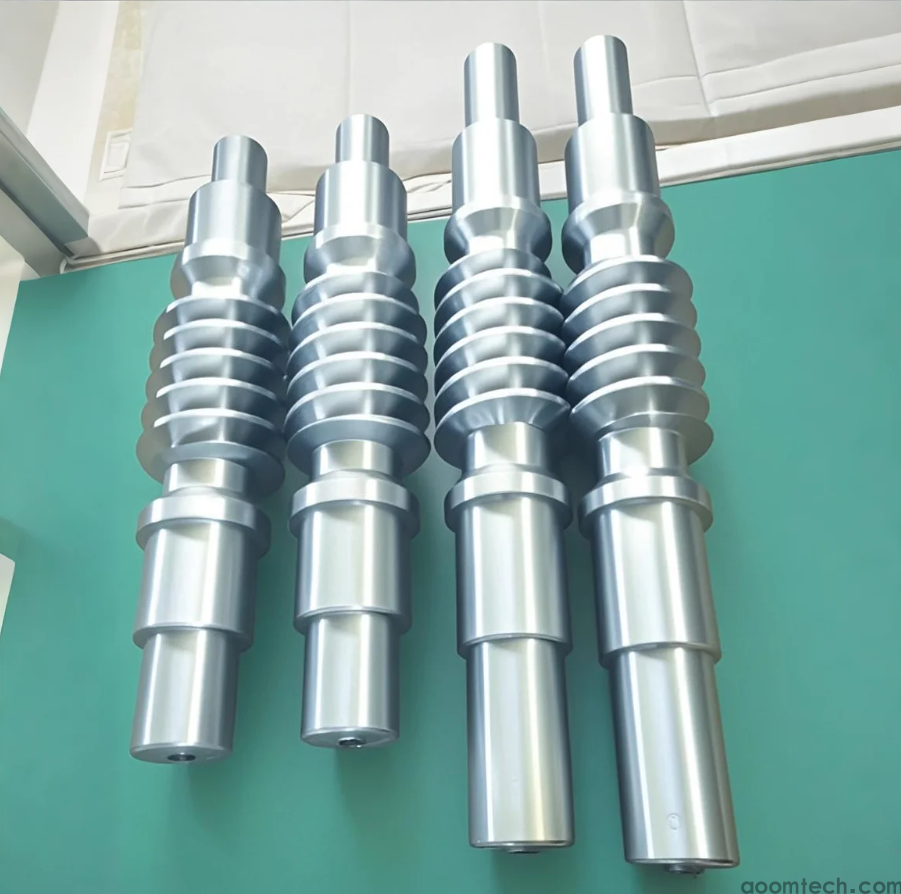
CNC Machining Worm Gear Parts
CNC Machining Worm Gear Parts: Process, Benefits, Challenges, and Quality Assurance
Introduction to CNC Machining Worm Gear Parts
CNC Machining Worm Gear Parts plays a critical role in modern mechanical engineering and manufacturing. Worm gears are essential components used to transmit power and motion between non-parallel, non-intersecting shafts, typically at a 90-degree angle. They are widely used in automotive systems, industrial machinery, robotics, elevators, conveyors, and precision equipment.
The significance of CNC (Computer Numerical Control) machining lies in its ability to produce highly precise worm gear components with consistent quality. These gears require extremely accurate tooth geometry to ensure smooth engagement, minimal friction, and efficient torque transmission. Even small errors in machining can lead to noise, vibration, wear, or complete system failure.
For example, in a conveyor belt system, CNC-machined worm gear parts help maintain stable speed control and smooth operation. In robotics, they ensure precise motion control, which is essential for accuracy and repeatability.
The Process of CNC Machining Worm Gear Components
Design and Engineering
The process of CNC machining worm gear components begins with detailed engineering design. Engineers use CAD (Computer-Aided Design) software to create a precise 3D model of the worm gear. This design includes parameters such as module, pressure angle, lead angle, tooth profile, and transmission ratio.
The design stage also considers load capacity, operating speed, lubrication conditions, and expected lifespan. A poorly designed gear profile can cause uneven load distribution, leading to premature wear or reduced efficiency. Therefore, design optimization is critical for manufacturability and performance.
Material Selection
Material selection directly impacts the durability and performance of worm gear parts. Common materials include alloy steel, carbon steel, bronze, and engineering plastics.
Alloy steel: Used for high-load, heavy-duty applications due to its strength and hardness.
Bronze: Often used for worm wheels because of its low friction and good wear resistance.
Engineering plastics: Suitable for low-noise, lightweight, or cost-sensitive applications.
Choosing the right material also depends on machinability, cost, and thermal stability during operation.
CNC Programming
After design finalization, the CAD model is converted into a CNC program using CAM (Computer-Aided Manufacturing) software. This step defines toolpaths, cutting speeds, feed rates, and machining sequences.
In process of CNC machining worm gear components, programming accuracy is essential. Incorrect toolpaths can result in improper tooth spacing, poor surface finish, or dimensional errors. Advanced simulation tools are often used to verify the machining process before actual production begins.
Machine Setup and Tooling
CNC machine setup involves installing the correct fixtures, cutting tools, and workholding devices. Worm gear machining often requires specialized tools such as gear hobs, form cutters, or multi-axis milling tools.
Proper spindle speed, tool alignment, and rigidity of the setup are crucial for precision. Any instability during machining can affect tooth accuracy and surface quality.
Machining Operations
Milling
Milling is commonly used to shape worm gear teeth. A rotating cutting tool removes material gradually to form the gear profile. Multi-axis CNC machines are often used to achieve complex geometries.
Proper control of cutting parameters such as feed rate, depth of cut, and spindle speed ensures accuracy and smooth surface finish.
Turning
Turning operations may be used for machining the cylindrical base or shaft of worm gear assemblies. The workpiece rotates while a stationary cutting tool removes material.
Maintaining concentricity and dimensional accuracy is essential, especially in high-speed applications where imbalance can cause vibration.
Heat Treatment
In many cases, worm gear parts undergo heat treatment to improve mechanical properties. Processes such as quenching, tempering, or case hardening increase hardness, wear resistance, and fatigue strength.
However, improper heat treatment can lead to distortion or brittleness, affecting gear performance. Post-heat-treatment machining may be required to restore dimensional accuracy.
Quality Control
Quality control is a vital step in CNC machining worm gear parts production. Manufacturers use advanced inspection tools such as Coordinate Measuring Machines (CMM), gear measuring instruments, and surface roughness testers.
Key inspection factors include tooth profile accuracy, pitch error, backlash, and surface finish. Any deviation from specifications may require rework or rejection to ensure reliability in final applications.
Finishing and Surface Treatment
Finishing processes such as grinding, polishing, and deburring improve surface quality and remove sharp edges. Surface treatments like plating, carburizing, or shot peening enhance corrosion resistance and durability.
These processes significantly extend the service life of worm gear components, especially in harsh working environments.
Benefits of CNC Machining Worm Gear Parts
High Precision and Consistency
One of the main advantages of CNC Machining Worm Gear Parts is its exceptional precision. CNC systems ensure tight tolerances and consistent quality across all produced parts, which is essential for smooth gear engagement and efficient power transmission.
Customization Flexibility
CNC machining allows full customization based on application requirements. Whether the need is for high torque, low noise, or compact design, worm gear components can be tailored accordingly. This is especially useful in specialized industries such as robotics and aerospace.
Cost Efficiency for Small Batches
For prototype development or small production runs, CNC machining is highly cost-effective. It eliminates the need for expensive molds or tooling required in traditional manufacturing methods. This reduces lead time and supports faster product development cycles.
These advantages make CNC machining worm gear parts an ideal solution for both small businesses and large-scale industrial production.
Challenges in CNC Machining Worm Gear Products
Complex Tooth Geometry
One of the biggest challenges in CNC machining worm gear products is the complex geometry of the gear teeth. Achieving precise involute or helical profiles requires advanced programming and multi-axis machining capabilities.
To overcome this, manufacturers often use high-end CNC machines and simulation software to optimize toolpaths and reduce errors.
Tool Wear and Breakage
Worm gear machining often involves hard materials that accelerate tool wear. Continuous cutting under high load conditions can lead to tool damage or breakage.
Solutions include using carbide tools, optimizing cutting parameters, and regularly monitoring tool condition during production.
Maintaining Consistent Quality
Ensuring uniform quality across multiple batches is another challenge. Variations in material, machine calibration, or operator skill can affect final results.
Implementing strict quality control systems and standardized operating procedures helps maintain consistency in production.
Ensuring High-Quality CNC Machining Worm Gear Parts
Partnering with Experienced Manufacturers
Choosing an experienced CNC machining supplier is crucial for achieving high-quality worm gear components. Skilled manufacturers understand gear geometry, material behavior, and precision machining requirements.
Evaluating experience, industry certifications, and production capabilities can help ensure reliable outcomes.
Continuous Process Improvement
Continuous improvement in machining processes enhances efficiency and product quality. This includes adopting advanced CNC technologies, improving workflow, and training operators.
Lean manufacturing principles are often applied to reduce waste and improve productivity.
Collaboration Between Engineers and Machinists
Effective communication between designers, engineers, and machinists ensures that designs are practical and manufacturable. Early collaboration helps identify potential production challenges and optimize gear design for machining efficiency.
This teamwork significantly improves the success rate of CNC machining worm gear parts projects.
Conclusion
CNC Machining Worm Gear Parts is a highly specialized process that combines advanced engineering, precise machining, and strict quality control. From design and material selection to machining, heat treatment, and finishing, each step plays a vital role in ensuring performance and reliability.
Understanding the process of CNC machining worm gear components, recognizing the benefits of CNC for worm gear parts, and addressing the challenges in CNC machining worm gear products are essential for achieving high-quality results.
With the right technology, skilled expertise, and strong quality management, CNC machining continues to be the most reliable method for producing durable, efficient, and precise worm gear systems used in modern industry.
RELATED PRODUCTS
-
Metal Parts CNC Machining
-
CNC Machining Services for Flashlight Ho
-
Metal Parts CNC Machining Services
-
Brass Parts CNC Machining Services
-
Roller CNC Machining Services
-
CNC machining of high-precision parts
-
CNC Machining for Sprockets
-
CNC Machining for Turbine Parts
-
CNC Machining Service for Crankshafts
-
CNC Machining Service for Copper Blocks