CNC Machining E-bike Parts
CNC Machining E-bike Parts: Precision Manufacturing for Modern Electric Bikes
Electric bicycles, or e-bikes, are becoming more popular worldwide as people look for eco-friendly, efficient, and cost-effective transportation. Behind every high-performing e-bike is a set of carefully engineered components. One of the most important manufacturing methods used today is CNC Machining E-bike Parts, which ensures high precision, durability, and consistent quality.
This article explains what CNC machining of e-bike parts is, why it matters, how it works, what materials are used, the main challenges, and how to choose the right manufacturing partner.
Introduction to CNC Machining E-bike Parts
The Significance of E-bike Parts
E-bike parts play a critical role in the functionality, performance, and safety of electric bicycles. As e-bikes become more advanced, the demand for high-quality components continues to grow.
CNC machining is widely used to produce key e-bike components such as:
E-bike frames
Motor housings
Gear and drivetrain components
Battery mounts and enclosures
Axles and shafts
Each of these parts contributes to overall performance. For example, a strong and lightweight frame improves riding stability and comfort, while a precisely machined motor housing protects the motor from vibration, dust, and impact.
Importance of CNC Machining for E-bike Parts
Precision Manufacturing
CNC machining allows manufacturers to produce e-bike parts with extremely high precision. Because e-bike components must fit together perfectly, even small errors can cause performance issues.
With computer-controlled tools, CNC machines can maintain tight tolerances. This precision helps prevent problems such as:
Mechanical misalignment
Unwanted vibration and noise
Premature wear of components
Reduced drivetrain efficiency
For example, if gear tooth profiles are not accurately machined, the drivetrain may slip or wear out faster, reducing the lifespan of the e-bike.
Customization and Innovation
One of the biggest advantages of CNC machining is flexibility. Manufacturers can design and produce custom e-bike parts based on specific performance needs.
This supports innovation in areas such as:
Lightweight frame structures
Integrated battery compartments
Custom motor mounts
Aerodynamic component designs
For example, a frame with an integrated battery compartment reduces weight distribution issues and improves the overall riding experience. This level of customization is difficult to achieve with traditional manufacturing methods.
Cost-effectiveness for Medium-volume Production
CNC machining is also cost-effective for medium production volumes. Once a CNC program is created, manufacturers can produce multiple identical parts with consistent quality.
Cost savings come from:
Reduced setup time
Efficient material usage
Lower defect rates
Batch production efficiency
This makes CNC machining a strong choice for e-bike companies that need reliable production without extremely high tooling costs.
CNC Machining Processes for E-bike Parts
CNC Milling for E-bike Parts
Milling is one of the most common CNC processes used in e-bike manufacturing. It involves a rotating cutting tool that removes material from a solid block to create complex shapes, holes, slots, and surfaces.
Key factors in milling include:
Tool selection based on material type
Spindle speed and feed rate adjustments
Cutting depth optimization
For example, aluminum frame parts require higher cutting speeds, while steel components need slower speeds and stronger tools.
Turning
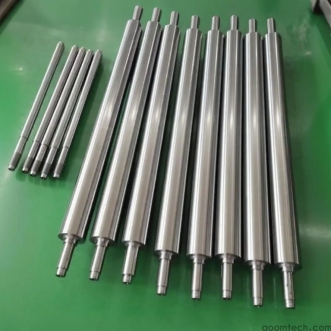
Turning is used to produce cylindrical parts such as axles, shafts, and rotating components in e-bike systems.
Important considerations include:
Maintaining concentricity
Controlling surface finish quality
Managing chip formation
When machining stainless steel shafts, coolant is often used to reduce heat and improve surface smoothness.
Drilling
Drilling is used to create precise holes for assembly, wiring, and mounting components.
Accurate hole placement is essential. Even small deviations can cause assembly issues or affect safety. For example, incorrectly drilled holes in a motor housing may prevent proper installation of the motor unit.
Materials Used in CNC Machining E-bike Parts
Aluminum
Aluminum is one of the most commonly used materials in e-bike manufacturing. It is lightweight, corrosion-resistant, and has an excellent strength-to-weight ratio.
It is often used for:
E-bike frames
Rims
Motor housings
However, aluminum requires proper machining control because it is relatively soft and can deform if cutting parameters are not optimized.
Steel
Steel provides high strength and durability, making it ideal for heavy-load components such as gears, axles, and structural supports.
Compared to aluminum, steel requires:
Slower cutting speeds
Stronger cutting tools
More effective cooling systems
Composite Materials
Carbon-fiber-reinforced polymers and other composites are increasingly used in high-performance e-bike frames due to their excellent strength-to-weight ratio.
However, machining composites is challenging. Issues such as fiber delamination must be controlled using:
Diamond-coated cutting tools
Precise feed rate control
Low heat cutting strategies
Challenges in CNC Machining E-bike Parts
Tool Wear and Breakage
E-bike parts are made from different materials, some of which are hard or abrasive. This leads to tool wear over time.
Solutions include:
Using carbide or diamond-coated tools
Regular tool inspection and replacement
Optimized toolpath programming
Heat Generation
Heat generated during machining can affect both tools and workpieces. Excess heat may cause dimensional errors or material damage.
To control heat:
Use coolant systems effectively
Adjust cutting speed and feed rate
Select heat-resistant tools
Meeting Industry Standards
E-bike components must meet strict safety and performance standards. Manufacturers must ensure every part is reliable and consistent.
This is achieved through:
Coordinate Measuring Machine (CMM) inspections
Strict quality control systems
Continuous process monitoring
Choosing a CNC Machining Service for E-bike Parts
Technical Expertise
When selecting a provider, technical knowledge is essential. A reliable manufacturer should understand materials, machining processes, and e-bike design requirements.
To evaluate expertise, consider:
Previous e-bike manufacturing projects
Engineering team qualifications
Sample part quality
Quality Assurance
A strong quality system ensures consistent and reliable e-bike parts. This includes both in-process and final inspections.
Common tools used in quality control include:
Coordinate Measuring Machines (CMM)
Profilometers
Hardness testers
Effective quality assurance reduces defects and ensures safety compliance.
Cost-effectiveness and Lead Times
While cost is important, it should be balanced with quality and reliability. In the competitive e-bike industry, delivery speed is also critical.
When comparing providers, consider:
Quotation transparency
Production efficiency
On-time delivery record
This helps ensure a stable supply chain and consistent product quality.
Conclusion
CNC Machining E-bike Parts plays a key role in producing high-quality, durable, and innovative components for modern electric bicycles. From frames and motor housings to gears and custom components, CNC technology ensures precision, flexibility, and efficiency.
By understanding materials, processes, challenges, and supplier selection, manufacturers and buyers can make better decisions and achieve higher performance in e-bike production. As the e-bike industry continues to grow, CNC machining will remain a core technology driving innovation and reliability.
RELATED PRODUCTS
-
Metal Parts CNC Machining
-
CNC Machining Services for Flashlight Ho
-
Metal Parts CNC Machining Services
-
Brass Parts CNC Machining Services
-
Roller CNC Machining Services
-
CNC machining of high-precision parts
-
CNC Machining for Sprockets
-
CNC Machining for Turbine Parts
-
CNC Machining Service for Crankshafts
-
CNC Machining Service for Copper Blocks