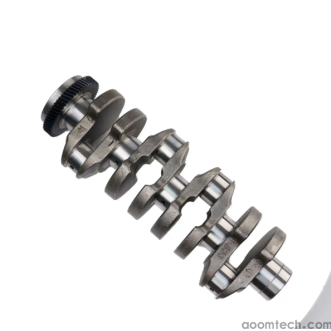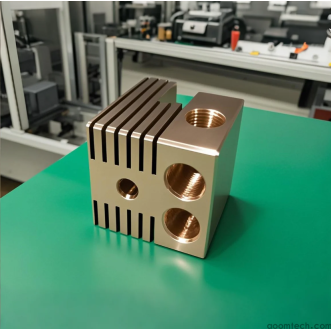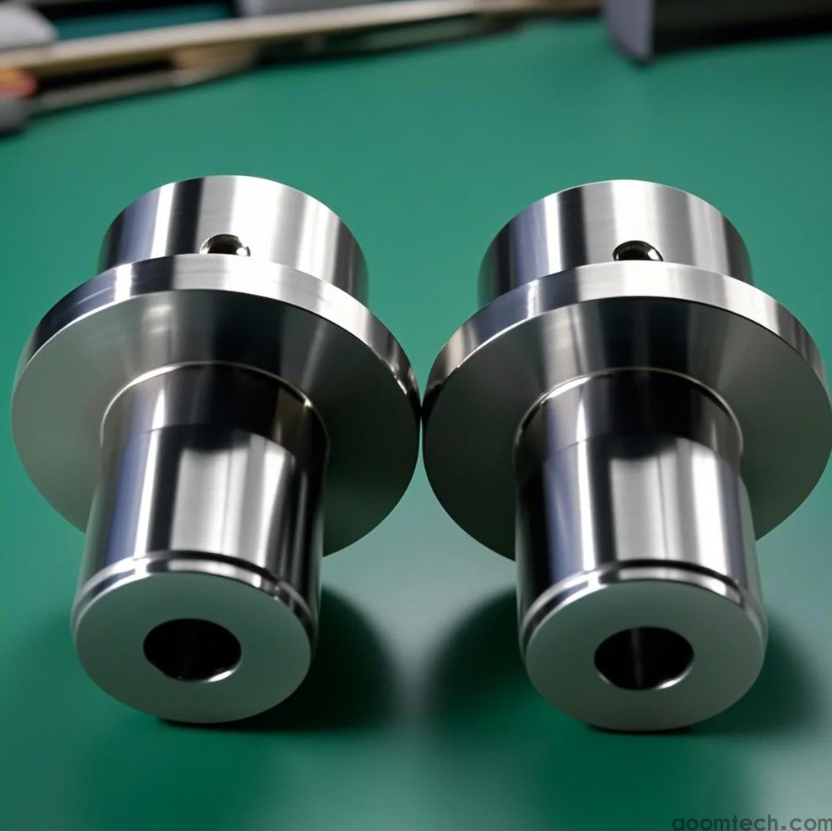
Precision CNC Machining Customization Services
Precision CNC Machining Customization Services
Introduction to Precision CNC Machining Customization Services
The Significance of Custom-Made Precision Parts
Custom-made precision parts are essential in many modern industries. Sectors such as aerospace, medical, automotive, and electronics depend on highly accurate components to ensure safe and efficient system performance. Precision CNC Machining Customization Services make it possible to produce these tailored components with high consistency and accuracy.
Examples include custom aerospace engine components designed for better fuel efficiency, patient-specific medical implants that match human anatomy, specialized automotive transmission parts for improved performance, and unique electronic connectors used in advanced devices. Each of these parts plays a direct role in ensuring the success, safety, and reliability of complex systems.
Importance of Precision CNC Machining for Customization
High-Precision Tailoring
Precision CNC machining allows manufacturers to produce custom parts with extremely tight tolerances and high dimensional accuracy. This is critical because custom parts often have unique requirements that standard components cannot meet. CNC machines follow computer-controlled instructions, ensuring repeatability and consistency.
In industries like medical technology, even a small deviation in size can lead to serious problems. For example, an improperly fitted implant may cause discomfort, poor healing, or health risks. In aerospace systems, inaccurate parts may lead to performance inefficiency or safety failures.
Meeting Diverse Design Needs
One of the key advantages of CNC machining is its ability to produce parts with complex geometries and advanced design features. Engineers can design components with internal channels, curved surfaces, or intricate structures that would be difficult or impossible using traditional methods.
For example, a high-performance automotive engine may require parts with internal cooling channels to reduce heat buildup. Similarly, advanced electronic systems may need connectors with complex circuit paths to support high-speed data processing.
Cost-Effectiveness for Specialized Production
Although custom manufacturing may seem expensive at first, CNC machining becomes cost-effective in medium and large production runs. Once the CNC program is created, identical parts can be reproduced with minimal variation.
Reduced setup time, optimized tool usage, and automated production help lower overall costs. For example, producing batches of custom medical devices using CNC machining ensures both consistency and affordability over time.
CNC Machining Processes for Precision Custom Parts
Milling
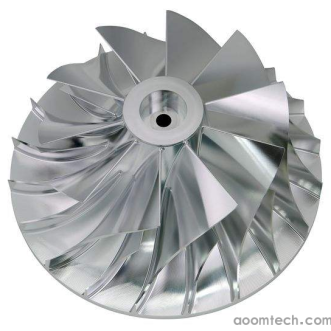
Milling is one of the most common processes in precision CNC milling for custom parts. It uses a rotating cutting tool to remove material from a workpiece, forming flat surfaces, holes, slots, and complex 3D shapes.
Tool selection depends on material type and design complexity. For example, machining aerospace-grade alloys requires carbide-coated tools and carefully controlled parameters such as spindle speed, feed rate, and cutting depth.
Proper cooling and lubrication are also essential to maintain accuracy and prevent tool wear during the process.
Turning
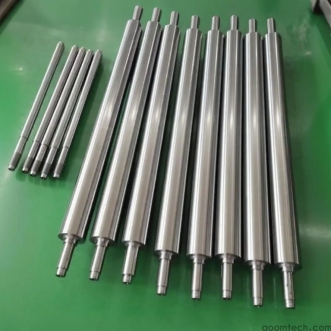
Turning is used for producing cylindrical parts such as shafts, rods, and pins. The workpiece rotates while a cutting tool removes material to achieve the desired shape.
Maintaining concentricity and surface smoothness is critical in turning operations. Engineers must carefully control cutting speed, feed rate, and tool condition.
For example, high-speed machine shafts require extremely smooth surfaces to ensure stable operation and reduce vibration during use.
Electrical Discharge Machining (EDM)
EDM is a specialized process used for hard materials and complex shapes that cannot be achieved with traditional cutting tools. It uses controlled electrical discharges to remove material.
Wire EDM is used for cutting precise profiles, while sinker EDM is used for creating detailed cavities or molds. Although EDM is slower than conventional machining, it provides unmatched precision for complex custom parts.
Materials Used in Precision CNC Machining of Custom Parts
Metals
Metals are widely used in materials for precision CNC-machined custom components due to their strength and durability:
Steel: High strength and wear resistance, suitable for heavy-load applications such as industrial machinery.
Aluminum: Lightweight and corrosion-resistant, commonly used in aerospace and electronics for weight reduction and heat dissipation.
Titanium: Excellent strength-to-weight ratio and corrosion resistance, widely used in aerospace and medical implants.
Ceramics and Composites
Ceramics provide excellent hardness, heat resistance, and electrical insulation. They are often used in electronics and high-temperature environments but are brittle and require careful machining.
Composite materials such as carbon-fiber-reinforced polymers offer high strength with low weight. However, machining composites requires specialized tools to prevent fiber damage and delamination.
Challenges in Precision CNC Machining of Custom Parts
Tool Wear and Breakage
High-precision machining often involves hard materials and complex geometries, which increase tool wear. Small cutting tools are especially vulnerable to breakage.
Solutions include using carbide or diamond-coated tools, monitoring tool condition in real time, and optimizing toolpaths to reduce stress.
Heat Generation
Heat produced during machining can affect dimensional accuracy and tool life. Materials with low thermal conductivity are especially prone to heat buildup.
Cooling systems, optimized cutting speeds, and proper lubrication are essential to control temperature and maintain precision.
Programming Complexity
Creating CNC programs for custom parts requires advanced knowledge of CAD/CAM systems and machining strategies. Complex geometries and multi-axis movements increase difficulty.
Simulation tools help engineers test machining paths before production, reducing errors and improving efficiency.
Choosing a Precision CNC Machining Customization Service Provider
Technical Expertise
When selecting a provider for choosing a provider for precision CNC machining customization, technical experience is critical. A reliable provider should understand different materials, machining methods, and industry requirements.
Checking case studies, sample parts, and team qualifications can help evaluate their capabilities. Providers with aerospace or medical experience often demonstrate higher precision standards.
Quality Assurance
A strong quality control system ensures consistency and reliability. Professional providers use tools such as coordinate measuring machines (CMM), profilometers, and hardness testers.
Quality checks should occur during production and after completion to ensure all specifications are met. This reduces defects and ensures product reliability.
Cost-Effectiveness and Lead Times
While cost is important, it should not compromise quality. Comparing multiple suppliers helps identify the best balance between price and performance.
Reliable providers also offer realistic lead times and maintain consistent delivery schedules, which is essential for industries with strict deadlines.
Conclusion
Precision CNC Machining Customization Services play a vital role in modern manufacturing by enabling the production of highly accurate, custom-designed components. From aerospace to medical applications, these services ensure that complex systems operate safely and efficiently.
By understanding machining processes, material selection, technical challenges, and supplier evaluation, businesses can make informed decisions and achieve better manufacturing outcomes. As industries continue to advance, precision CNC machining will remain a key foundation for innovation and high-performance engineering.
RELATED PRODUCTS
-
Metal Parts CNC Machining
-
CNC Machining Services for Flashlight Ho
-
Metal Parts CNC Machining Services
-
Brass Parts CNC Machining Services
-
Roller CNC Machining Services
-
CNC machining of high-precision parts
-
CNC Machining for Sprockets
-
CNC Machining for Turbine Parts
-
CNC Machining Service for Crankshafts
-
CNC Machining Service for Copper Blocks