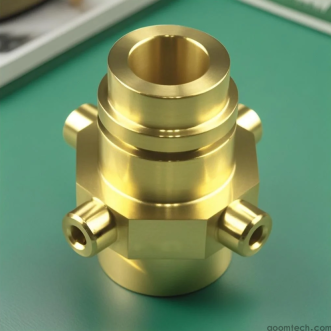
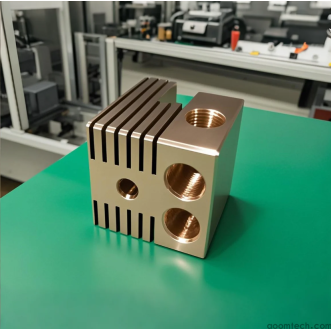
CNC Machining Precision Brass Parts
CNC Machining Precision Brass Parts: Processes, Materials, and Industry Applications
CNC Machining Precision Brass Parts play an important role in many modern industries. From electronics to plumbing and musical instruments, brass components are widely used because of their strong balance of performance, durability, and machinability. CNC (Computer Numerical Control) machining makes it possible to produce these parts with extremely high accuracy and repeatability, which is essential for today’s demanding engineering standards.
Introduction to CNC Machining Precision Brass Parts
The Significance of Precision Brass Parts
Precision brass parts are essential in many industries because brass, an alloy of copper and zinc, offers a unique combination of properties. It has good electrical and thermal conductivity, strong corrosion resistance, and excellent machinability.
In real-world applications, these parts are everywhere:
Electronics: Brass connectors ensure stable electrical signals and low resistance.
Plumbing: Brass valves and fittings help control water flow and prevent leaks.
Musical instruments: Brass components help produce accurate sound tones and resonance.
Each of these applications depends on dimensional accuracy. Even a small error in size or shape can affect performance, reliability, or safety.
Importance of CNC Machining for Precision Brass Parts
High-precision Manufacturing
CNC machining enables the production of precision brass parts with extremely tight tolerances. Controlled by digital programs, CNC machines can repeatedly produce identical parts with high accuracy.
This precision is critical because small deviations can lead to serious problems:
Poor electrical contact in connectors, causing signal loss or instability
Water leakage in plumbing systems due to improper sealing
Incorrect sound quality in musical instruments
For example, in a brass electrical connector, even a slight dimensional error can increase resistance and reduce performance. CNC technology ensures these parts fit perfectly into complex assemblies.
Complex Design Realization
Another key advantage of CNC machining is the ability to produce complex geometries. Many modern brass parts require intricate internal channels, fine surface details, or multi-step structures.
Examples include:
Multi-chamber brass components used in advanced plumbing systems
Precision-engineered connectors with internal threading and channels
Decorative brass parts for musical instruments with fine engraving
Traditional machining methods may struggle with these shapes, but CNC machining makes it possible through precise multi-axis control and advanced toolpath programming.
Cost-effectiveness for Medium-volume Production
For medium production runs, CNC machining is often more cost-effective than manual or traditional methods. Once the CNC program is created, the machine can produce consistent parts with minimal human intervention.
Cost savings come from:
Reduced setup time for repeat production
Efficient use of cutting tools
Lower scrap rates due to higher accuracy
This makes CNC machining a practical choice for industries producing medium batches of precision brass components.
CNC Machining Processes for Precision Brass Parts
Milling
CNC milling is one of the most common processes for creating precision brass parts. A rotating cutting tool removes material from a stationary workpiece to form flat surfaces, slots, holes, or complex 3D shapes.
Key points in milling include:
Tools: Carbide end mills are commonly used for better durability and precision
Spindle speed: Typically 2000–5000 rpm for brass
Feed rate: Around 0.1–0.3 mm/tooth depending on geometry
Sharp tools are essential to avoid burr formation and ensure smooth surface finishes. Proper parameter control helps achieve high-quality results in applications such as brass plumbing fittings and electronic housings.
Turning
CNC turning is used to produce cylindrical brass parts such as rods, bushings, and shafts. The workpiece rotates while a cutting tool removes material to shape the outer diameter.
Important considerations include:
Maintaining concentricity for balanced performance
Using carbide inserts for stable cutting
Spindle speeds between 1500–4000 rpm
Feed rates of 0.05–0.2 mm/rev
Turning is widely used in producing precision shafts for electronic devices and mechanical systems where smooth surface finish is critical.
Drilling
Drilling is used to create accurate holes in brass parts for mounting, fluid flow, or wiring paths.
Best practices include:
Using twist drills with 118°–135° point angles
Spindle speeds between 1000–3000 rpm
Feed rates of 0.05–0.15 mm/rev
Accurate hole placement is essential. Misaligned holes can cause assembly issues or product failure in final applications such as electronic enclosures or plumbing systems.
Brass Materials and Their Machining Characteristics
Brass Alloys for CNC-Machined Precision Parts
Different brass alloys are used depending on application requirements:
Yellow brass (Cu-Zn): Good machinability and general-purpose use
Red brass: Higher copper content, offering better corrosion resistance
Leaded brass (e.g., HPb59-1): Excellent machinability due to improved chip breaking
Each alloy behaves differently during machining. For example, leaded brass allows faster cutting speeds and smoother tool performance, while red brass is preferred in environments requiring higher corrosion resistance.
Challenges in CNC Machining of Precision Brass Parts
Tool Wear and Breakage
Even though brass is relatively easy to machine, tool wear still occurs during high-speed or high-precision operations. Small tools used for detailed features are especially vulnerable.
Solutions include:
Using high-quality carbide tools
Monitoring tool condition regularly
Optimizing toolpaths to reduce stress
Heat Generation
Excess heat can affect dimensional accuracy and tool life. Brass machining requires careful control of cutting parameters and effective coolant use to maintain stability.
Proper cooling helps prevent thermal expansion, ensuring consistent part dimensions during production.
Surface Finish and Burring
Brass tends to form burrs during machining, which can affect both appearance and function.
To address this issue:
Use sharp cutting tools
Optimize feed rates and speeds
Apply post-machining deburring processes
This is especially important for electrical connectors where smooth surfaces are required for proper conductivity.
Choosing a CNC Machining Service for Precision Brass Parts
Technical Expertise
When selecting a machining provider, technical experience is critical. A reliable supplier should understand different brass alloys, machining strategies, and precision requirements.
Key evaluation points include:
Past experience in CNC machining precision brass parts
Case studies or sample projects
Technical capability in handling complex designs
Quality Assurance
A strong quality control system ensures consistent product performance. Reliable manufacturers use tools such as calipers, micrometers, and optical inspection systems.
Good quality systems include:
In-process inspection during machining
Final product inspection before delivery
Clear handling of non-conforming parts
Cost-effectiveness and Lead Times
Cost is important, but it should always be balanced with quality. Reliable suppliers provide clear pricing and realistic delivery schedules.
To evaluate effectively:
Compare multiple quotations
Review delivery performance history
Assess value rather than just price
Conclusion
CNC Machining Precision Brass Parts are essential components in modern engineering, supporting industries such as electronics, plumbing, and instrumentation. CNC technology enables high accuracy, complex design production, and efficient medium-volume manufacturing.
By understanding the machining processes, material types, and common challenges, manufacturers and engineers can make better decisions when developing or sourcing brass components. Choosing the right machining service ensures long-term performance, reliability, and cost efficiency in every application.
RELATED PRODUCTS
-
Metal Parts CNC Machining
-
CNC Machining Services for Flashlight Ho
-
Metal Parts CNC Machining Services
-
Brass Parts CNC Machining Services
-
Roller CNC Machining Services
-
CNC machining of high-precision parts
-
CNC Machining for Sprockets
-
CNC Machining for Turbine Parts
-
CNC Machining Service for Crankshafts
-
CNC Machining Service for Copper Blocks