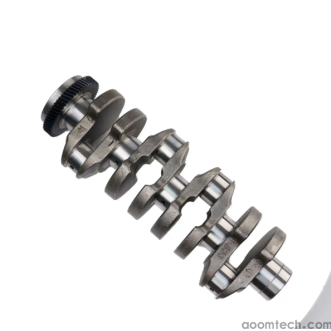
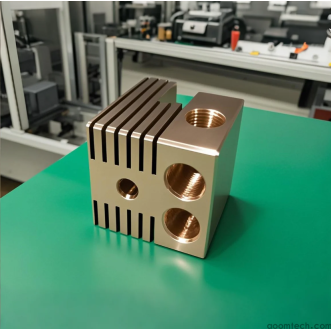
Custom Precision Parts CNC Machining
Custom Precision Parts CNC Machining
Custom Precision Parts CNC Machining is a modern manufacturing method used to produce highly accurate and customized mechanical parts. It uses computer-controlled machines (CNC) to cut, shape, and finish materials such as metal, plastic, and composite materials into exact specifications.
In today’s industries, products must be more precise, more reliable, and more efficient than ever before. This is why Custom Precision Parts CNC Machining plays a key role in sectors such as aerospace, medical devices, automotive engineering, robotics, and electronics. It helps companies turn complex ideas into real, functional components with high accuracy and consistency.
This article explains the significance of custom precision parts CNC machining, the full production process, key benefits, common challenges, and how to choose the right machining service provider.
Significance of Custom Precision Parts CNC Machining
Meeting Unique Requirements
One of the most important advantages of Custom Precision Parts CNC Machining is its ability to meet unique design requirements. Many industries require parts that cannot be produced using standard manufacturing methods.
For example, a medical implant may need a special shape to fit a patient’s body perfectly. Similarly, aerospace components must meet extremely strict performance and safety standards. CNC machining allows manufacturers to produce these parts with exact dimensions and tight tolerances.
In semiconductor manufacturing equipment, even a small deviation in a custom mechanical component can affect the entire production line. Custom CNC machining ensures that every part fits and functions exactly as designed.
Enabling Innovation
Custom CNC machining also supports innovation by making complex ideas possible. Engineers and designers can create advanced product designs without being limited by traditional manufacturing restrictions.
For example, in electric vehicle development, custom precision parts are used in battery systems, cooling structures, and advanced drivetrain components. Without CNC machining, many of these designs would be too complex or too expensive to produce.
This flexibility helps companies develop new technologies faster and stay competitive in global markets.
Process of Custom Precision Parts CNC Machining
Design Consultation
The process usually begins with a design consultation. The customer shares their ideas, drawings, or technical requirements such as dimensions, tolerances, materials, and product function.
The machining service provider then reviews the design and offers suggestions for improvement. For example, a customer designing a custom mechanical bracket may need advice on wall thickness or hole placement to improve strength and manufacturability.
CAD/CAM Design and Programming
After the design is approved, engineers create a detailed 3D model using CAD (Computer-Aided Design) software. This model includes all product details such as structure, surface features, and assembly interfaces.
Next, CAM (Computer-Aided Manufacturing) software is used to generate the CNC machining program. This program defines tool paths, cutting speeds, feed rates, and machining strategies.
For complex optical components, for example, programming must ensure extremely smooth surface finishing and precise curvature control, which requires advanced simulation and toolpath optimization.
Material Selection and Procurement
Choosing the right material is essential in Custom Precision Parts CNC Machining. Different materials offer different properties:
Titanium: high strength, lightweight, and corrosion-resistant
Aluminum: lightweight and easy to machine
Stainless steel: strong and durable
Ceramics: heat-resistant and electrically insulating
Material selection directly affects machining strategy. For example, titanium is harder to cut than aluminum, requiring stronger cutting tools, slower feed rates, and specialized cooling systems.
Machining and Quality Control
Machining Operations
CNC machines perform operations such as milling, turning, drilling, and grinding. Each operation follows the programmed instructions to shape the part with high precision.
Different materials require different machining conditions. Hard metals may require slower cutting speeds, while softer materials allow faster production.
Quality Control
Quality control ensures that every part meets design requirements. Tools such as calipers, micrometers, and Coordinate Measuring Machines (CMM) are used to verify dimensions.
Advanced inspection methods may also include surface roughness testing and X-ray inspection for internal structures. In some cases, a CMM may detect small dimensional errors, leading engineers to adjust machine settings and improve accuracy in future production runs.
Benefits of Custom Precision CNC-Machined Parts
High Precision and Accuracy
One of the biggest advantages of Custom Precision Parts CNC Machining is its extremely high accuracy. CNC machines can achieve micron-level tolerances, ensuring parts fit perfectly in complex systems.
For example, in medical devices such as surgical instruments, high precision ensures patient safety and proper device performance.
Flexibility in Design
CNC machining allows fast design changes. Engineers can quickly update CAD models and re-run machining programs without creating new molds or tools.
This flexibility is especially useful in product development, where multiple design iterations are often required before final production.
Cost-Effectiveness for Small to Medium Batches
For small and medium production volumes, CNC machining is often more cost-effective than mass production methods. There is no need for expensive molds or tooling.
For example, a startup company may order 50 custom-machined components for a prototype system without high upfront investment, making CNC machining ideal for early-stage development.
Challenges in Custom Precision Parts CNC Machining
Complex Design Interpretation
One challenge is understanding complex customer designs. If requirements are unclear or incomplete, it may lead to errors in production.
For example, a misinterpreted tolerance requirement could result in parts that do not fit properly during assembly. In such cases, engineers must communicate closely with the customer to correct the design and reprocess the part.
Cost Management for One-Off Parts
Single custom parts can be expensive because setup, programming, and machine preparation take time. Reducing cost requires careful planning and material optimization.
Manufacturers may suggest alternative materials or adjust design features to reduce machining time while maintaining performance.
Meeting Tight Deadlines
Customers often request fast delivery for urgent projects. However, high-precision machining requires careful processing time.
To meet deadlines, machining companies may run multiple machines at once or extend production shifts. Proper scheduling is essential to balance speed and quality.
How to Choose a Custom Precision Parts CNC Machining Service
Experience and Expertise
Choosing an experienced provider is very important. Skilled manufacturers understand complex designs and can offer valuable engineering suggestions.
Companies with proven case studies and industry experience are more likely to deliver reliable results in Custom Precision Parts CNC Machining projects.
Equipment and Technology
Modern CNC equipment is essential for high-quality production. Advanced machines such as 5-axis CNC systems allow more complex geometries and higher accuracy.
Updated technology also improves efficiency, reduces errors, and supports advanced manufacturing needs such as high-speed machining and adaptive control systems.
Quality Management System
A strong quality management system ensures consistent product quality. Look for providers with certifications such as ISO 9001, which indicate standardized quality processes.
Reliable quality systems include regular inspections, documented testing procedures, and corrective action processes to prevent repeated errors.
Conclusion: Unlocking the Value of Custom Precision Parts CNC Machining
Custom Precision Parts CNC Machining is a powerful manufacturing solution that supports innovation, precision, and flexibility across many industries. It allows companies to produce highly customized parts with excellent accuracy and consistent quality.
From the process of custom precision parts CNC machining to its benefits and challenges, understanding each step helps businesses make better decisions and improve product outcomes.
When selecting a provider, consider experience, equipment, and quality systems to ensure successful results. Whether for prototypes or production runs, CNC machining remains a reliable solution for modern engineering needs.
Key takeaway: By understanding the benefits of custom precision CNC-machined parts and the challenges in custom precision parts CNC machining, businesses can better plan projects and achieve higher performance in their final products.
RELATED PRODUCTS
-
Metal Parts CNC Machining
-
CNC Machining Services for Flashlight Ho
-
Metal Parts CNC Machining Services
-
Brass Parts CNC Machining Services
-
Roller CNC Machining Services
-
CNC machining of high-precision parts
-
CNC Machining for Sprockets
-
CNC Machining for Turbine Parts
-
CNC Machining Service for Crankshafts
-
CNC Machining Service for Copper Blocks