CNC Machining & Manufacturing of Precision Parts
CNC Machining & Manufacturing of Precision Parts
CNC Machining & Manufacturing of Precision Parts is a core technology in modern industry. It enables the production of highly accurate components used in aerospace, medical devices, electronics, automotive systems, and many other advanced applications. These parts must meet strict tolerance requirements because even a very small error can lead to system failure or reduced performance.
This article explains CNC machining in simple language, covering the process, benefits, challenges, quality control, and how to choose a reliable service provider. It is designed to help engineers, manufacturers, students, and decision-makers understand how precision parts are made in real-world production.
The Significance of Precision Parts
Precision parts are the backbone of modern technology. They are components manufactured with extremely tight tolerances, often measured in microns. These parts ensure machines and systems work smoothly, safely, and efficiently.
In industries like aerospace, a slight deviation in a turbine blade can affect engine performance or safety. In medical devices, incorrect dimensions can lead to device failure or patient risk. In electronics, small inaccuracies can disrupt circuit performance or connectivity.
Because of these requirements, understanding CNC machining process for precision parts is essential for anyone involved in manufacturing or product development. CNC (Computer Numerical Control) machining provides the accuracy and repeatability needed for these demanding applications.
The CNC Machining Process for Precision Parts
Design and CAD Modeling
The manufacturing process begins with design. Engineers use CAD (Computer-Aided Design) software to create a detailed 3D model of the part. This model defines all dimensions, tolerances, and geometric features.
Design considerations depend on the application. For example, aerospace components must be lightweight yet strong, while medical parts must be biocompatible and corrosion-resistant. Designers also consider material behavior, stress distribution, and manufacturing feasibility.
A well-designed CAD model is the foundation of successful CNC machining because all later steps depend on its accuracy.
CNC Programming
Once the design is complete, it is converted into machine instructions using CAM (Computer-Aided Manufacturing) software. This step is known as CNC programming.
Programmers define toolpaths, cutting speeds, feed rates, and cutting depths. These parameters must be carefully optimized to ensure accuracy and surface quality. Even small mistakes in programming can result in defective parts or tool damage.
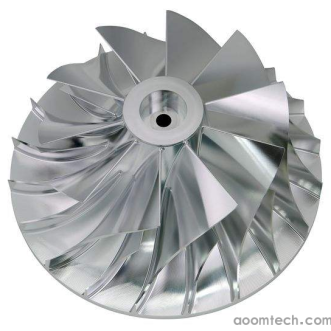
Complex geometries require advanced programming strategies such as multi-axis toolpaths, adaptive cutting, and simulation testing to prevent errors before actual machining begins.
Material Selection and Preparation
Material selection is critical in precision manufacturing. Common materials include aluminum, stainless steel, titanium, plastics, and engineered composites.
Each material has unique properties:
Aluminum: Lightweight, easy to machine, widely used in aerospace and automotive industries.
Stainless Steel: Strong and corrosion-resistant, ideal for medical and industrial tools.
Titanium: High strength-to-weight ratio and biocompatibility, commonly used in implants.
Engineering Plastics: Used for lightweight, non-metal components in electronics and medical devices.
Before machining, materials may be cut, heat-treated, or surface-treated to improve performance and machinability.
Machine Setup and Tooling
CNC machines must be properly set up before production begins. Workpieces are secured using fixtures or clamps to ensure stability during cutting.
Tool selection is equally important. Different operations require different tools such as end mills, drills, turning inserts, and grinding wheels. High-quality carbide or diamond-coated tools are often used for precision work.
Machine parameters like spindle speed, feed rate, and coolant flow must match both the material and the CNC program. Proper setup reduces vibration, improves accuracy, and extends tool life.
Machining Operations
Milling
Milling is one of the most common CNC operations. It removes material using rotating cutting tools to create flat surfaces, slots, and complex 3D shapes.
Different tools are used depending on the geometry:
End mills for general cutting
Ball-nose mills for curved surfaces
Face mills for large flat areas
Proper control of spindle speed and feed rate is essential to achieve high accuracy and smooth surface finishes.
Turning
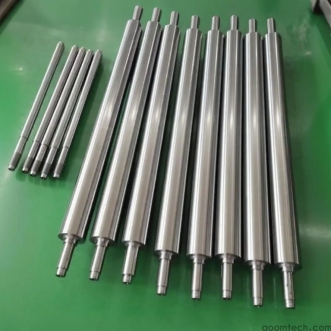
Turning is used to create cylindrical parts such as shafts and bushings. The workpiece rotates while a fixed cutting tool removes material.
Precision in turning depends on maintaining concentricity and correct diameter control. Sharp cutting inserts and proper coolant application help improve surface quality and reduce heat buildup.
Drilling
Drilling creates holes in precision parts. Accuracy depends on correct drill selection, speed, and feed rate.
Proper alignment is important to ensure holes are perpendicular and correctly positioned. In high-precision applications, drill guides or CNC positioning systems are used to improve accuracy.
Grinding
Grinding is used for final finishing and achieving very tight tolerances. It removes small amounts of material using abrasive wheels.
This process is essential when extremely smooth surfaces or precise dimensional control is required, such as in aerospace and medical components.
Finishing and Inspection
After machining, parts often undergo finishing processes such as deburring, polishing, anodizing, or plating. These steps improve appearance, corrosion resistance, and performance.
Inspection is a critical stage. Tools like calipers, micrometers, surface roughness testers, and Coordinate Measuring Machines (CMMs) are used to verify accuracy.
Only parts that meet strict specifications are approved for use. This ensures reliability in final applications.
Benefits of CNC Machining for Precision Parts
High Precision and Accuracy
CNC machining delivers extremely high accuracy due to computer-controlled operations. This ensures consistent quality across all produced parts.
Complex Geometries
CNC technology can produce complex shapes that are impossible with traditional manufacturing methods. This supports innovation in industries such as aerospace and medical technology.
Repeatability
Once a CNC program is created, it can produce identical parts repeatedly. This is essential for mass production and maintaining consistent product quality.
Challenges in CNC Machining of Precision Parts
Tool Wear and Breakage
Cutting tools gradually wear out due to friction and heat. This can affect accuracy and surface quality. Regular monitoring and tool replacement strategies are necessary to maintain performance.
Complex Programming and Setup
Advanced part geometries require skilled programming and careful machine setup. Errors in toolpath design can lead to defects or wasted materials.
Cost-effectiveness
CNC machining involves high equipment and tooling costs. Efficient planning, optimized toolpaths, and material management are needed to control production costs.
Quality Control for CNC-Machined Precision Parts
In-Process Inspection
During production, measurements are taken to ensure parts remain within tolerance. If deviations are detected, adjustments are made immediately.
This reduces waste and prevents defective batches.
Final Inspection
After machining and finishing, final inspection verifies all dimensions, surface quality, and material properties.
Non-conforming parts may be reworked or rejected depending on severity. This ensures only high-quality components reach customers.
How to Choose a CNC Machining Service Provider for Precision Parts
Experience and Expertise
A reliable provider should have proven experience in manufacturing precision parts. Industry-specific knowledge is important, especially for aerospace, medical, or automotive applications.
Equipment and Technology
Modern CNC machines, multi-axis systems, and advanced CAD/CAM software are essential for producing high-quality parts efficiently.
Quality Assurance and Customer Service
A strong quality control system ensures consistent results. Good communication, timely updates, and technical support are also important when choosing a supplier.
Conclusion: Mastering CNC Machining for Precision Parts
CNC machining is a vital technology for producing high-quality precision components used across modern industries. Understanding the full workflow—from design and programming to machining and inspection—helps ensure better product quality and manufacturing efficiency.
Key success factors include accurate design, proper material selection, optimized machining strategies, and strict quality control for CNC-machined precision parts. By following these principles, manufacturers can achieve reliable performance and long-term success.
As technology continues to evolve, staying updated with new machining techniques, tools, and quality systems is essential for maintaining competitiveness in the global manufacturing industry.
RELATED PRODUCTS
-
Metal Parts CNC Machining
-
CNC Machining Services for Flashlight Ho
-
Metal Parts CNC Machining Services
-
Brass Parts CNC Machining Services
-
Roller CNC Machining Services
-
CNC machining of high-precision parts
-
CNC Machining for Sprockets
-
CNC Machining for Turbine Parts
-
CNC Machining Service for Crankshafts
-
CNC Machining Service for Copper Blocks