CNC Rapid Prototyping Services
CNC Rapid Prototyping Services: A Complete Guide for Faster Product Development
Introduction to CNC Rapid Prototyping Services
CNC Rapid Prototyping Services play an important role in modern product development. CNC (Computer Numerical Control) technology allows manufacturers to quickly turn digital 3D designs into real physical parts. This helps engineers and designers test ideas before starting mass production.
The main value of these services is speed and accuracy. Instead of waiting weeks for traditional tooling, companies can receive functional prototypes in a few days. This is especially useful in industries where innovation moves fast.
For example, in the automotive industry, engineers can quickly produce engine component prototypes to test performance and durability. In consumer electronics, designers can build prototype housings to evaluate size, shape, and usability before final production. This significantly reduces development risks and costs.
The Process of CNC Rapid Prototyping Services
Design and Preparation
The process of CNC rapid prototyping services begins with a detailed 3D model created using CAD (Computer-Aided Design) software. This digital model represents the final part with exact measurements and geometry.
Before machining, the model must be prepared for CNC processing. This includes converting it into machine-readable formats such as G-code. Engineers also check for design errors, ensuring the model can be manufactured without issues.
Key considerations include part orientation, tool access, and structural stability. A poor design setup may lead to machining errors, wasted material, or inaccurate prototypes. Careful preparation ensures smooth production and high precision.
CNC Machining Operations
Milling
Milling is one of the most common CNC machining methods used in prototyping. A rotating cutting tool removes material from a solid block to create the desired shape.
Different tools are used depending on the material. For example, carbide end mills are commonly used for metals and plastics due to their durability. Cutting parameters such as spindle speed, feed rate, and cutting depth must be carefully adjusted.
Plastic materials often require higher spindle speeds for smooth finishing, while metals require slower speeds to avoid tool wear and overheating.
Turning
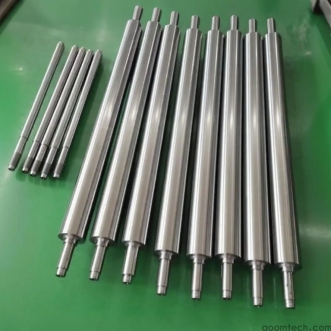
Turning is used to produce cylindrical parts such as shafts, rods, and bushings. In this process, the workpiece rotates while a stationary cutting tool shapes it.
Maintaining concentricity and surface quality is important. Carbide inserts are often used for machining metals due to their strength and heat resistance.
Proper parameter control helps prevent issues such as vibration (chatter) and ensures a smooth surface finish. Turning is essential for producing precise rotational components in prototypes.
5-Axis Machining
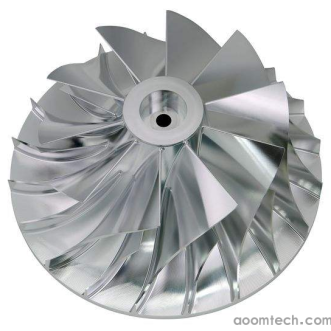
5-axis machining is used for highly complex prototype designs. It allows the cutting tool to move in five different directions, enabling the creation of intricate geometries in a single setup.
This reduces the need for multiple repositioning steps, saving time and improving accuracy. It is widely used in aerospace and medical industries, where complex shapes and tight tolerances are required.
The main advantage of 5-axis machining is its ability to produce highly detailed parts with fewer errors and faster production time.
Finishing and Post-Processing
After machining, prototypes go through finishing processes. These may include deburring to remove sharp edges, sanding for smooth surfaces, and polishing for improved appearance.
Surface treatments such as anodizing or painting may also be applied depending on the application. These steps improve both aesthetics and functionality, especially for parts that involve movement or user interaction.
Materials Used in CNC Rapid Prototyping
Metals
Metals are widely used in CNC prototyping due to their strength and durability.
Aluminum: Lightweight, easy to machine, and corrosion-resistant. Common in automotive and aerospace prototypes.
Steel: Very strong and suitable for load-bearing components, but harder to machine.
Titanium: High strength-to-weight ratio and excellent corrosion resistance, often used in aerospace and medical prototypes.
Plastics
Plastics are commonly used for low-cost and functional prototypes.
ABS: Easy to machine and impact-resistant, widely used in consumer products.
Nylon: Self-lubricating and durable, suitable for moving parts.
PEEK: High-performance plastic with excellent heat and chemical resistance, used in demanding industries.
Advantages of CNC Rapid Prototyping Services
High Precision
One of the key advantages of CNC rapid prototyping is high accuracy. CNC machines can achieve extremely tight tolerances, sometimes as precise as ±0.001 inches.
This level of precision ensures that prototypes closely match final production designs, which is critical for industries like medical devices and aerospace engineering.
Fast Turnaround Time
CNC prototyping is significantly faster than traditional manufacturing methods. Simple parts can often be completed within 1–3 days.
This speed allows companies to test designs quickly, make improvements, and reduce product development time.
Cost-Effectiveness for Small Batches
For small production runs (around 10–200 pieces), CNC prototyping is highly cost-effective. There is no need for expensive molds or tooling, which reduces initial investment.
This makes it ideal for startups and companies testing new product ideas.
Material Flexibility
CNC machining supports a wide range of materials, including metals, plastics, and composites. This flexibility allows designers to choose materials based on strength, weight, cost, and application needs.
Applications of CNC Rapid Prototyping Services
Aerospace Industry
In aerospace, CNC prototypes are used for engine components, structural parts, and avionics housings. High precision and strong materials are essential for safety and performance testing.
Prototyping helps engineers test aerodynamics, durability, and heat resistance before final production.
Automotive Industry
The automotive industry uses CNC prototyping for engine parts, transmission systems, and interior components.
It allows manufacturers to quickly test new designs and improve vehicle performance while reducing development time.
Medical Industry
CNC rapid prototyping is widely used for surgical tools, implants, and medical device components.
High accuracy and biocompatible materials ensure safety and effectiveness in medical applications.
Consumer Goods Industry
Consumer product companies use CNC prototypes to test electronics, appliances, furniture, and more.
This helps evaluate product design, usability, and appearance before launching to market.
How to Choose a CNC Rapid Prototyping Service Provider
Experience and Expertise
When choosing a CNC rapid prototyping service provider, experience is very important. A skilled provider understands different materials, machining methods, and design challenges.
Check their portfolio, case studies, and industry experience. Providers with a strong track record are more likely to deliver reliable results.
Quality Assurance
A good service provider should have a strong quality control system. This includes in-process inspection and final testing using tools like calipers, micrometers, and CMM (Coordinate Measuring Machines).
Proper quality control ensures that every prototype meets design specifications and performance requirements.
Cost-Effectiveness
Cost should be balanced with quality. A reliable provider offers transparent pricing, including material costs, machining costs, and finishing services.
Comparing multiple quotes helps identify the best value without sacrificing quality or accuracy.
Turnaround Time
Fast delivery is essential in prototyping. A good provider should clearly communicate production timelines and consistently meet deadlines.
This ensures smooth product development and faster time-to-market.
Conclusion
CNC Rapid Prototyping Services are essential for modern product development. They allow companies to quickly turn ideas into real, testable parts with high precision and flexibility.
By understanding the process of CNC rapid prototyping services, the materials used, and the advantages of CNC rapid prototyping, businesses can make better decisions during product design.
Choosing the right partner through careful evaluation of experience, quality, cost, and delivery time ensures successful results and faster innovation.
RELATED PRODUCTS
-
Metal Parts CNC Machining
-
CNC Machining Services for Flashlight Ho
-
Metal Parts CNC Machining Services
-
Brass Parts CNC Machining Services
-
Roller CNC Machining Services
-
CNC machining of high-precision parts
-
CNC Machining for Sprockets
-
CNC Machining for Turbine Parts
-
CNC Machining Service for Crankshafts
-
CNC Machining Service for Copper Blocks