CNC Machining for Precision Shaft Parts
CNC Machining for Precision Shaft Parts
Introduction to CNC Machining for Precision Shaft Parts
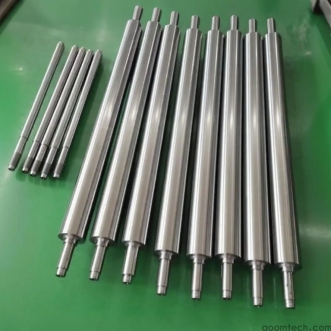
CNC Machining for Precision Shaft Parts plays a critical role in modern manufacturing industries where accuracy, durability, and consistency are required. Precision shaft parts are essential mechanical components used to transmit motion, support rotating elements, and ensure stable operation of machines. These parts are widely applied in automotive systems, aerospace engineering, industrial equipment, robotics, and energy systems.
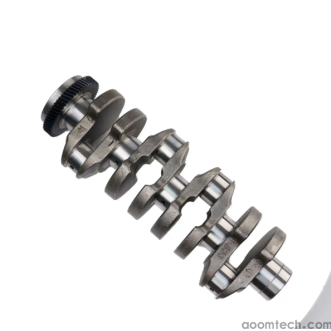
CNC (Computer Numerical Control) machining is one of the most reliable manufacturing methods for producing these parts. It offers high accuracy, excellent repeatability, and the ability to create complex geometries. For example, in an automotive engine, a crankshaft must be machined with extreme precision to convert piston movement into smooth rotational energy. Even the smallest error in shaft geometry can lead to vibration, energy loss, or mechanical failure.
The Significance of Precision Shaft Parts and CNC Machining
Precision shaft parts are the backbone of rotating machinery. They are responsible for transferring torque, maintaining alignment, and ensuring smooth mechanical performance under load. Because these components often operate under high stress and continuous motion, even minor dimensional deviations can lead to serious performance issues.
CNC machining is highly suitable for these parts because it provides controlled and automated manufacturing. Unlike manual machining, CNC systems follow programmed instructions that ensure each part is produced with consistent accuracy. This makes it ideal for industries where safety and reliability are critical, such as aerospace and automotive engineering.
The CNC Machining Process for Precision Shaft Parts
Design Phase
The process begins with CAD (Computer-Aided Design), where engineers create a detailed 3D model of the shaft. The design considers mechanical function, load conditions, rotational speed, and connection with other components.
Accuracy in this stage is extremely important. A poorly designed shaft diameter or incorrect tolerance can result in imbalance, vibration, or premature wear during operation. This is why engineers carefully simulate performance conditions before finalizing the design.
CNC machining process for precision shaft parts depends heavily on this stage, as it sets the foundation for all subsequent operations.
Material Selection
Material choice is one of the most important factors in shaft manufacturing. The selected material must match the mechanical and environmental requirements of the application.
Common materials include:
Carbon steel – Cost-effective and suitable for general-purpose shafts.
Alloy steel – High strength and ideal for high-stress applications such as aerospace components.
Stainless steel – Excellent corrosion resistance, used in harsh or humid environments.
Material selection in precision shaft part CNC machining directly affects machining performance. Harder materials require slower cutting speeds and stronger tools, while softer materials allow faster machining but may require careful finishing.
CNC Programming
After design and material selection, the CAD model is converted into a CNC program using CAM (Computer-Aided Manufacturing) software. This program defines toolpaths, spindle speeds, feed rates, and cutting depth.
Precise programming is essential. Incorrect toolpaths can lead to dimensional errors or poor surface finish. For example, excessive cutting depth may cause tool deflection, while improper feed rates can result in overheating or uneven surfaces.
Machine Setup and Tooling
In this stage, the CNC machine is prepared with the correct tools and fixtures. For shaft machining, turning tools, carbide inserts, and grinding wheels are commonly used.
Proper setup ensures stability and accuracy during machining. Poor tool selection or incorrect alignment can lead to vibration, tool wear, and dimensional inaccuracy. Spindle speed and feed rate must be carefully matched to both material properties and machining operations.
Machining Operations
Turning
Turning is the primary process for shaping shaft components. The workpiece rotates while the cutting tool removes material to form the required diameter and geometry.
Rough turning removes excess material quickly, while finish turning focuses on achieving tight tolerances and smooth surface quality. Operators adjust spindle speed and feed rate to balance efficiency and surface quality.
Grinding
Grinding is used when extremely high precision is required. A high-speed grinding wheel removes very small amounts of material to achieve tight tolerances and fine surface finishes.
This process is essential for shafts used in high-speed machinery, where even microscopic surface imperfections can affect performance and durability.
Drilling and Threading (if applicable)
Some shaft designs require holes or threads for lubrication channels, fasteners, or assembly connections. Drilling ensures accurate hole placement, while threading creates precise screw engagement.
Correct tool selection and cutting parameters are essential to avoid misalignment or thread damage.
Quality Control in CNC Machining of Precision Shaft Parts
In-Process Inspection
During machining, continuous inspection ensures that the part remains within tolerance. Tools such as calipers, micrometers, and surface roughness testers are used to monitor accuracy.
Quality control in CNC precision shaft part production helps detect errors early, reducing waste and preventing defective parts from advancing through production.
If deviations are detected, operators can immediately adjust tool settings or machining parameters.
Final Inspection
Once machining is complete, the shaft undergoes detailed inspection. This includes checks for diameter accuracy, roundness, straightness, and surface quality.
Advanced equipment such as Coordinate Measuring Machines (CMM) and hardness testers are used to ensure compliance with design requirements. Any non-conforming parts are either reworked or rejected.
Benefits of CNC Machining for Precision Shaft Parts
High Precision
CNC machining delivers extremely tight tolerances, often within microns. This level of precision ensures smooth operation and reduces mechanical wear.
In aerospace applications, high-precision shafts contribute to safer and more efficient engine performance.
Repeatability
Once programmed, CNC machines can produce identical parts consistently. This repeatability is essential for mass production, especially in industries like automotive manufacturing where thousands of identical shafts are required.
Complex Geometries
CNC machining allows the production of complex shaft designs such as stepped shafts, tapered shafts, and splined shafts.
These designs improve torque transmission and mechanical performance in advanced systems like gear assemblies and robotics.
Conclusion: Ensuring High-Quality Precision Shaft Parts through CNC Machining
CNC Machining for Precision Shaft Parts is a highly reliable and efficient manufacturing method that ensures accuracy, durability, and consistency. From design and material selection to machining and quality inspection, every step plays a crucial role in final product performance.
Key takeaways include the importance of precise engineering design, correct material selection, optimized machining parameters, and strict quality control procedures. Together, these factors ensure that shafts meet demanding industrial requirements.
To improve long-term production quality, manufacturers should invest in operator training, adopt modern machining technologies, and maintain detailed production records. These practices support continuous improvement and higher manufacturing efficiency.
RELATED PRODUCTS
-
Metal Parts CNC Machining
-
CNC Machining Services for Flashlight Ho
-
Metal Parts CNC Machining Services
-
Brass Parts CNC Machining Services
-
Roller CNC Machining Services
-
CNC machining of high-precision parts
-
CNC Machining for Sprockets
-
CNC Machining for Turbine Parts
-
CNC Machining Service for Crankshafts
-
CNC Machining Service for Copper Blocks