CNC Turning for Precision Parts
CNC Turning for Precision Parts
CNC Turning for Precision Parts is one of the most important manufacturing processes used today to create high-accuracy components. Many industries depend on it because even a very small error in size or shape can cause serious problems in product performance and safety. CNC turning helps manufacturers produce parts with excellent precision, repeatability, and consistency.
Introduction to CNC Turning for Precision Parts
The significance of CNC (Computer Numerical Control) turning in precision part manufacturing cannot be overstated. Precision parts are widely used in industries such as automotive, aerospace, electronics, and medical equipment. These parts must meet strict tolerances and high-quality standards.
CNC turning provides the level of control needed to produce these components accurately. For example, in the aerospace industry, engine shafts and turbine components must be manufactured with extreme precision. Even a tiny deviation can affect engine performance, fuel efficiency, or safety. CNC turning ensures these parts are made correctly and consistently every time.
The CNC Turning Process for Precision Parts
Part Design and Programming
The CNC turning process for precision parts begins with design. Engineers use CAD (Computer-Aided Design) software to create a detailed 3D model of the part. This model includes exact dimensions, tolerances, and surface finish requirements.
Next, CAM (Computer-Aided Manufacturing) software converts the CAD model into a CNC program. This program contains instructions for the machine, including toolpaths, spindle speed, feed rate, and cutting depth. Accurate programming is essential because any mistake can lead to defective parts that do not meet specifications.
Material Selection and Preparation
Material selection plays a key role in CNC turning. The choice depends on the application and required properties such as strength, heat resistance, corrosion resistance, and durability.
Common materials include aluminum, steel, titanium, brass, and engineering plastics. For example, titanium is often used in aerospace due to its strength and light weight, while aluminum is popular for automotive parts because it is easy to machine.
Before machining, materials are cut to size and cleaned. Proper preparation helps ensure smooth machining and reduces tool wear.
Machine Setup and Tooling
In this stage, the CNC turning machine is carefully set up. The workpiece is fixed securely using fixtures to prevent movement during machining. The machine is calibrated to ensure accuracy.
Tooling is also very important. Cutting tools such as carbide inserts are selected based on the material and operation type (roughing or finishing). Correct tooling improves surface quality and extends tool life. Poor setup can cause errors, rough surfaces, or tool damage.
The Turning Operation
During the turning operation, the workpiece rotates at high speed while the cutting tool removes material to form the final shape. The process is usually divided into two stages:
Rough turning: Quickly removes excess material close to final dimensions.
Finish turning: Uses lighter cuts for high accuracy and smooth surface finish.
Operators adjust spindle speed, feed rate, and cutting depth to achieve the best results. Higher speeds may improve surface finish but must be controlled to avoid heat buildup and tool wear.
Applications of CNC Turning in Precision Parts
Aerospace Industry
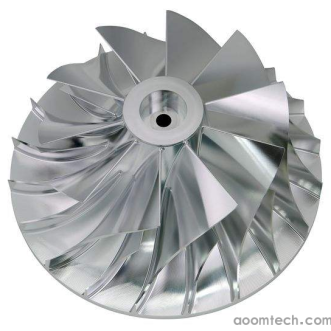
In aerospace manufacturing, CNC turning is used to produce engine shafts, landing gear components, and turbine parts. These parts must withstand extreme pressure and temperature while maintaining perfect accuracy.
Automotive Industry
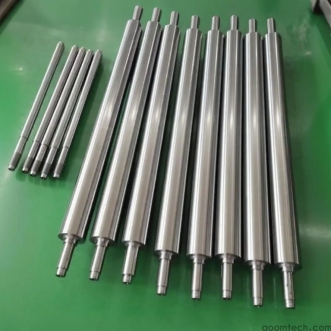
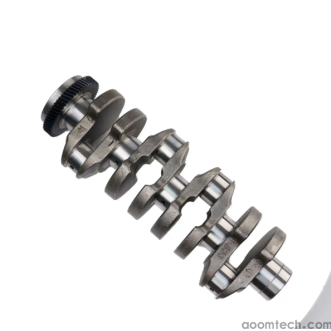
The automotive industry relies heavily on CNC turning for components such as crankshafts, camshafts, and piston rods. These parts directly affect engine performance, fuel efficiency, and durability. CNC turning also supports mass production while maintaining consistent quality.
Medical Industry
In the medical field, CNC turning is used to manufacture surgical tools, dental implants, and orthopedic components. High precision is essential because these parts are used directly in or on the human body. Biocompatible materials are often used to ensure safety and reliability.
Advantages of CNC Turning for Precision Parts
High Precision
One of the biggest advantages of CNC turning for precision manufacturing is its high accuracy. Tight tolerances can be achieved, often within microns. This ensures parts fit perfectly and perform reliably in demanding applications.
Repeatability
Once a CNC program is created, the machine can produce identical parts repeatedly. This repeatability is essential for large-scale production and ensures consistent quality across all components.
Complex Geometries
CNC turning can produce complex shapes such as threads, tapers, grooves, and contoured surfaces. This flexibility allows manufacturers to design advanced components that would be difficult or impossible to make manually.
Quality Control in CNC Turning for Precision Parts
In-process Inspection
Quality control starts during machining. Operators regularly check dimensions and surface finish using tools like calipers, micrometers, and surface roughness testers. If any deviation is found, machine settings are adjusted immediately to prevent defects.
Final Inspection
After machining, each part undergoes final inspection. Advanced tools such as Coordinate Measuring Machines (CMMs) are used to verify dimensions with high accuracy. Visual inspection is also performed to detect surface defects.
Non-conforming parts are either reworked or rejected depending on the severity of the issue. This ensures only high-quality parts are delivered to customers.
Conclusion: Mastering CNC Turning for High-Quality Precision Parts
In summary, CNC Turning for Precision Parts is a critical manufacturing process that supports many industries. From design and programming to machining and quality control, each step must be carefully managed to achieve the best results.
Understanding the CNC turning process for precision parts helps manufacturers improve efficiency and reduce errors. The applications of CNC turning in precision parts continue to grow, especially in aerospace, automotive, and medical industries.
The advantages of CNC turning for precision manufacturing include high accuracy, repeatability, and the ability to produce complex shapes. With continuous improvement in tooling technology and operator training, CNC turning will remain a key method for producing high-quality precision components.
Key takeaway: Success in CNC turning depends on precise design, proper material selection, correct machine setup, and strict quality control at every stage of production.
RELATED PRODUCTS
-
Metal Parts CNC Machining
-
CNC Machining Services for Flashlight Ho
-
Metal Parts CNC Machining Services
-
Brass Parts CNC Machining Services
-
Roller CNC Machining Services
-
CNC machining of high-precision parts
-
CNC Machining for Sprockets
-
CNC Machining for Turbine Parts
-
CNC Machining Service for Crankshafts
-
CNC Machining Service for Copper Blocks