


CNC Machining Process for Precision Pulleys
Introduction to CNC Machining of Precision Pulleys
The CNC Machining Process for Precision Pulleys is a key manufacturing method used to produce high-accuracy pulley components for modern mechanical systems. Precision pulleys are widely used in conveyor systems, automotive engines, industrial machines, and automation equipment. They play an important role in transmitting power, controlling speed, and ensuring stable motion.
For example, in an automotive engine timing system, a precision pulley works with the timing belt to maintain perfect synchronization between engine components. If the pulley is not accurate, it can lead to vibration, misalignment, or even system failure. This is why high-precision CNC machining is essential.
Pre-Machining Considerations
Design and Specification Analysis
A successful production starts with detailed design analysis. In pre-machining for precision pulley CNC machining, engineers study key requirements such as belt type (V-belt, flat belt, or timing belt), power transmission load, rotational speed, and installation space.
Using CAD (Computer-Aided Design) software, a 3D model is created. Good design practice includes:
Adding proper fillets at edges to reduce stress concentration
Ensuring symmetry for smooth and balanced rotation
Designing groove profiles that match belt specifications
Material Selection
Choosing the right material is essential for performance and durability. Common materials include aluminum, steel, cast iron, and engineering plastics.
Aluminum: Lightweight, ideal for high-speed and weight-sensitive applications
Steel: High strength, suitable for heavy-load power transmission
Cast iron: Good wear resistance and vibration absorption
Engineering plastics: Quiet operation and corrosion resistance
The selection depends on working conditions, load requirements, and cost efficiency.
Machine and Tool Preparation
Before machining starts, the CNC machine must be properly prepared. The machine should support high precision, stable spindle performance, and accurate multi-axis control if needed.
Common tools include carbide-tipped turning inserts, end mills, and drills. Tool selection depends on material type and machining operation. Key factors include tool diameter, cutting edge geometry, coating type, and wear resistance.
CNC Machining Operations
Turning Operations
In turning in precision pulley CNC process, the raw material is mounted on a CNC lathe. The turning operation creates the main cylindrical shape of the pulley, including outer diameter, inner bore, and stepped features.
Important parameters include spindle speed, feed rate, and depth of cut. Maintaining concentricity between inner and outer diameters is critical to prevent vibration during operation and ensure smooth rotation.
Milling Operations
Milling is used to create pulley grooves. Different groove shapes are required depending on belt type. For example, V-belt pulleys require precise V-shaped grooves.
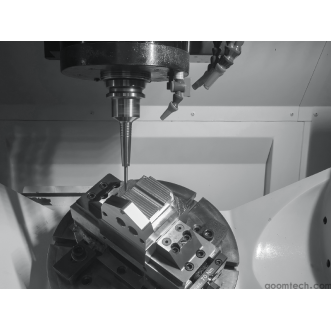
During milling, the CNC program defines the toolpath, cutting depth, and cutting speed. Stable parameters are necessary to achieve smooth surface finish and accurate groove geometry. Groove angle and depth must be controlled carefully to ensure proper belt engagement and reduce wear.
Hole Drilling and Keyway Cutting (If Applicable)
Some pulleys require mounting holes or keyways for torque transmission. Drilling operations ensure accurate hole placement and diameter control.
Keyway cutting is performed using end mills to create a precise slot that fits a key for secure torque transfer. Fixtures are often used to maintain alignment and improve machining accuracy.
Quality Control During Machining
In-Process Inspection
Quality control in precision pulley CNC manufacturing is essential to ensure dimensional accuracy. During machining, regular inspections are performed using calipers, micrometers, and profile gauges.
Typical inspection points include:
Checking pulley diameter after turning operations
Measuring groove angle and depth during milling
Verifying concentricity between bore and outer surface
If deviations are found, machining parameters are adjusted immediately to prevent defects.
Surface Finish Monitoring
Surface quality directly affects pulley performance. A smooth surface reduces friction, wear, and noise in operation.
Surface roughness testers are used to measure finish quality. To improve surface finish, operators may adjust feed rate, increase spindle speed, or replace worn cutting tools. Sharp tools are critical for achieving high-quality results.
Post-Machining Processes
Deburring and Edge Rounding
After machining, burrs and sharp edges must be removed. Burrs can damage belts and reduce system reliability.
Deburring methods include manual filing, tumbling, or automated brushing. Edge rounding also improves safety and reduces stress concentration on the pulley surface.
Surface Treatment
Surface treatment improves durability and performance. Common methods include:
Painting: Provides corrosion protection
Plating: Improves wear and corrosion resistance
Heat treatment: Increases hardness and strength
The choice of treatment depends on application environment, load conditions, and expected service life.
Conclusion
The CNC Machining Process for Precision Pulleys requires careful planning, precise machining, and strict quality control at every stage. From design analysis and material selection to turning, milling, inspection, and finishing, each step directly affects the final performance of the pulley.
By following proper machining practices and maintaining consistent quality control, manufacturers can produce reliable precision pulleys that ensure smooth power transmission and long service life in demanding mechanical systems.
 Process of Custom High-Precisi
 CNC Machining Parameter Settin
 5 Key Tips for CNC Machining o
 Small-batch Precision Parts 5-