


5-Axis CNC Precision Machining
5 - Axis CNC Precision Machining is one of the most advanced manufacturing technologies used today. It allows manufacturers to create highly complex and precise parts with fewer setups and better accuracy. In industries where even a tiny error can cause failure—such as aerospace, automotive, and medical—this technology plays a key role.
This article explains the significance of 5 - axis CNC precision machining, its working process, benefits, challenges, and how to choose the right service provider. It is written in simple language to help engineers, designers, and buyers understand it clearly.
Introduction to 5 - Axis CNC Precision Machining
The significance of 5 - axis CNC precision machining lies in its ability to manufacture parts with extremely complex shapes and tight tolerances. Unlike traditional 3-axis machines, 5-axis systems move a tool or part in five directions at the same time. This flexibility makes it possible to produce advanced components that were once very difficult or impossible to machine.
Today, industries such as aerospace (for example Boeing aircraft components), automotive, and medical implants rely heavily on this technology to improve performance, safety, and efficiency.
Significance of 5 - Axis CNC Precision Machining
Meeting Complex Design Requirements
Modern products often require complex shapes with curved surfaces, deep cavities, and tight angles. The process of 5 - axis CNC precision machining makes it possible to machine these designs in a single setup.
For example, turbine blades used in aircraft engines—such as those in Boeing or Airbus systems—have twisted aerodynamic shapes. These blades must be extremely precise to ensure engine efficiency and safety. 5-axis machining allows manufacturers to cut these shapes accurately without multiple repositioning steps.
Enhancing Product Performance
High precision directly improves product performance. In the medical industry, custom implants such as hip joints or dental implants must match the patient’s body structure perfectly.
For example, a titanium hip implant produced using 5-axis CNC machining can fit more naturally into the human body, reducing pain and improving recovery time. This shows how the benefits of 5 - axis CNC-machined parts directly impact human health and comfort.
Process of 5 - Axis CNC Precision Machining
Design and Programming
The process begins with a digital design using CAD (Computer-Aided Design) software. Engineers then convert this design into machine instructions using CAM (Computer-Aided Manufacturing) software.
In the process of 5 - axis CNC precision machining, programming is more complex than standard machining. The software must define toolpaths, spindle speed, feed rate, and cutting angles across five axes.
For example, when programming a complex aerospace bracket, engineers must carefully simulate tool movement to avoid collisions while ensuring all surfaces are machined correctly.
Machine Setup
Proper setup is essential for accuracy. The workpiece must be securely fixed, and cutting tools must be correctly installed. The machine also requires calibration to ensure all axes move precisely.
If the workpiece is not clamped tightly, vibrations may occur during machining, leading to poor surface finish or dimensional errors. This step is critical for maintaining quality in 5 - Axis CNC Precision Machining.
Machining Operations
Milling
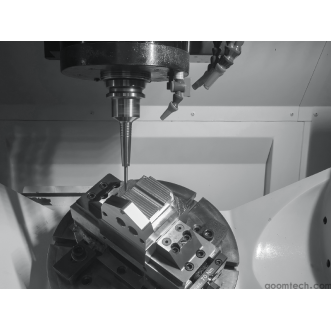
Milling is the main operation in 5-axis machining. The cutting tool moves in multiple directions at once, allowing it to shape complex surfaces smoothly. Adjusting speed and feed rate based on material type (such as aluminum or titanium) is important for precision.
Turning and Drilling
5-axis machines also support turning and drilling. Turning creates cylindrical shapes, while drilling produces accurate holes. The extra axes allow access to hard-to-reach areas, improving flexibility and precision.
Quality Control
Quality control ensures the final part meets design requirements. Tools like calipers, micrometers, and Coordinate Measuring Machines (CMMs) are used.
For example, a CMM may detect a small deviation in a turbine component. Engineers then adjust the machining parameters to correct the error, ensuring consistent quality in future production.
Benefits of 5 - Axis CNC - Machined Parts
High Precision and Accuracy
One of the biggest benefits of 5 - axis CNC-machined parts is extreme accuracy. The machine can maintain tight tolerances even for complex shapes.
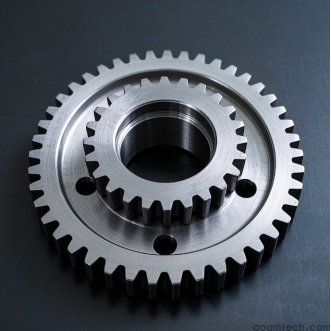
For example, automotive transmission components require very precise gear alignment. 5-axis machining ensures smooth operation and longer product life.
Reduced Setup Time
Traditional machining often requires multiple setups. However, 5-axis machines can complete most parts in a single setup, reducing time and cost.
This improves productivity significantly in high-volume manufacturing environments.
Complex Shape Machining
5-axis CNC machining allows the creation of free-form surfaces and organic shapes that are impossible with simpler machines.
For example, high-end consumer product housings—such as camera bodies or luxury device enclosures—use this technology to achieve smooth, modern designs.
Challenges in 5 - Axis CNC Precision Machining
Complex Programming
The challenges in 5 - axis CNC precision machining include advanced programming requirements. Engineers must understand geometry, tool movement, and collision prevention.
Even a small programming error can cause tool crashes or defective parts, making simulation software essential.
High-Cost Equipment and Maintenance
5-axis machines are expensive to purchase and maintain. They require advanced components, precise calibration, and regular servicing.
Many manufacturers balance costs by using machines efficiently or outsourcing complex jobs to specialized providers.
Skilled Labor Shortage
There is a global shortage of skilled CNC operators and programmers. Companies often invest in training programs to develop talent capable of handling advanced machines.
This challenge affects production speed and scalability in many manufacturing companies.
How to Choose a 5 - Axis CNC Precision Machining Service
Evaluate Experience and Reputation
When selecting a provider, check their experience in 5 - Axis CNC Precision Machining. Companies with proven case studies in aerospace or medical industries are often more reliable.
For example, a manufacturer with experience producing aircraft components for Boeing is likely to deliver high-quality precision parts.
Assess Equipment and Technology
Advanced machines and software are essential. Look for companies using modern 5-axis CNC systems and simulation tools that reduce errors and improve efficiency.
State-of-the-art equipment ensures better accuracy and faster production cycles.
Review Quality Management System
A strong quality system ensures consistent results. Certifications such as ISO 9001 demonstrate commitment to quality management standards.
Companies with strict inspection processes and traceability systems are more likely to deliver reliable results.
Conclusion: Leveraging 5 - Axis CNC Precision Machining
5 - Axis CNC Precision Machining is a powerful technology that supports modern manufacturing needs. It enables complex design creation, improves accuracy, reduces setup time, and enhances product performance.
However, it also comes with challenges such as high cost, complex programming, and skilled labor requirements. Choosing the right machining service is essential for success.
If you are working on high-precision or complex-shaped parts, now is the right time to explore professional 5 - axis CNC precision machining services and take advantage of this advanced manufacturing technology.
 Process of Custom High-Precisi
 CNC Machining Parameter Settin
 5 Key Tips for CNC Machining o
 Small-batch Precision Parts 5-