


CNC Machining Process of Titanium Alloy Parts
The CNC Machining Process of Titanium Alloy Parts plays a critical role in modern manufacturing industries where high performance, strength, and reliability are required. Titanium alloys are widely used because they combine low weight with excellent strength, corrosion resistance, and stability under high temperatures. However, these advantages also make them difficult to machine, which is why CNC (Computer Numerical Control) technology is essential for producing precise and complex titanium components.
Introduction to CNC Machining of Titanium Alloy Parts
CNC machining of titanium alloy parts is a manufacturing process where computer-controlled machines shape titanium into finished components based on digital designs. This process is used when high precision and tight tolerances are required.
The importance of the CNC Machining Process of Titanium Alloy Parts can be seen across industries such as aerospace, medical, automotive, and energy. In aerospace, titanium parts are used in aircraft engines and structural components to reduce weight while maintaining strength. In medical applications, titanium is used for implants and surgical tools due to its biocompatibility. Automotive and energy industries also rely on titanium parts for durability and performance in extreme environments.
Steps in CNC Machining of Titanium Alloy Parts
The manufacturing process follows several carefully controlled stages to ensure accuracy and quality. The steps in CNC machining of titanium alloy parts are essential for achieving reliable and high-performance components.
1. Design and Programming
The first step involves creating a detailed design using CAD (Computer-Aided Design) software. Engineers develop a 3D model of the titanium part based on functional requirements.
This model is then converted into CNC machine instructions using CAM (Computer-Aided Manufacturing) software. These instructions define tool paths, cutting speeds, feed rates, and machining strategies.
Accurate design and programming are essential because even small errors can lead to part failure, poor fit, or production delays.
2. Material Selection and Preparation
Choosing the right titanium alloy is critical. Different grades are used depending on the application. For example, Ti-6Al-4V is commonly used in aerospace due to its excellent balance of strength and flexibility.
Before machining, the material is cut into suitable sizes. In some cases, heat treatment such as annealing is applied to reduce internal stress and improve machinability.
Proper preparation ensures stability during machining and improves final product quality.
3. CNC Machining Operations
This stage includes multiple machining processes such as milling, turning, and drilling. Each process is carefully controlled to achieve high precision.
Milling
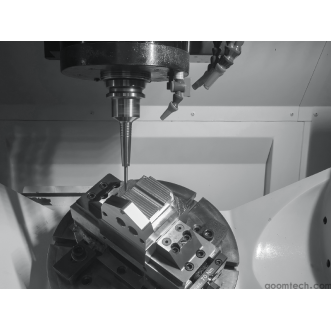
Milling is used to create flat surfaces, slots, and complex 3D shapes. Carbide end mills are commonly used due to their hardness and heat resistance.
Since titanium generates high heat during cutting, lower spindle speeds and optimized feed rates are used to reduce tool wear and overheating.
Turning
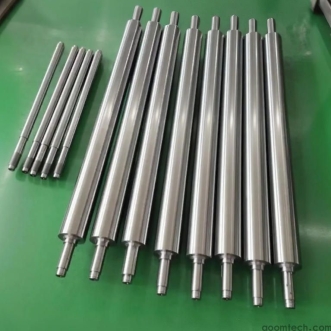
Turning is used to produce cylindrical parts such as shafts. Maintaining concentricity and surface finish is very important in this process.
Special coated carbide tools are used, and cutting parameters are carefully adjusted to avoid vibration and improve accuracy.
Drilling
Drilling is used to create precise holes in titanium parts. Cobalt-coated drill bits are often used due to their strength and heat resistance.
Controlled feed rates and spindle speeds help prevent tool damage and ensure clean hole edges.
4. Heat Treatment (Optional)
In some cases, heat treatment is applied after machining. Processes such as solution treatment and aging can improve hardness, strength, and fatigue resistance.
Careful control of heating and cooling rates is necessary to prevent distortion or cracking of the titanium part.
5. Finishing Operations
Finishing processes improve both performance and appearance. Common operations include:
Deburring to remove sharp edges
Shot peening to improve fatigue resistance
Anodizing for corrosion protection and surface enhancement
These finishing steps ensure that the final product meets both functional and aesthetic requirements.
Challenges in Machining Titanium Alloy Parts by CNC
The challenges in machining titanium alloy parts by CNC are mainly related to the material’s hardness, heat generation, and chip control. Understanding these challenges is important for achieving stable production.
Tool Wear and Breakage
Titanium alloys are tough and tend to cause rapid tool wear. In some cases, tools may break due to high cutting stress.
To reduce this problem, manufacturers use high-quality carbide tools with advanced coatings. Tool condition is monitored regularly, and machining paths are optimized to reduce stress on cutting edges.
Heat Generation and Dimensional Stability
Machining titanium produces significant heat, which can affect dimensional accuracy. If not controlled, parts may expand during cutting and shrink after cooling, leading to errors.
Effective coolant systems and optimized cutting speeds are used to control temperature. Cooling intervals may also be introduced during long machining cycles.
Chip Evacuation
Titanium often produces long, sticky chips that can interfere with machining. These chips may wrap around tools and reduce cutting efficiency.
High-pressure coolant systems and chip-breaking tool designs help remove chips effectively and maintain smooth operation.
Quality Control in CNC Machining of Titanium Alloy Parts
Quality control in CNC machining of titanium alloy parts is essential to ensure that every component meets strict industrial standards. Inspection is carried out at multiple stages of production.
In-Process Inspection
During machining, operators regularly check dimensions, surface finish, and tool conditions. Common tools include calipers, micrometers, and surface roughness testers.
If any deviation is detected, machining parameters are adjusted immediately to correct the issue.
Final Inspection Criteria
After machining is completed, parts undergo detailed inspection. Coordinate Measuring Machines (CMM) are often used to verify dimensions with high accuracy.
Tolerances, surface quality, and geometric accuracy are checked carefully. Non-conforming parts are either reworked or rejected.
All inspection data is recorded to ensure traceability and compliance with quality standards.
Material and Mechanical Property Testing
In addition to dimensional checks, material testing is also performed. This ensures that the titanium alloy maintains its required mechanical properties.
Common tests include:
Hardness testing to verify strength
Tensile testing to measure durability
Microstructure analysis to confirm material consistency
These tests help ensure that the final parts perform reliably in real-world applications.
Conclusion
The CNC Machining Process of Titanium Alloy Parts is a highly advanced manufacturing method that requires precision, control, and expertise. From design and programming to final inspection, every step must be carefully managed to achieve high-quality results.
Although titanium is difficult to machine due to its hardness and heat sensitivity, modern CNC technology makes it possible to produce complex, high-performance components for demanding industries.
By understanding the steps in CNC machining of titanium alloy parts, recognizing the challenges in machining titanium alloy parts by CNC, and applying strict quality control in CNC machining of titanium alloy parts, manufacturers can ensure reliable performance and long service life of titanium components.
 Process of Custom High-Precisi
 CNC Machining Parameter Settin
 5 Key Tips for CNC Machining o
 Small-batch Precision Parts 5-