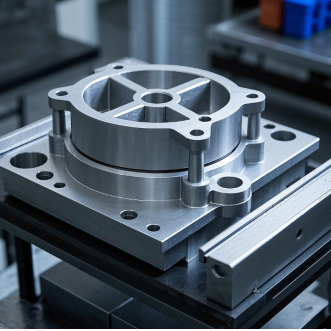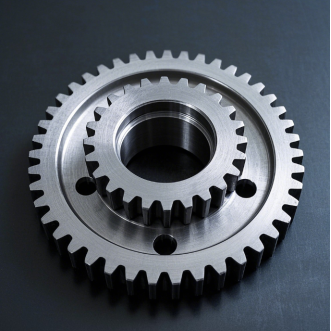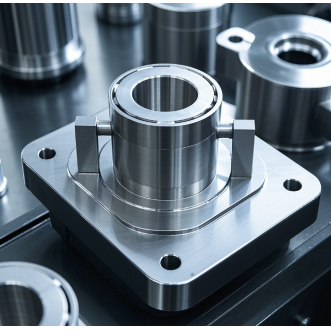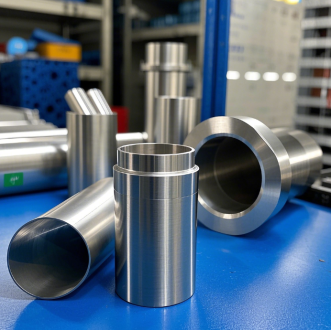
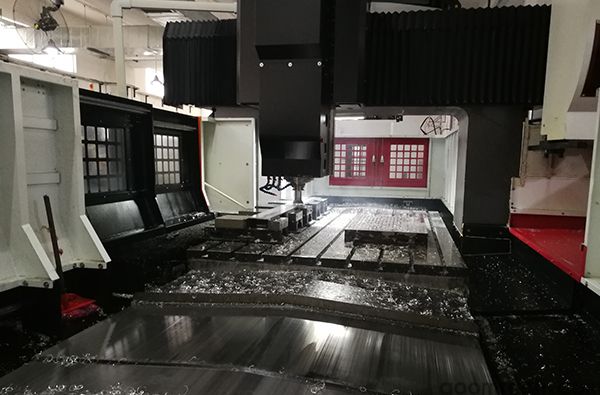
CNC Large Part Machining Services
Introduction to CNC Large Part Machining Services
CNC Large Part Machining Services refer to the precision manufacturing process used to produce oversized components with computer-controlled machines. CNC (Computer Numerical Control) technology allows manufacturers to shape, cut, drill, and finish large materials with extremely high accuracy.
These services are essential in industries where large-scale, high-strength, and high-precision parts are required. Typical applications include heavy machinery, construction equipment, transportation systems, energy infrastructure, and aerospace structures. Without CNC machining, producing such large and complex components consistently and accurately would be extremely difficult and costly.
The Significance of CNC Large Part Machining Services
The importance of CNC Large Part Machining Services lies in their ability to deliver precision at scale. Large components must not only be strong but also meet strict dimensional tolerances. Even a small error in machining can lead to performance issues, safety risks, or assembly failures.
For example, in the energy sector, large turbine components must operate under extreme pressure and temperature conditions. In construction, structural steel or aluminum parts must fit perfectly into large assemblies. In aerospace, oversized structural frames must balance weight reduction with extreme durability. CNC machining ensures these requirements are met consistently.
By using automation and digital control, manufacturers reduce human error, improve repeatability, and maintain stable quality across production batches.
The Process of CNC Large Part Machining
Design and Planning
The process of CNC large part machining services begins with detailed engineering design. Engineers create 3D models using CAD (Computer-Aided Design) software to define the exact shape, size, and functional requirements of the part.
During this stage, engineers consider material behavior, load distribution, stress points, and manufacturability. For large components, even small design mistakes can lead to expensive rework. Therefore, simulation and verification are often performed before production begins.
After design approval, process planning defines machining steps, tool paths, and production sequences. This ensures the part is manufactured efficiently and accurately from start to finish.
Material Selection and Preparation
Material selection plays a critical role in CNC large part machining. Common materials include high-strength steel, aluminum alloys, titanium, and engineering composites.
The choice depends on factors such as strength requirements, corrosion resistance, weight limitations, and cost efficiency. For example, aluminum alloys are often used in aerospace for weight reduction, while steel is preferred in construction for its durability.
Once selected, raw materials are cut into manageable sizes and prepared for machining. In some cases, heat treatment is applied to improve hardness or mechanical performance before machining begins.
CNC Machining Operations
Milling
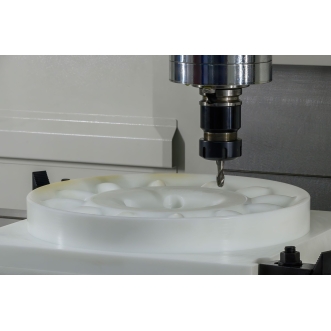
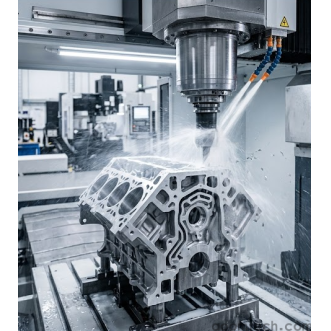
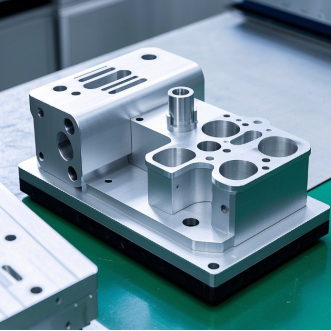
Milling is one of the most common operations in large part machining. A rotating cutting tool removes material from the workpiece to create flat surfaces, slots, holes, and complex geometries.
Large components require heavy-duty CNC milling machines with high-power spindles and rigid structures. Tool selection is crucial, with carbide end mills often used for efficiency and durability. Cutting parameters such as spindle speed, feed rate, and depth of cut must be carefully controlled to prevent vibration and tool wear.
Turning
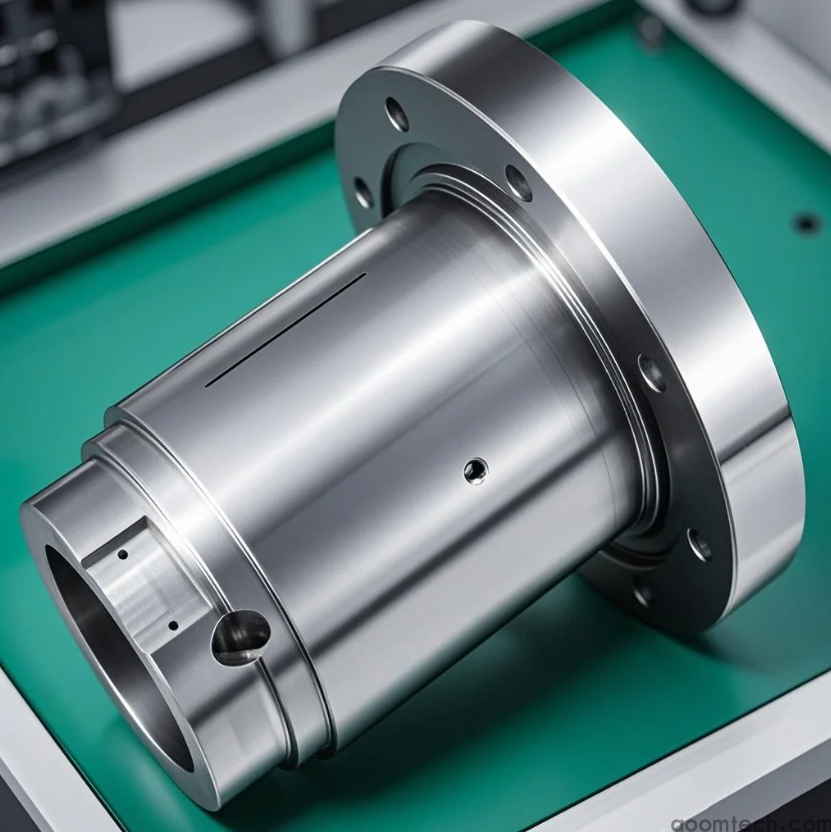
Turning is used for cylindrical large parts such as shafts, rollers, and structural pipes. The workpiece rotates while a cutting tool shapes its surface.
Heavy-duty CNC lathes are required for large-scale turning operations. Maintaining concentricity and surface finish is critical, especially for components used in construction machinery or energy systems.
Drilling and Boring
Drilling creates precise holes, while boring refines or enlarges them to exact dimensions. In large part machining, accuracy in hole placement is essential for assembly and structural integrity.
Advanced drilling and boring systems ensure deep-hole accuracy and alignment, especially in large equipment used in energy generation or industrial machinery.
Quality Control
Quality assurance is a vital part of CNC Large Part Machining Services. Because large components are expensive and often safety-critical, strict inspection processes are required.
In-process inspections monitor dimensions, tool wear, and surface quality during machining. Final inspections are performed using advanced tools such as Coordinate Measuring Machines (CMMs) and laser scanning systems.
These technologies ensure that every dimension meets design specifications. Non-conforming parts are identified early to avoid costly production failures.
Key Considerations in CNC Large Part Machining
Machine Capacity and Capability
One of the most important key considerations in CNC large part machining is machine capability. Machines must be large enough to handle oversized components while maintaining stability and precision.
Key factors include working envelope size, spindle power, and load-bearing capacity. A machine must be strong enough to support heavy materials without vibration or deformation during machining.
Tooling and Fixturing
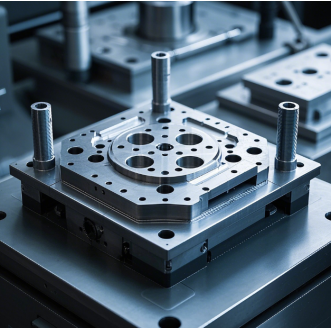
Proper tooling and fixturing are essential for accuracy and efficiency. Large parts require custom fixtures that securely hold the workpiece in place throughout machining.
Well-designed fixtures reduce vibration, improve stability, and ensure consistent machining results. Tool selection must also match the material and machining requirements to maximize performance and tool life.
Cost-effectiveness
CNC large part machining can be expensive due to material size, machine requirements, and long processing times. However, cost optimization is possible through smart planning.
Design optimization, efficient toolpath programming, and material selection can significantly reduce costs. Using reusable fixtures and minimizing unnecessary machining steps also improves cost efficiency.
How to Choose a CNC Large Part Machining Service Provider
Experience and Expertise
When choosing a CNC large part machining service provider, experience is one of the most important factors. Providers with proven expertise in large-scale machining understand the challenges of handling heavy and complex components.
It is recommended to review past projects, industry experience, and technical capabilities. A skilled engineering team ensures better problem-solving and higher production reliability.
Quality Assurance System
A strong quality assurance system ensures consistent product performance. Reliable providers follow standardized quality management systems such as ISO 9001, which is recognized internationally for quality control standards.
Good providers offer full inspection reports, traceability documentation, and strict process monitoring. This ensures that every part meets required specifications before delivery.
Communication and Customer Service
Clear communication is essential for successful project execution. A professional machining provider maintains regular updates, responds quickly to inquiries, and provides technical guidance throughout the process.
Good customer service ensures that design changes, technical issues, or production adjustments are handled efficiently without delays or misunderstandings.
Conclusion
CNC Large Part Machining Services play a vital role in modern manufacturing industries that depend on large, precise, and durable components. From design and material selection to machining and quality control, every stage requires careful planning and advanced technology.
Understanding the process of CNC large part machining services, the key considerations in CNC large part machining, and the importance of choosing a CNC large part machining service provider helps businesses make informed decisions and achieve better manufacturing outcomes.
By selecting the right partner and applying proper engineering practices, companies can ensure high-quality results, improved efficiency, and long-term cost savings in large-scale production.
RELATED PRODUCTS
-
Medical Brass CNC Machining Parts
-
Precision CNC Machining PEEK Services
-
Precision Custom CNC Machined Car Parts
-
cnc machining optical housings
-
Precision CNC Casting Machining Services
-
Precision Gear CNC Machining Services
-
Precision Stainless Steel Parts CNC Mach
-
CNC Machining of Precision Aluminum Tube
-
CNC Machining of Large Precision Aluminu
-
CNC Machining & Manufacturing of Pre