CNC Machining Service for Copper Blocks
Introduction to CNC Machining Service for Copper Blocks
A CNC Machining Service for Copper Blocks is a professional manufacturing process that uses computer-controlled machines to shape copper materials into precise block components. These copper blocks are widely used in industries such as electronics, electrical engineering, automotive, and industrial manufacturing.
Copper is highly valued for its excellent thermal and electrical conductivity, corrosion resistance, and good malleability. Because of these properties, copper blocks are commonly used in heat dissipation systems, electrical conduction components, and precision mechanical parts.
For example, in high-performance computers, a copper heat sink block helps transfer heat away from the processor. In power distribution systems, copper busbar blocks efficiently carry large electrical currents with minimal energy loss.
The Significance of Copper Blocks in Industry
Copper blocks play a critical role in modern engineering systems. Their performance directly affects the efficiency, safety, and reliability of many devices and machines.
Electronics: Copper blocks are used as heat sinks to manage thermal loads in CPUs, GPUs, and power modules.
Electrical systems: They serve as busbars that distribute electricity in substations and switchgear.
Manufacturing: Copper blocks are used in molds and tooling systems due to their thermal stability.
Energy systems: They support heat exchange and electrical conduction in renewable energy equipment.
Without properly manufactured copper blocks, systems may suffer from overheating, energy loss, poor electrical contact, or mechanical failure.
Importance of CNC Machining for Copper Blocks
Precision Manufacturing
CNC machining allows copper blocks to be produced with extremely high precision. Many applications require tight tolerances to ensure proper assembly and performance. Even small dimensional errors can lead to overheating, inefficient conductivity, or mechanical misalignment.
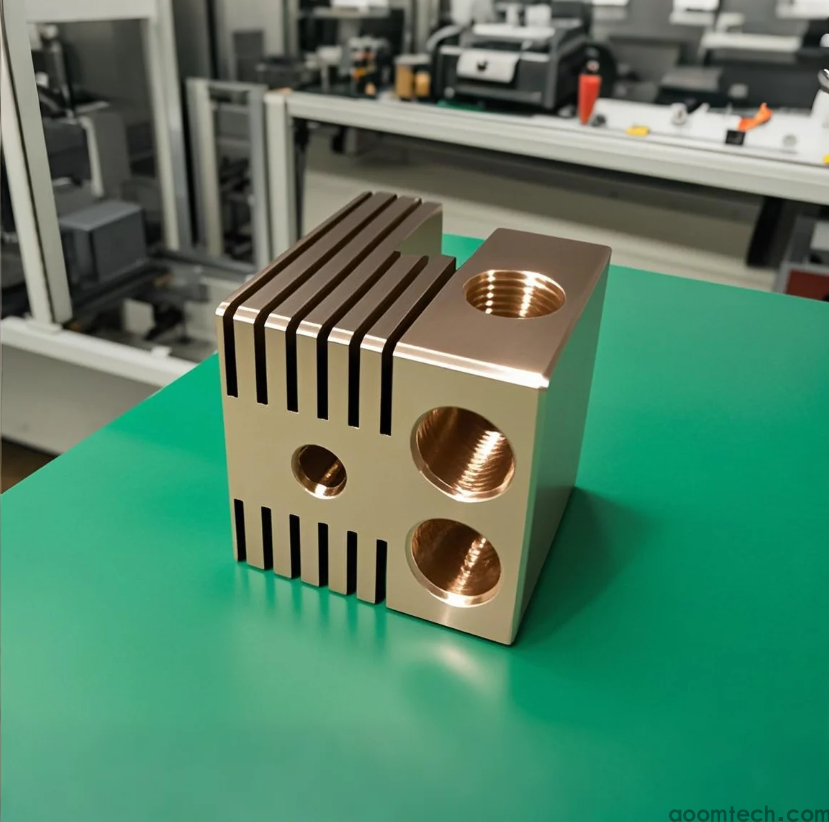
For example, in a heat sink application, the fins and mounting holes must be precisely machined to ensure maximum heat transfer and secure installation. Poor accuracy may reduce cooling efficiency and damage sensitive electronic components.
Customization for Diverse Applications
One of the key advantages of CNC machining is flexibility. Each industry has unique requirements for copper block shape, size, and internal structure.
Examples include copper blocks with:
Internal channels for liquid cooling systems in high-power LED devices
Special surface geometries for improved electrical contact in connectors
Complex 3D structures for advanced thermal management systems
This flexibility makes CNC machining ideal for both prototype development and mass production.
Cost-Effectiveness in Batch Production
Once a CNC program is created, it can be reused to produce identical copper blocks in large quantities. This improves production efficiency and reduces cost per unit.
In batch manufacturing, automation reduces labor requirements, improves material usage, and minimizes waste. As a result, CNC machining becomes highly cost-effective for medium and large production runs.
CNC Machining Processes for Copper Blocks
Milling
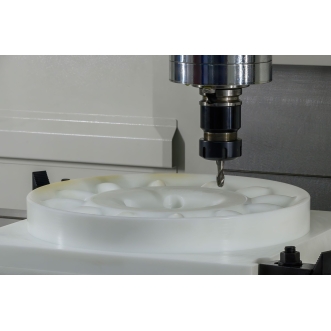
CNC milling is one of the most common methods used in copper block manufacturing. A rotating cutting tool removes material from a copper workpiece to create flat surfaces, grooves, holes, and complex 3D shapes.
Because copper is relatively soft, machining parameters must be carefully controlled. Proper spindle speed, feed rate, and depth of cut are essential to avoid tool wear and achieve a smooth surface finish.
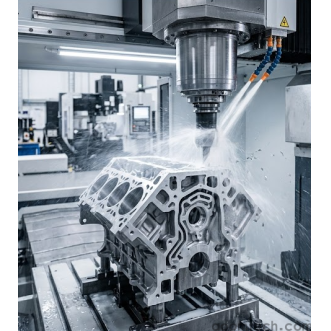
Copper often produces long, stringy chips during milling. To solve this, manufacturers use chip-breaking tools and effective coolant systems to maintain clean and efficient machining conditions.
Long-tail keyword: CNC milling for copper blocks requires optimized tool selection and cutting conditions to ensure precision and surface quality.
Drilling
Drilling is used to create accurate holes in copper blocks for mounting, fluid channels, or electrical connections. Precision is extremely important because even slight misalignment can affect assembly and performance.
Special drill bits designed for soft metals are often used to reduce chip clogging and improve hole accuracy. Coolant also plays a key role in preventing overheating and tool damage.
Turning (When Applicable)
Although copper blocks are typically prismatic, some features may require turning operations. Turning is used to create cylindrical shapes, rounded edges, or internal circular features.
Maintaining concentricity and surface smoothness is essential, especially in applications involving fluid flow or rotational assembly parts.
Types of Copper Used in Block CNC Machining
Pure Copper
Pure copper offers excellent electrical and thermal conductivity, making it ideal for high-performance applications. However, its softness can create machining challenges such as tool deflection and poor chip control.
To overcome these issues, manufacturers use sharp cutting tools, proper coolant systems, and optimized machining parameters.
Long-tail keyword: types of copper in block CNC machining often start with pure copper for maximum conductivity performance.
Copper Alloys
Copper alloys provide improved mechanical properties compared to pure copper.
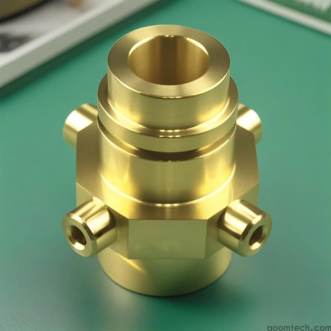
Brass (Copper-Zinc): Offers good machinability and corrosion resistance. Commonly used in plumbing and general engineering parts.
Bronze (Copper-Tin): Provides high wear resistance and strength, suitable for heavy-duty mechanical components.
These alloys are often selected when strength and durability are more important than maximum conductivity.
Challenges in CNC Machining Copper Blocks
Chip Formation and Control
Copper tends to produce long, continuous chips that can wrap around tools or clog machines. This can reduce machining efficiency and damage the workpiece.
Solutions include chip-breaking tools, optimized feed rates, and strong coolant flow to remove chips effectively.
Tool Wear
Although copper is soft, continuous machining can still cause tool wear. Poor parameter selection can accelerate this issue.
High-quality carbide tools and regular tool inspection are essential to maintain consistent machining performance and accuracy.
Surface Finish Quality
Achieving a smooth surface finish is critical, especially in thermal and electrical applications. Rough surfaces can reduce contact efficiency and performance.
Post-processing techniques such as polishing or fine abrasive finishing are often used to improve surface quality.
Choosing a CNC Machining Service Provider for Copper Blocks
Technical Expertise
When selecting a provider for CNC copper block machining, technical knowledge is essential. The manufacturer should understand copper material behavior, machining parameters, and application-specific requirements.
Evaluating case studies, sample parts, and engineering capability can help determine whether the provider is suitable for your project.
Quality Assurance System
A reliable provider should have strict quality control processes. This includes in-process inspection and final product testing using tools such as calipers, micrometers, and surface roughness testers.
A strong quality system ensures consistency, accuracy, and compliance with technical specifications.
Cost-Effectiveness and Lead Time
Cost is important, but it should be balanced with quality and reliability. The best providers offer competitive pricing without compromising precision or material performance.
Lead time is also critical, especially for industrial production schedules. A dependable supplier should be able to meet deadlines consistently.
Long-tail keyword: choosing a provider for CNC copper block machining requires balancing precision, cost, and delivery performance.
Conclusion
A CNC Machining Service for Copper Blocks is essential for producing high-precision components used in thermal management, electrical systems, and industrial manufacturing. From CNC milling for copper blocks to drilling and finishing, every step requires careful control to ensure performance and reliability.
Understanding the types of copper in block CNC machining, managing production challenges, and selecting the right manufacturing partner are key to achieving high-quality results. With proper engineering and machining expertise, copper blocks can deliver outstanding conductivity, durability, and efficiency across a wide range of applications.
RELATED PRODUCTS
-
Medical Brass CNC Machining Parts
-
Precision CNC Machining PEEK Services
-
Precision Custom CNC Machined Car Parts
-
cnc machining optical housings
-
Precision CNC Casting Machining Services
-
Precision Gear CNC Machining Services
-
Precision Stainless Steel Parts CNC Mach
-
CNC Machining of Precision Aluminum Tube
-
CNC Machining of Large Precision Aluminu
-
CNC Machining & Manufacturing of Pre