Roller CNC Machining Services
Introduction to Roller CNC Machining Services
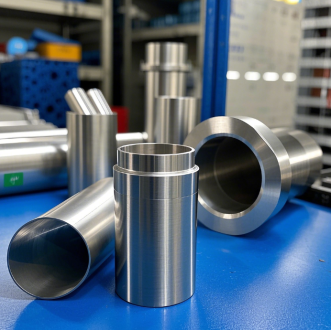
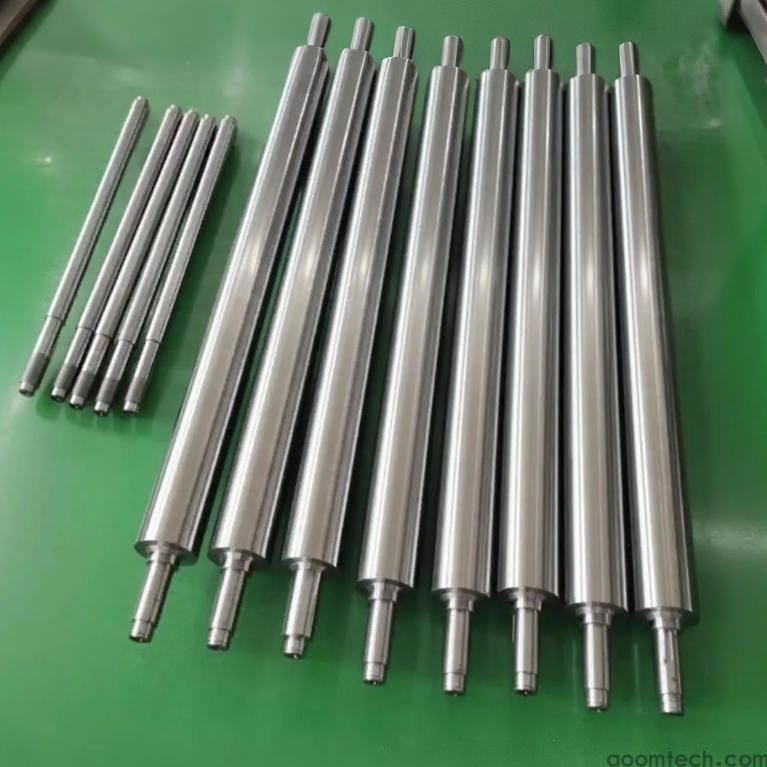
Rollers are widely used mechanical components found in many industrial systems that rely on smooth movement, load support, and continuous material handling. Roller CNC Machining Services refer to the use of computer numerical control (CNC) technology to manufacture rollers with high precision, consistency, and repeatability.
These services are essential for industries such as manufacturing, printing, logistics, packaging, and material handling. Whether it is a conveyor system moving goods in a warehouse or a printing press transferring ink onto paper, rollers play a critical role in ensuring stable and efficient operation.
The Significance of Rollers in Industrial Applications
Rollers are fundamental components that support and guide movement in mechanical systems. Their main functions include reducing friction, carrying loads, and ensuring controlled motion. Without properly designed rollers, many industrial systems would suffer from instability, inefficiency, and frequent breakdowns.
Common types of rollers include:
Conveyor rollers – used in warehouses and production lines to transport goods efficiently.
Printing press rollers – used to transfer ink evenly onto paper or other materials.
Idler rollers – used in belt systems to guide and support conveyor belts.
Each type requires specific dimensional accuracy and surface quality to function correctly in its intended environment.
Importance of Roller CNC Machining Services
Precision Manufacturing
One of the main advantages of Roller CNC Machining Services is high precision. Rollers must meet strict requirements in diameter, length, roundness, and surface finish. Even small deviations can lead to vibration, uneven wear, or system misalignment.
CNC technology ensures that every roller is manufactured with consistent accuracy. This level of precision helps prevent operational issues such as product damage in conveyor systems or poor print quality in printing machines.
Customization for Diverse Applications
Different industries require different roller designs. CNC turning for rollers allows manufacturers to create customized geometries, surface textures, and material configurations based on specific needs.
For example, a food processing line may require stainless steel rollers with corrosion resistance and hygienic surfaces, while a packaging system may need rubber-coated rollers for better grip. CNC machining makes it possible to produce all these variations efficiently.
Cost-Effectiveness in Batch Production
When producing large quantities, Roller CNC Machining Services become highly cost-effective. Once the CNC program is set, machines can repeatedly produce identical rollers with minimal variation.
This reduces labor costs, shortens setup time, and improves production efficiency. For example, manufacturing hundreds of conveyor rollers for a logistics center can be completed with consistent quality at a lower unit cost compared to traditional manual machining methods.
CNC Machining Processes for Rollers
Turning
Turning is the primary process used in roller manufacturing. In this process, the workpiece rotates while a cutting tool removes excess material to form a cylindrical shape. This is the foundation of CNC turning for rollers.
Cutting parameters such as spindle speed, feed rate, and depth of cut must be carefully adjusted depending on the material. Steel rollers require different settings compared to aluminum or plastic rollers. Proper tool selection is also essential to achieve accurate dimensions and smooth surface finishes.
Grinding
Grinding is used to achieve final dimensional accuracy and surface smoothness. It is especially important for applications like printing rollers, where surface quality directly affects performance.
Different grinding wheels are selected based on material type. The process ensures high concentricity, tight tolerances, and low surface roughness, which are critical for high-speed industrial applications.
Drilling and Boring
Some rollers require internal features such as mounting holes or shaft connections. Drilling is used to create new holes, while boring is used to enlarge or refine existing ones.
These operations require careful alignment to ensure proper installation and smooth operation in mechanical systems. Inaccurate hole placement can lead to imbalance or mechanical failure during operation.
Materials for CNC-Machined Rollers
Metals
Metals are widely used in roller manufacturing due to their strength and durability.
Steel – offers high strength and is suitable for heavy-duty conveyor systems.
Aluminum – lightweight and corrosion-resistant, ideal for high-speed or low-load applications.
Stainless steel – excellent corrosion resistance, commonly used in food, medical, and chemical industries.
Each metal has different machining characteristics. For example, steel requires stronger cutting tools, while aluminum allows faster machining speeds.
Plastics and Composites
In addition to metals, many rollers are made from engineering plastics and composites.
Nylon – provides good wear resistance and smooth operation.
Polyurethane – offers excellent abrasion resistance and grip.
Polyethylene – lightweight and cost-effective for general applications.
Composite materials, such as carbon-fiber-reinforced polymers, are also used when high strength and reduced weight are required.
Challenges in Roller CNC Machining
Tool Wear
Machining rollers, especially from hard metals, can cause significant tool wear. This affects accuracy and increases production costs. To solve this, manufacturers often use carbide-coated tools and monitor tool condition regularly.
Heat Generation
Excess heat during machining can cause dimensional distortion and reduce tool life. Effective coolant systems and optimized cutting speeds are essential to control temperature during production.
Maintaining Dimensional Accuracy
Rollers must maintain strict tolerances along their entire length. Long cylindrical shapes can be difficult to control during machining. Advanced measuring tools such as laser gauges and micrometers are often used for real-time inspection.
Choosing a Provider for Roller CNC Machining Services
Technical Expertise
When selecting a provider for choosing a provider for roller CNC machining services, technical knowledge is critical. A reliable manufacturer should have experience with different materials, machining techniques, and roller applications across industries.
Reviewing case studies and sample products can help evaluate their capabilities and consistency.
Quality Assurance Systems
A strong quality control system ensures that every roller meets required standards. This includes in-process inspections, final measurements, and surface quality testing using precision instruments such as surface roughness testers and coordinate measuring machines.
Effective quality assurance reduces the risk of defects and ensures long-term performance in real-world applications.
Cost and Delivery Performance
While cost is important, it should not compromise quality. Comparing multiple suppliers helps identify the best balance between price and performance. Equally important is delivery reliability, especially for large-scale production projects where delays can disrupt operations.
Conclusion
Roller CNC Machining Services play a vital role in modern industrial manufacturing by delivering high-precision, durable, and application-specific rollers. Through advanced processes such as CNC turning, grinding, and precision drilling, manufacturers can meet strict industry demands across multiple sectors.
By selecting the right materials for CNC-machined rollers and partnering with a skilled and reliable machining provider, businesses can improve equipment performance, reduce downtime, and enhance overall production efficiency.
RELATED PRODUCTS
-
Medical Brass CNC Machining Parts
-
Precision CNC Machining PEEK Services
-
Precision Custom CNC Machined Car Parts
-
cnc machining optical housings
-
Precision CNC Casting Machining Services
-
Precision Gear CNC Machining Services
-
Precision Stainless Steel Parts CNC Mach
-
CNC Machining of Precision Aluminum Tube
-
CNC Machining of Large Precision Aluminu
-
CNC Machining & Manufacturing of Pre