CNC Machining for Aerospace Parts
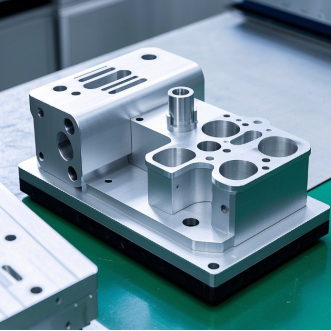
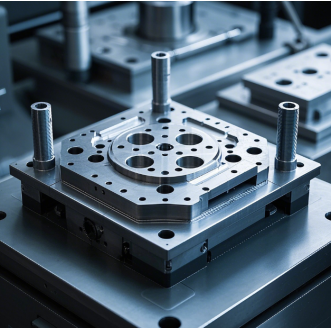
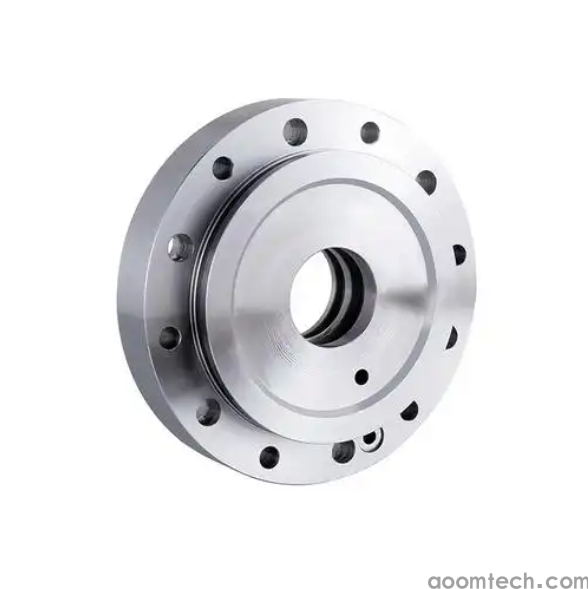
CNC Machining for Aerospace Parts plays a critical role in modern aviation and space exploration. Aircraft and spacecraft depend on components that are extremely precise, lightweight, and strong. Even a tiny manufacturing error can affect safety, fuel efficiency, or performance. This is why CNC (Computer Numerical Control) machining has become one of the most important production methods in the aerospace industry.
The Significance of Aerospace Parts
Aerospace parts are the building blocks of aircraft, satellites, and spacecraft. They are used in engines, wings, landing gear, control systems, and structural frames. Without these parts, safe flight would not be possible.
The aerospace industry continues to evolve through organizations such as and manufacturers like and . These companies rely heavily on advanced manufacturing methods to ensure every part meets strict safety and performance standards.
CNC machining has become essential because it allows manufacturers to produce complex and highly accurate parts consistently, supporting the high demands of aerospace engineering.
Unique Requirements of CNC Machining for Aerospace Parts
Extreme Precision and Tolerances
Aerospace parts require extremely tight tolerances, often measured in microns. Even small deviations can impact aerodynamic performance or structural safety. For example, turbine blades must be manufactured with very high precision to ensure smooth airflow and efficient engine operation.
CNC machines achieve this level of accuracy through computer-controlled toolpaths, stable machining environments, and advanced feedback systems. This makes them ideal for producing mission-critical aerospace components.
High-Strength and Lightweight Materials
Aerospace parts must be both strong and lightweight to improve fuel efficiency and performance. Common materials include titanium, aluminum alloys, and carbon-fiber composites.
These materials require special machining strategies. For example, titanium needs slower cutting speeds and high-performance cooling systems, while aluminum allows faster machining with high-speed tools. Carbon fiber requires careful handling to avoid delamination or fiber damage.
This is a key part of material selection for aerospace CNC parts, where engineers must balance performance, cost, and manufacturability.
Complex Geometries
Aerospace components often feature complex shapes such as airfoils, turbine blades, engine casings, and structural brackets. These shapes are designed to reduce weight while maximizing strength and aerodynamic efficiency.
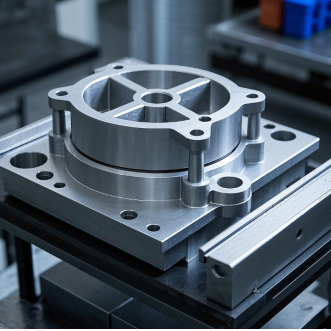
Multi-axis CNC machines (3-axis, 4-axis, and 5-axis) make it possible to produce these complex geometries in a single setup. This reduces errors and improves consistency across production batches.
The CNC Machining Process for Aerospace Parts
Design and Programming
The process begins with CAD (Computer-Aided Design), where engineers create a detailed 3D model of the part. The design considers aerodynamics, stress distribution, and material behavior.
Next, CAM (Computer-Aided Manufacturing) software converts the design into machine instructions. These instructions define toolpaths, cutting speeds, feed rates, and depth of cut. A small programming error can result in defective parts, making this stage extremely important.
Machine Setup and Tooling
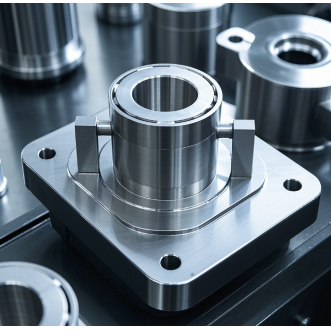
Before machining begins, CNC machines must be carefully calibrated. High-precision fixtures are used to secure the workpiece firmly and prevent movement during cutting.
Tool selection is also critical. Aerospace machining often uses carbide end mills, drills, and turning tools designed for durability and precision. Machine settings such as spindle speed and feed rate must match both the material and the part design.
Machining Operations
Milling
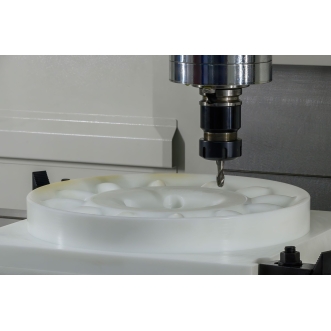
Milling is used to create flat surfaces, slots, and complex 3D shapes. Ball-nose end mills are often used for curved surfaces like turbine blades. Proper chip removal and cutting parameter control are essential for achieving a smooth finish and accurate dimensions.
Turning
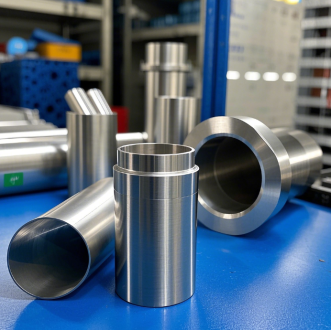
Turning is used for cylindrical parts such as shafts and connectors. The workpiece rotates while the cutting tool removes material. Achieving concentricity and surface quality requires stable feed rates and precise tool alignment.
Drilling
Drilling creates holes used for fastening and assembly. In aerospace manufacturing, hole accuracy is critical because even slight deviations can affect structural integrity. Correct drill selection and controlled cutting speeds help prevent defects and tool breakage.
Material Considerations for Aerospace Parts
Titanium and Its Alloys
Titanium is widely used due to its high strength-to-weight ratio, corrosion resistance, and heat resistance. However, it is difficult to machine because of low thermal conductivity and high strength.
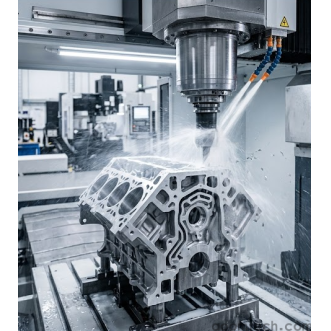
Machining titanium requires slow cutting speeds, rigid setups, and high-pressure coolant systems to prevent tool wear and overheating.
Aluminum Alloys
Aluminum alloys are popular in aerospace because they are lightweight and easier to machine. High-speed machining techniques are commonly used to improve efficiency and surface quality.
Different aluminum grades are selected depending on whether strength, corrosion resistance, or machinability is the priority.
Carbon-Fiber Composites
Carbon-fiber composites are increasingly used in aircraft structures due to their strength and low weight. However, machining them requires specialized tools and controlled cutting conditions.
Diamond-coated tools are often used to reduce wear and prevent damage such as fiber pull-out or delamination.
Quality Control in CNC Machining of Aerospace Parts
In-Process Inspection
Quality control in CNC machining of aerospace parts begins during production. Measurements are taken throughout machining using precision instruments such as calipers, optical systems, and surface roughness testers.
If deviations are detected, operators can adjust toolpaths or cutting parameters immediately to correct errors before completion.
Final Inspection
After machining, each part undergoes strict inspection. Coordinate Measuring Machines (CMM), ultrasonic testing, and X-ray inspection are commonly used to verify accuracy and structural integrity.
Non-conforming parts are either reworked or rejected depending on severity. This strict process ensures only safe and reliable components are used in aerospace systems.
The Impact of CNC Machining on the Aerospace Industry
Enhanced Performance and Safety
CNC machining has significantly improved the safety and performance of aircraft and spacecraft. High precision ensures that components fit and function correctly under extreme conditions.
Reliable manufacturing supports better fuel efficiency, reduced maintenance costs, and improved structural safety.
Innovation and Design Freedom
CNC technology enables engineers to design highly complex and efficient aerospace components that were previously impossible to manufacture. This includes lightweight structures, advanced engine parts, and optimized aerodynamic surfaces.
As a result, aerospace innovation continues to grow, supported by the precision and flexibility of CNC machining systems.
Conclusion: Mastering CNC Machining for Aerospace Parts
CNC Machining for Aerospace Parts is a foundation of modern aerospace manufacturing. It combines precision engineering, advanced materials, and strict quality control to produce components that meet the highest safety standards.
Key takeaways include the importance of tight tolerances, careful material selection for aerospace CNC parts, advanced multi-axis machining, and strict inspection processes. Together, these factors ensure reliable and high-performance aerospace systems.
For professionals in the industry, continuous learning and adaptation to new machining technologies and aerospace standards are essential for long-term success.
RELATED PRODUCTS
-
Medical Brass CNC Machining Parts
-
Precision CNC Machining PEEK Services
-
Precision Custom CNC Machined Car Parts
-
cnc machining optical housings
-
Precision CNC Casting Machining Services
-
Precision Gear CNC Machining Services
-
Precision Stainless Steel Parts CNC Mach
-
CNC Machining of Precision Aluminum Tube
-
CNC Machining of Large Precision Aluminu
-
CNC Machining & Manufacturing of Pre