CNC Machining for Automotive Parts
CNC Machining for Automotive Parts plays a critical role in the modern automotive industry. Today’s vehicles require components that are highly precise, durable, and consistent in quality. CNC (Computer Numerical Control) machining makes it possible to produce these complex parts with high accuracy and repeatability. From engine systems to braking components, CNC technology supports almost every major area of automotive manufacturing.
This article explains the CNC machining process for automotive parts, including its importance, materials, production steps, advantages, and quality control methods. The goal is to help readers clearly understand how CNC machining contributes to safe and efficient vehicles.
The Role of CNC Machining in the Automotive Industry
The automotive industry depends on parts that must perform reliably under stress, heat, vibration, and long-term use. Even small errors in manufacturing can lead to serious performance or safety problems. CNC machining solves this challenge by producing parts with very tight tolerances and excellent repeatability.
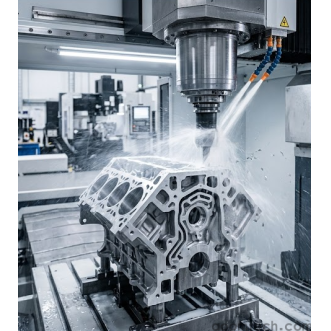
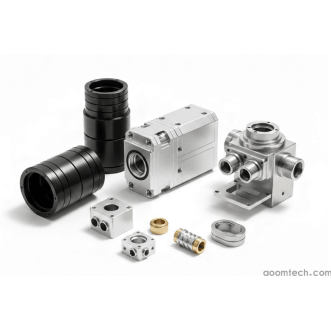
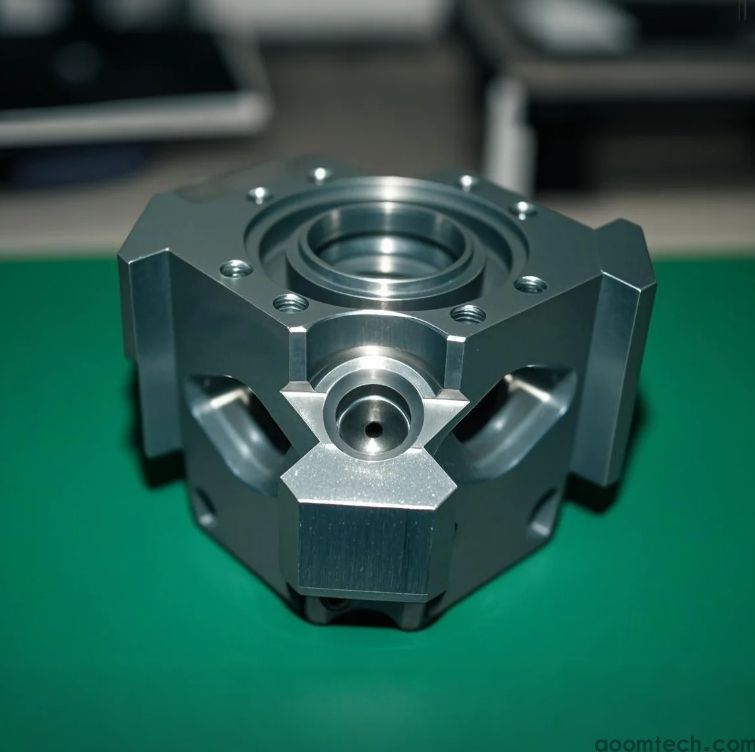
Examples of CNC-machined automotive components include engine blocks, pistons, cylinder heads, transmission gears, brake calipers, suspension parts, and steering components. These parts must fit perfectly and work smoothly together. CNC machining ensures that each component meets strict design requirements, improving vehicle performance, fuel efficiency, and safety.
The CNC Machining Process for Automotive Parts
Design Phase
The process begins with design. Engineers use CAD (Computer-Aided Design) software to create 3D models of automotive parts. These digital models define every dimension, curve, and feature of the part.
At this stage, designers consider the function of the part, load conditions, and how it will interact with other components in the vehicle. Precision is extremely important. A small design mistake can cause assembly issues or part failure. For example, an incorrectly designed piston may reduce engine compression efficiency or cause long-term engine damage.
Material Selection
Material selection in automotive part CNC machining is a key step that directly affects performance and durability. Automotive parts require materials that can handle stress, heat, and corrosion while remaining cost-effective.
Common materials include:
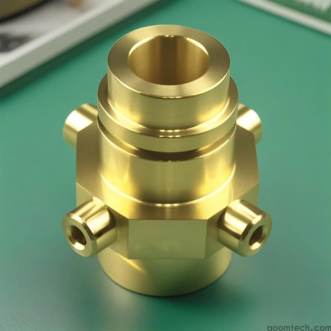
Aluminum – Lightweight, good heat dissipation, often used in engine components and housings.
Steel – High strength and durability, used for axles, gears, and structural parts.
Titanium – Extremely strong and lightweight, used in high-performance or racing applications.
Engineering plastics – Used for non-structural or lightweight interior and functional parts.
Different materials require different machining strategies. For example, steel needs slower cutting speeds and stronger tools, while aluminum allows faster machining but requires careful heat control to avoid surface deformation.
CNC Programming
Once the design is complete, it is converted into a CNC program using CAM (Computer-Aided Manufacturing) software. This program contains detailed instructions for the machine, including toolpaths, cutting speed, feed rate, and cutting depth.
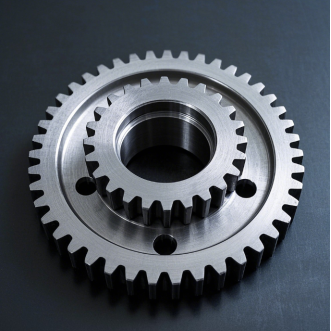
Accurate programming is essential. If toolpaths are incorrect, the machine may remove too much or too little material. In automotive gear production, even a small error can affect gear alignment, causing noise, vibration, or failure during operation.
Machine Setup and Tooling
Before machining begins, the CNC machine must be properly set up. This includes selecting cutting tools, installing fixtures, and securing the raw material.
Tool selection depends on the material and required operation. Carbide tools are commonly used for hard materials due to their wear resistance. Machine settings such as spindle speed and feed rate must match the CNC program.
Proper setup ensures stable machining, accurate dimensions, and good surface quality. Poor setup can lead to tool breakage, dimensional errors, and rejected parts.
Machining Operations
Milling
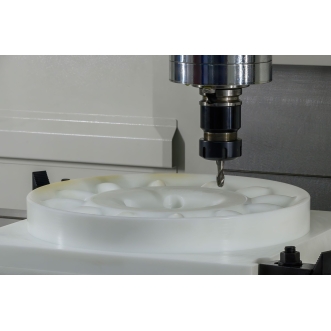
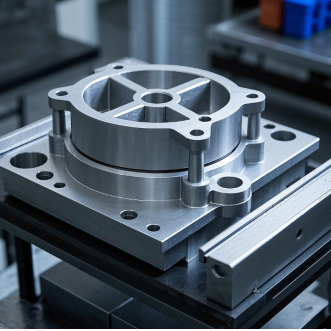
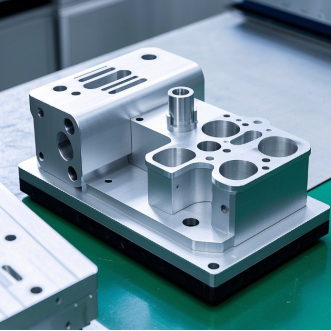
Milling uses a rotating cutting tool to remove material and create complex shapes, flat surfaces, and holes. It is widely used for engine components and housings.
For hard materials like steel, carbide end mills are used. For aluminum, higher spindle speeds improve efficiency. However, heat control is important to avoid material distortion.
Turning
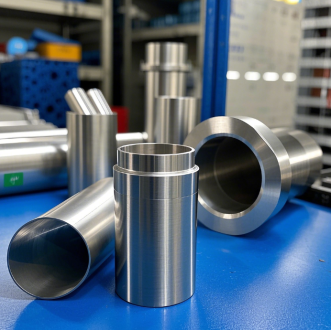
Turning is used to produce cylindrical parts such as shafts, bushings, and axles. In this process, the workpiece rotates while a cutting tool shapes its surface.
Precision is critical to ensure concentricity and smooth surface finish. Poor control can cause vibration or imbalance, especially in parts like driveshafts that require perfect rotation.
Drilling and Boring
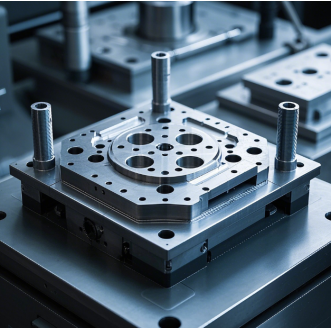
Drilling creates holes for bolts, fluid channels, and assembly connections. Boring is used to enlarge or refine holes to precise dimensions.
In automotive manufacturing, hole accuracy is very important. Incorrect hole placement can cause assembly failure or leakage in engine systems. CNC drilling ensures high precision and repeatability.
Quality Control in Automotive CNC Machining
Quality control is one of the most important steps in automotive manufacturing. Because many automotive parts are safety-critical, strict inspection standards are applied at every stage of production.
In-process inspections check tool wear, surface finish, and dimensional accuracy during machining. Final inspections use advanced equipment such as Coordinate Measuring Machines (CMM), profilometers, and optical measurement systems.
Any part that does not meet specifications is either reworked or rejected. This ensures that only safe and reliable components are used in vehicles.
Advantages of CNC Machining for Automotive Parts
High Precision
One of the biggest advantages of CNC for automotive part production is high precision. CNC machines can achieve extremely tight tolerances, ensuring perfect fit and performance. This is especially important for fuel injection systems, where accuracy directly affects engine efficiency and emissions.
Customization
CNC machining allows manufacturers to produce custom automotive parts for specific vehicle models or performance needs. This is especially useful in motorsports, luxury vehicles, and prototype development.
Custom alloy wheels, performance engine parts, and specialized suspension components are all examples of CNC-enabled customization.
High-Volume Production Efficiency
Once a CNC program is created, it can be reused for mass production. Machines can operate continuously with minimal human intervention, making CNC machining ideal for large-scale automotive manufacturing.
This reduces production costs, improves consistency, and shortens delivery time, which is essential in the competitive automotive market.
Conclusion: The Impact of CNC Machining on Automotive Manufacturing
CNC Machining for Automotive Parts has transformed the way vehicles are designed and produced. It offers unmatched precision, flexibility, and efficiency, making it essential for modern automotive manufacturing.
Understanding the CNC machining process for automotive parts—including design, material selection, programming, machining, and quality control—helps ensure the production of safe, reliable, and high-performance components.
As technology continues to evolve, manufacturers are also improving automation systems, using advanced materials, and enhancing quality control methods. Companies that continuously improve their processes will remain competitive in the global automotive industry.
Key takeaway: CNC machining is not just a manufacturing method—it is the foundation of precision, safety, and innovation in today’s automotive world.
RELATED PRODUCTS
-
Medical Brass CNC Machining Parts
-
Precision CNC Machining PEEK Services
-
Precision Custom CNC Machined Car Parts
-
cnc machining optical housings
-
Precision CNC Casting Machining Services
-
Precision Gear CNC Machining Services
-
Precision Stainless Steel Parts CNC Mach
-
CNC Machining of Precision Aluminum Tube
-
CNC Machining of Large Precision Aluminu
-
CNC Machining & Manufacturing of Pre