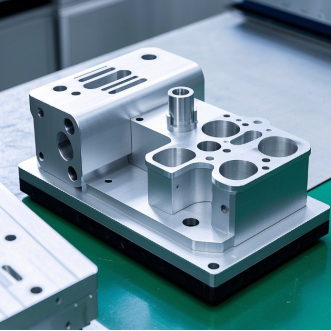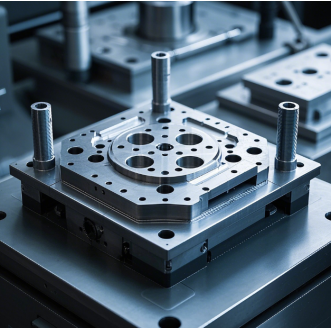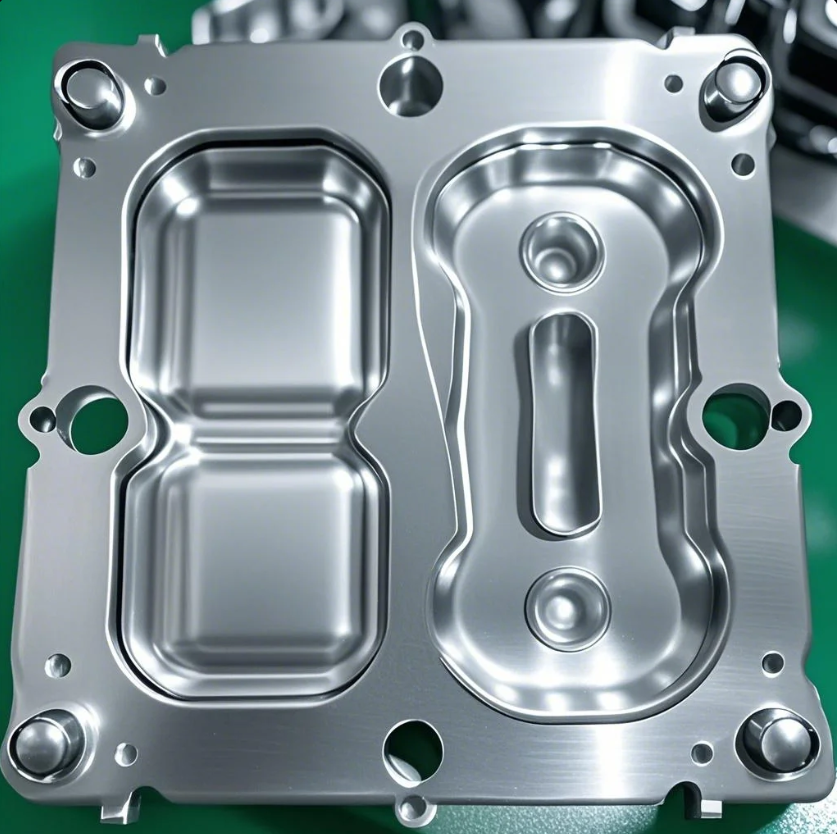
CNC Machining for Foam Mould parts
Introduction to CNC Machining for Foam Mould Parts
CNC Machining for Foam Mould parts is a modern manufacturing method used to create precise foam components for many industries. CNC stands for Computer Numerical Control, which means machines are controlled by computer programs to cut and shape materials automatically.
The significance of CNC machining in foam mould part production is very important because it helps manufacturers produce accurate, repeatable, and high-quality foam parts. These parts are widely used in packaging, aerospace, film production, and product prototyping. CNC machining improves both quality and productivity by reducing manual work and human error.
Significance of CNC Machining in Foam Mould Part Production
Precision Manufacturing
CNC machining allows extremely precise production of foam mould parts. Because the process is computer-controlled, it can follow exact measurements from a digital design.
This precision is very important in industries where foam parts must fit perfectly. For example, a custom foam insert used in electronic device packaging must hold the product tightly to prevent damage during shipping. Even a small error in size could affect protection and safety.
With CNC technology, manufacturers can achieve tight tolerances and consistent results across many identical parts.
Complex Shape Creation
Another major advantage is the ability to create complex shapes. Foam mould parts often require detailed curves, cavities, and 3D structures that are difficult to make by hand.
For example, in the film industry, foam props such as fantasy weapons or architectural models often have highly detailed designs. CNC machines can accurately carve these complex forms directly from digital models, making production faster and more reliable.
Process of CNC Machining Foam Mould Parts
Design and Programming
The process starts with digital design using CAD (Computer-Aided Design) software. Engineers create a 3D model of the foam mould part based on its final use.
After that, CAM (Computer-Aided Manufacturing) software converts the design into machine instructions. These instructions define toolpaths, spindle speed, feed rate, and cutting depth.
For example, in aerospace foam mould production, engineers often face challenges such as complex aerodynamic shapes. These require advanced programming to ensure smooth tool movement and accurate surface finishing.
Material Selection and Preparation
Choosing the right foam material is very important in process of CNC machining foam mould parts. Common materials include polyurethane foam, EPS (expanded polystyrene), XPS (extruded polystyrene), and EVA foam.
Each material has different density, hardness, and heat resistance. For example, softer foam allows faster cutting but may require lower feed control to avoid tearing. Denser foam offers better surface finish but increases tool resistance.
Before machining, foam blocks are cut into suitable sizes and securely fixed to the machine table to prevent movement during cutting.
Machining Operations
Tool Selection
Different tools are used depending on the design and foam type:
Single-flute “O” flute end mills: used for fast cutting and efficient chip removal
Ball-nose end mills: used for smooth curved surfaces
Compression tools: used to reduce tearing on edges
Cutting Process
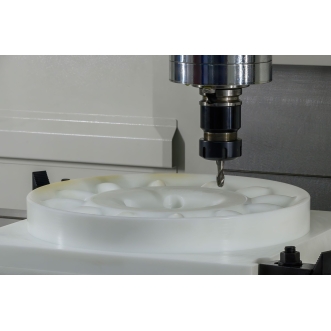
The CNC machine follows programmed toolpaths to remove foam layer by layer. Speed settings must be carefully controlled.
For example, if spindle speed is too high, some foam materials may melt due to heat buildup. Adjusting feed rate and speed helps improve surface quality and prevent damage.
Quality Control and Inspection
Quality control ensures that foam mould parts meet design requirements. Inspectors check surface smoothness, shape accuracy, and dimensions.
For example, during production of foam packaging inserts, a small dimensional error was detected in one batch. The issue was corrected by adjusting tool calibration before continuing production, preventing further waste.
Benefits of Using CNC for Foam Mould Part Manufacturing
High-Quality Output
One of the main benefits of using CNC for foam mould part manufacturing is consistent quality. Every part is produced based on the same digital design, ensuring uniform results.
For example, a company producing foam packaging for fragile glass products achieved consistent protective performance across thousands of units using CNC machining.
Cost-Effectiveness for Medium to Large Batches
Once the CNC program is created, production becomes efficient and repeatable. This reduces labor cost and increases productivity.
For medium and large production batches, CNC machining significantly lowers per-unit cost. A manufacturer producing foam inserts for industrial equipment was able to reduce production costs by automating the machining process.
Quick Turnaround for Prototyping
CNC machining is very useful for fast prototyping. Designers can quickly turn digital models into real foam parts.
For example, a product development team needed a foam prototype for a new wearable device. CNC machining allowed them to receive the part within a short time, helping them test and improve the design quickly.
Challenges in CNC Machining Foam Mould Parts
Material-Specific Challenges
Different foam materials behave differently during machining. Some may melt due to heat, while others may tear easily.
For example, EPS foam may deform if spindle speed is too high. This issue can be solved by reducing cutting speed and improving airflow or cooling during machining.
Tool Wear and Breakage
Although foam is soft, continuous machining can still cause tool wear. Poor settings or abrasive foam types may shorten tool life.
For example, during large production runs, tools may need frequent replacement. Using high-quality cutting tools and maintaining correct cutting parameters helps reduce wear and improve efficiency.
Surface Finish and Dimensional Accuracy
Maintaining smooth surface finish and accuracy can be challenging. Improper feed rates or unstable toolholding may cause rough surfaces.
For example, a foam mould part initially showed uneven surfaces. After adjusting feed rate and using a more rigid toolholder, surface quality and accuracy improved significantly.
Applications of CNC-Machined Foam Mould Parts
Aerospace Industry
Applications of CNC-machined foam mould parts in aerospace include fixtures, jigs, and composite moulds.
For example, foam moulds are used to shape composite aircraft components. CNC precision ensures accurate fit and helps improve structural performance.
Film and Television Entertainment
In film production, foam moulds are used to create props, scenery, and visual effects elements.
For example, large fantasy props in blockbuster movies are often made from CNC-machined foam. This allows filmmakers to produce highly detailed and lightweight structures quickly and safely.
Packaging Industry
CNC foam moulds are widely used to create custom packaging inserts.
For example, high-end electronics require protective foam inserts that match the product shape exactly. CNC machining ensures a perfect fit, reducing damage during transport and storage.
Conclusion: Harnessing the Power of CNC Machining for Foam Mould Parts
Summary and Key Takeaways
CNC Machining for Foam Mould parts plays an important role in modern manufacturing. It offers high precision, supports complex shapes, improves production efficiency, and enables fast prototyping.
However, challenges such as material behavior, tool wear, and surface finishing must be carefully managed through proper settings and experience.
From aerospace to packaging and entertainment, CNC-machined foam mould parts are widely used across industries. Their flexibility and accuracy make them a reliable solution for modern product development.
Manufacturers and designers are encouraged to explore CNC machining as a practical and efficient method for foam mould part production, especially when quality and consistency are important.
RELATED PRODUCTS
-
Medical Brass CNC Machining Parts
-
Precision CNC Machining PEEK Services
-
Precision Custom CNC Machined Car Parts
-
cnc machining optical housings
-
Precision CNC Casting Machining Services
-
Precision Gear CNC Machining Services
-
Precision Stainless Steel Parts CNC Mach
-
CNC Machining of Precision Aluminum Tube
-
CNC Machining of Large Precision Aluminu
-
CNC Machining & Manufacturing of Pre