CNC Machining for Precision Parts
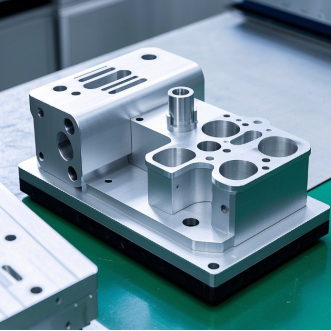
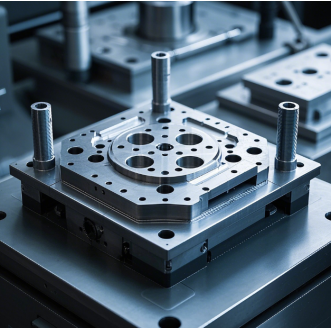
CNC Machining for Precision Parts is a core manufacturing method used across modern industries where accuracy, consistency, and reliability are critical. From aerospace components to medical implants, precision parts ensure that complex systems operate smoothly and safely. As global technology advances, the demand for tighter tolerances and higher-quality components continues to grow, making CNC (Computer Numerical Control) machining an essential production solution for manufacturers, engineers, and product developers.
This article explains how CNC machining works for precision parts, what factors influence accuracy, how tooling and materials are selected, and how quality is controlled to meet strict engineering standards.
The Importance of Precision Parts
Precision parts are the backbone of many industries because they guarantee the correct fit, function, and performance of machines and devices. Even the smallest dimensional error can lead to system failure, reduced efficiency, or safety risks.
Industries such as aerospace, automotive, electronics, and medical technology depend heavily on tight tolerances and consistent part quality. With increasing product complexity, traditional manufacturing methods are often insufficient, which is why CNC machining has become the preferred solution.
Understanding CNC Machining for Precision Parts is essential because it helps professionals design better products, reduce production errors, and improve overall manufacturing efficiency.
The CNC Machining Process for Precision Parts
Design and Programming
The CNC machining process for precision parts begins with detailed engineering design. Designers use CAD (Computer-Aided Design) software to create a 3D model of the component. This model defines all dimensions, tolerances, and functional requirements.
Once the design is finalized, CAM (Computer-Aided Manufacturing) software converts the model into machine-readable code (G-code). Programmers define toolpaths, spindle speeds, feed rates, and cutting depths. Accuracy at this stage is critical because any programming error directly affects the final part quality.
Machine Setup and Tooling
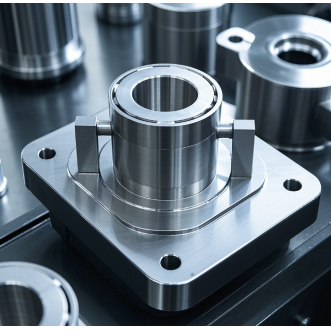
Proper machine setup is essential for achieving high precision. CNC machines must be properly calibrated and maintained to minimize mechanical errors. The workpiece is secured using high-precision fixtures that prevent movement during machining.
Tool selection also plays a key role. Common tools include carbide end mills, drills, and turning inserts. These tools are chosen based on material type, required surface finish, and machining operation. Machine parameters such as spindle speed and feed rate are adjusted to match both the tool and material properties.
Machining Operations
Milling
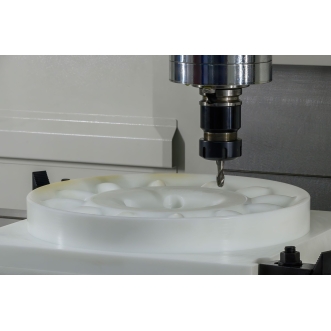
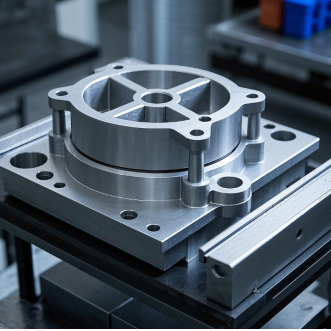
Milling is used to create flat surfaces, slots, and complex 3D geometries. For precision components, tool geometry is highly important. For example, ball-nose end mills are commonly used for contoured surfaces.
To ensure accuracy, cutting parameters must be carefully controlled. Proper chip evacuation is also important because accumulated chips can damage surface quality and reduce dimensional accuracy.
Turning
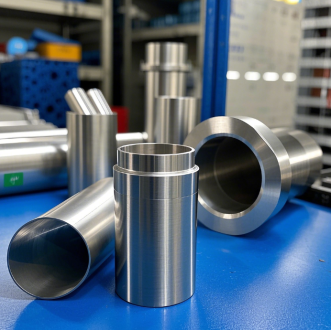
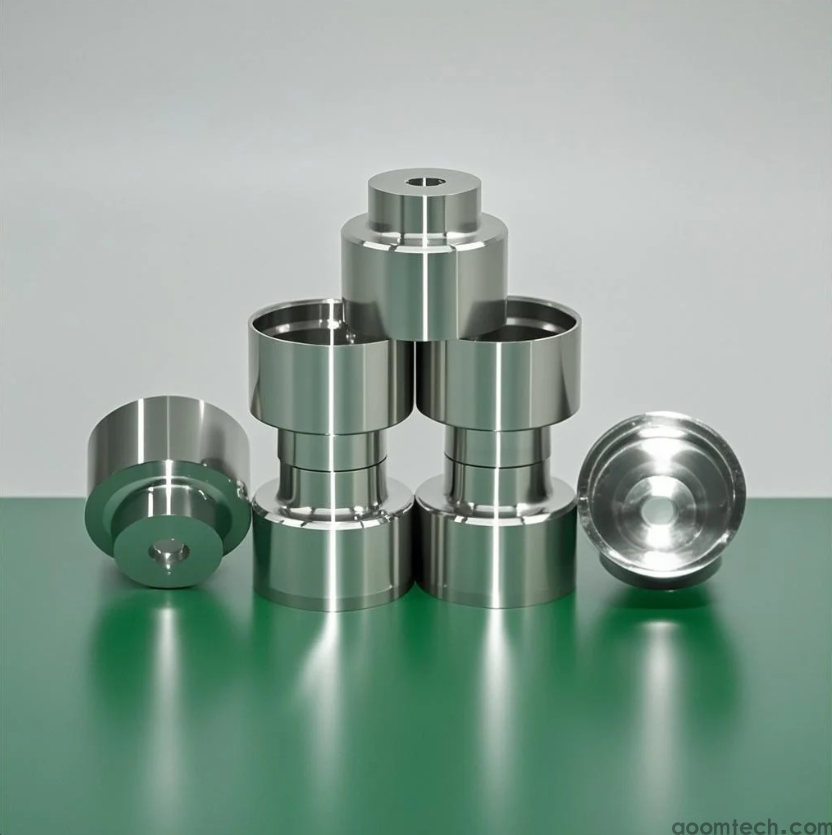
Turning is used for cylindrical precision parts such as shafts and bushings. In this process, the workpiece rotates while the cutting tool removes material.
Tool alignment, insert quality, and consistent feed rates are essential to maintain concentricity and surface finish. Even minor vibration can lead to dimensional errors, making machine stability critical.
Drilling
Drilling creates holes in precision parts and requires careful control of spindle speed and feed rate. Drill bit selection depends on material hardness, hole depth, and diameter.
In precision manufacturing, even slight deviations in hole position or size can cause assembly issues, so tool sharpness and machine calibration are essential.
Factors Influencing Precision in CNC Machining of Parts
Machine Accuracy and Rigidity
Machine accuracy is one of the most important factors in CNC machining for precision parts. Machines must have minimal backlash, high-quality linear guides, and strong structural rigidity.
Rigidity reduces vibration during cutting, which helps maintain tool stability and dimensional accuracy. Regular calibration and preventive maintenance are required to sustain performance over time.
Tool Wear and Breakage
Tool wear gradually affects cutting performance, leading to dimensional deviations and poor surface finish. Tool breakage can cause severe damage to both the workpiece and machine.
Modern manufacturing facilities often use tool monitoring systems to detect wear early. Using correct cutting parameters and high-quality tools significantly reduces the risk of failure.
Material Properties and Preparation
Material behavior strongly influences machining precision. Factors such as hardness, thermal expansion, and internal stress affect final dimensions.
For example, materials that expand under heat may change shape during machining. Proper preparation methods such as annealing help reduce internal stress and improve stability during cutting operations.
Tooling and Material Selection for Precision Parts
Tooling Selection
Choosing the right tooling is essential for achieving high accuracy. Tool coatings such as titanium nitride or diamond coatings improve wear resistance and extend tool life.
Different machining operations require different tools. For example, rough cutting tools prioritize material removal, while finishing tools focus on surface quality and tight tolerances.
Material Selection
Material selection depends on function, environment, and mechanical requirements. Each material has unique properties that influence machinability and performance.
For example, titanium alloys are commonly used in aerospace applications due to their high strength-to-weight ratio and corrosion resistance. Aluminum is often used for lightweight structures, while stainless steel is chosen for durability and corrosion resistance.
Quality Control in CNC Machining of Precision Parts
In-Process Inspection
Quality control in CNC machining of precision parts begins during production. Operators continuously monitor dimensions, surface finish, and tool condition using measuring instruments such as calipers, micrometers, and surface roughness testers.
If deviations are detected, immediate adjustments are made to machining parameters. This real-time feedback helps prevent defective production and reduces material waste.
Final Inspection
After machining is completed, final inspection ensures the part meets design specifications. Coordinate Measuring Machines (CMMs) are commonly used to verify dimensional accuracy with extremely tight tolerances.
Surface finish, geometric accuracy, and material integrity are also evaluated. Non-conforming parts are either reworked or discarded depending on severity and cost considerations.
Applications of CNC-Machined Precision Parts
Aerospace Industry
The aerospace sector relies heavily on CNC machining for precision parts such as turbine blades, structural frames, and engine components. These parts must withstand extreme temperatures, pressure, and mechanical stress.
High precision ensures safety, performance efficiency, and fuel optimization in aircraft systems.
Medical Industry
In the medical field, precision parts are used in surgical instruments, orthopedic implants, and dental devices. Accuracy is essential to ensure proper fit, biocompatibility, and patient safety.
CNC machining enables the production of highly customized medical components that improve treatment outcomes and recovery times.
Automotive Industry
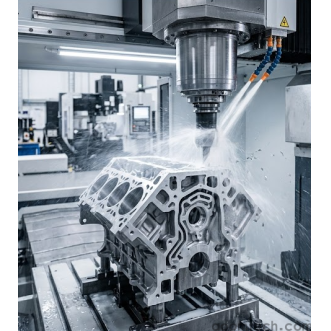
The automotive industry uses CNC-machined precision parts in engines, transmissions, and suspension systems. These components must meet strict performance and durability standards.
High-precision manufacturing improves vehicle efficiency, safety, and long-term reliability.
Conclusion: Mastering CNC Machining for Precision Parts
CNC Machining for Precision Parts plays a vital role in modern manufacturing by enabling the production of highly accurate and reliable components. From design and programming to final inspection, every stage of the process influences overall precision.
Key factors such as machine accuracy, tooling selection, material properties, and factors affecting precision in CNC machining of parts must be carefully managed to ensure success. In addition, CNC machining process for precision parts and quality control in CNC machining of precision parts are essential for maintaining consistent production quality.
Manufacturers who invest in advanced machining systems, skilled operators, and rigorous inspection methods can achieve superior results. Continuous training and adoption of modern technologies remain essential for staying competitive in high-precision industries.
RELATED PRODUCTS
-
Medical Brass CNC Machining Parts
-
Precision CNC Machining PEEK Services
-
Precision Custom CNC Machined Car Parts
-
cnc machining optical housings
-
Precision CNC Casting Machining Services
-
Precision Gear CNC Machining Services
-
Precision Stainless Steel Parts CNC Mach
-
CNC Machining of Precision Aluminum Tube
-
CNC Machining of Large Precision Aluminu
-
CNC Machining & Manufacturing of Pre