CNC Machining for Small Precision Parts
Introduction to CNC Machining for Small Precision Parts
CNC machining (Computer Numerical Control) is a manufacturing method where computer-controlled machines remove material from a workpiece to create precise parts. plays a key role in modern production, especially for small precision parts.
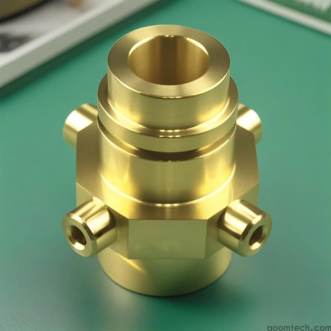
Small precision parts are essential components in many industries, including medical devices, electronics, automotive systems, and aerospace engineering. Even though these parts are small in size, they often determine the performance, safety, and reliability of entire systems. CNC machining is widely used because it can achieve high accuracy, repeatability, and the ability to produce complex geometries consistently.
The Significance of Small Precision Parts
Small precision parts are critical in modern engineering systems. They act as connectors, sensors, moving elements, or control components inside larger assemblies. Their small size supports product miniaturization, while their precision ensures smooth operation and high performance.
For example, a tiny valve in a medical device or a micro gear in an electronic instrument must fit perfectly within tight tolerances. Without such accuracy, the entire system may fail. This is why CNC machining is often the preferred method for producing these components.
Challenges of CNC Machining for Small Precision Parts
High Precision Requirements
Small precision parts often require extremely tight tolerances, commonly in the range of ±5 to ±10 micrometers. Even a minor deviation can cause malfunction, especially in high-performance systems like aerospace or medical equipment.
To achieve this level of precision, every stage of production must be carefully controlled—from CAD design and CAM programming to tool selection and final inspection. A small programming error or tool wear can significantly affect the final part quality.
Tooling and Material Handling
Machining small parts requires micro-scale tools such as micro end mills and drills. These tools are fragile and more likely to break under incorrect cutting conditions. Additionally, small workpieces are difficult to hold securely without causing deformation.
Manufacturers often use high-precision fixtures and soft clamping techniques to avoid damaging the part. Materials like titanium, stainless steel, aluminum, or engineering plastics each present different machining challenges due to hardness or brittleness.
Heat Generation and Chip Evacuation
Heat buildup is a major issue in small-scale machining because there is less material to absorb thermal energy. Excess heat can change material properties and reduce dimensional accuracy.
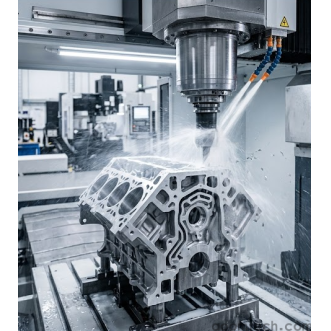
Chip evacuation is also more difficult because small chips can clog cutting zones and affect tool movement. Solutions include using minimum quantity lubrication (MQL), high-pressure coolant systems, and optimized toolpaths that reduce heat concentration.
Advantages of CNC Machining for Small Precision Parts
Precision and Repeatability
One of the biggest advantages of CNC machining is its ability to produce identical parts with extremely high precision. Once a program is set, the machine can repeat the same operation hundreds or thousands of times with minimal variation.
This is especially important for industries where interchangeability is required. Parts produced using CNC systems are consistent, reducing assembly errors and improving product reliability.
Complex Geometry Capability
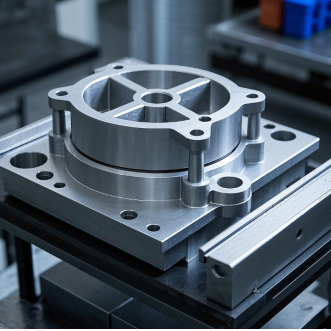
Modern multi-axis CNC machines can produce highly complex shapes that would be impossible with traditional methods. This includes internal cavities, micro channels, and curved surfaces.
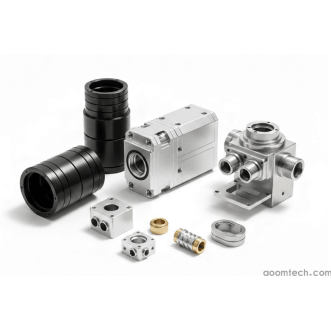
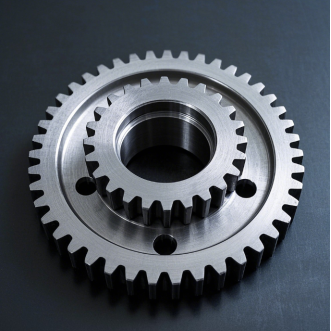
For example, miniature gears, micro-fluidic channels, and precision connectors can all be manufactured efficiently using CNC machining. Advanced machines from manufacturers like and are widely used in precision industries.
Automation and Efficiency
CNC machining is highly automated, which reduces human error and increases productivity. Once the machining program is validated, machines can run continuously with minimal supervision.
This automation reduces production time and cost, especially for large batches of small precision parts. It also ensures consistent quality across all manufactured components.
The CNC Machining Process for Small Precision Parts
Design and Programming
The process begins with CAD (Computer-Aided Design), where engineers create a 3D model of the part. This model includes exact dimensions, tolerances, and functional requirements.
Next, CAM (Computer-Aided Manufacturing) software converts the design into machine instructions. These instructions define toolpaths, cutting speeds, feed rates, and depth of cut. Even a small programming mistake can lead to scrap parts or machine damage.
Machine Setup and Tooling
Proper machine setup is essential for small precision parts. The CNC machine must be calibrated for high accuracy, and rigid fixtures are used to hold the workpiece securely.
Micro tools such as carbide micro end mills, micro drills, and precision inserts are selected based on material and geometry requirements. Spindle speed and feed rate must be carefully optimized to prevent tool breakage and ensure surface quality.
Machining Operations
Milling
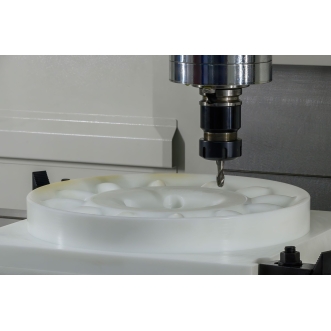
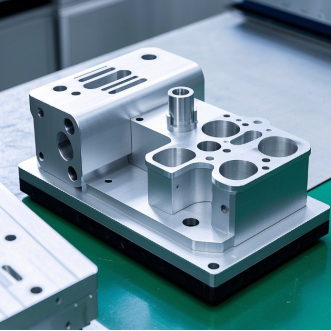
Milling is used to create flat surfaces, pockets, slots, and complex 3D geometries. For small parts, tool selection is critical. Ball-end mills are often used for curved surfaces to achieve smooth finishes.
Turning
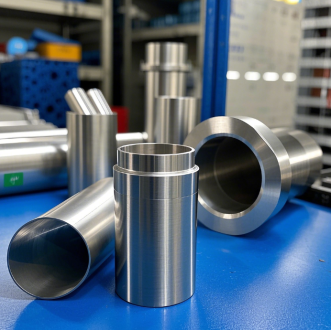
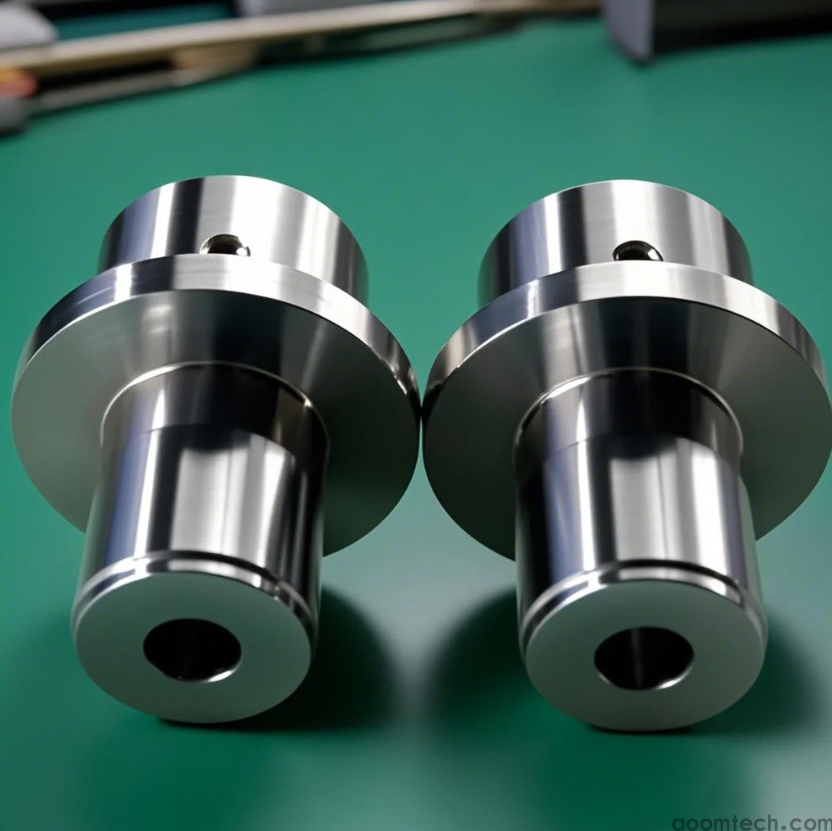
Turning is used for cylindrical components such as shafts and pins. The workpiece rotates while the cutting tool removes material. Achieving concentricity and smooth surface finish requires precise alignment and stable cutting conditions.
Drilling
Drilling creates holes with strict positional and dimensional accuracy. Even slight deviation in hole placement can make a part unusable in precision assemblies. Proper drill selection and controlled feed rates are essential.
Tooling and Material Considerations
Tooling Selection and Maintenance
High-quality micro tools are essential for small precision machining. Carbide tools are commonly used due to their hardness and wear resistance. Regular inspection is necessary to detect wear and prevent quality issues.
Tool storage and handling also matter, as micro tools are highly sensitive to damage. Proper maintenance ensures consistent performance and longer tool life.
Material Selection
Material choice depends on application requirements such as strength, corrosion resistance, thermal stability, and machinability. Common materials include aluminum, stainless steel, titanium, and engineering plastics.
For example, electronic components may require materials with stable electrical and thermal properties, while aerospace parts often require high strength-to-weight ratios.
Quality Control in CNC Machining of Small Precision Parts
In-process Inspection
Quality control starts during machining. Tools such as microscopes, digital calipers, and surface roughness testers are used to monitor accuracy in real time.
If deviations are detected, adjustments can be made immediately to correct toolpaths or machining parameters, preventing large-scale defects.
Final Inspection
After machining, parts undergo detailed inspection for dimensional accuracy, surface quality, and structural integrity. Advanced equipment like optical measurement systems and scanning electron microscopes may be used for high-precision evaluation.
Non-conforming parts are either reworked or discarded depending on defect severity. This ensures only high-quality components reach final assembly.
Applications of CNC-Machined Small Precision Parts
Medical Industry
In the medical field, CNC-machined small parts are used in surgical tools, implants, and diagnostic devices. These components must meet strict hygiene and biocompatibility standards.
High precision ensures patient safety and improves treatment effectiveness in modern medical procedures.
Electronics Industry
The electronics industry relies heavily on small precision components such as connectors, micro switches, and PCB-related parts. CNC machining supports miniaturization and high-density designs in modern devices.
Aerospace Industry
In aerospace applications, small precision parts are used in fuel systems, sensors, and control mechanisms. These parts must withstand extreme conditions while maintaining accuracy and reliability.
Conclusion: Mastering CNC Machining for Small Precision Parts
CNC machining for small precision parts is a highly specialized field that requires deep understanding of design, tooling, materials, and quality control. The challenges in CNC machining of small precision parts include tight tolerances, heat management, and delicate tool handling. However, the advantages of CNC for small precision parts—such as high precision, repeatability, and automation—make it the preferred manufacturing method across industries.
Successful production depends on careful planning, skilled programming, and strict quality control in CNC machining of small parts. By investing in advanced equipment, continuous training, and proper inspection systems, manufacturers can achieve reliable and high-quality results.
As industries continue to demand smaller and more complex components, CNC machining will remain a core technology driving innovation and precision manufacturing worldwide.
RELATED PRODUCTS
-
Medical Brass CNC Machining Parts
-
Precision CNC Machining PEEK Services
-
Precision Custom CNC Machined Car Parts
-
cnc machining optical housings
-
Precision CNC Casting Machining Services
-
Precision Gear CNC Machining Services
-
Precision Stainless Steel Parts CNC Mach
-
CNC Machining of Precision Aluminum Tube
-
CNC Machining of Large Precision Aluminu
-
CNC Machining & Manufacturing of Pre