CNC Machining Heat Sink
Introduction to CNC Machining Heat Sink
Heat sinks are essential components in modern electronic devices. They help remove excess heat generated by processors, power modules, and other electronic parts. Without effective heat dissipation, devices can overheat, slow down, or even fail.
The CNC Machining Heat Sink process plays an important role in producing high-performance cooling components. CNC (Computer Numerical Control) machining allows manufacturers to create heat sinks with high precision and excellent consistency. These CNC-machined heat sinks improve the performance, reliability, and lifespan of electronic products used in industries such as computers, automotive systems, telecommunications, and industrial equipment.
Importance of CNC Machining for Heat Sinks
Precision in Heat Transfer Design
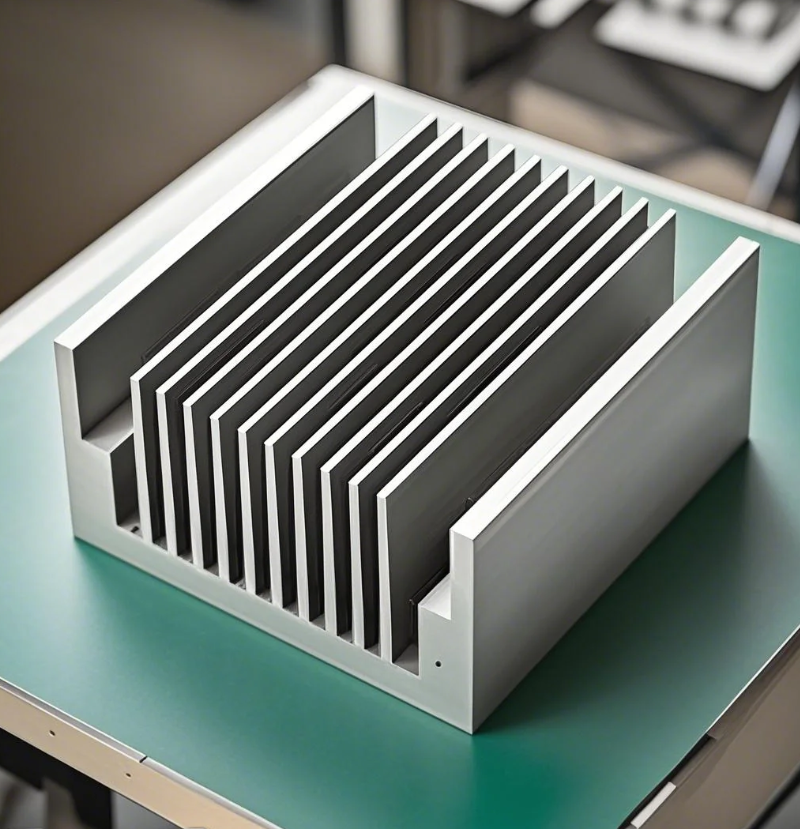
One key importance of CNC machining for heat sinks is its ability to produce highly precise fin structures and cooling channels. These fins increase the surface area, which improves heat dissipation efficiency.
For example, in a high-performance graphics card, CNC-machined heat sinks with accurately spaced aluminum fins help reduce GPU temperature during heavy workloads like gaming or 3D rendering. This ensures stable performance and prevents overheating.
Material Optimization
CNC machining also supports efficient use of materials such as aluminum, copper, and copper alloys. Engineers can select materials based on thermal conductivity, weight, and cost requirements.
For instance, laptops often use lightweight aluminum heat sinks. CNC machining ensures the material is shaped precisely, reducing waste while maintaining strong heat dissipation performance. This balance between weight and performance is critical for portable devices.
CNC Machining Process of Heat Sinks
Design and CAD/CAM Programming
The CNC machining process of heat sinks begins with CAD (Computer-Aided Design). Engineers create a 3D model based on the heat source size, device space, and required cooling performance.
Next, CAM (Computer-Aided Manufacturing) software converts the design into machine instructions. Toolpaths, cutting speeds, and feed rates are carefully defined. For example, in server heat sink production, complex fin arrays require optimized toolpaths to ensure consistent cutting and avoid tool collisions in deep fin structures.
Material Selection and Preparation
Choosing the right material is critical for thermal performance. Aluminum is widely used for its balance of cost and conductivity, while copper is chosen for higher heat transfer efficiency.
Before machining, raw material blocks are cut to size and may undergo treatments such as annealing to improve machinability. Copper, for example, requires slower cutting speeds due to its softness and high thermal conductivity, which can increase heat during machining.
Machining Operations
Milling
Milling is the primary process used to form fins, grooves, and the overall shape of the heat sink. Carbide cutting tools are commonly used for durability and precision.
Adjusting cutting speed and feed rate is important. Higher speeds can improve surface finish, but must be controlled to avoid excess heat buildup that may affect dimensional accuracy.
Drilling
Drilling is used to create mounting holes or airflow channels. High-speed steel or carbide drill bits are typically used.
Coolant is essential during drilling to prevent overheating and extend tool life. Accurate hole placement ensures proper installation and stable thermal contact in the final assembly.
Finishing Operations
After machining, heat sinks often undergo finishing processes such as polishing, anodizing, or coating.
Anodizing aluminum heat sinks improves corrosion resistance and surface hardness. It can also enhance thermal performance by improving surface emissivity, which helps release heat more effectively into the environment.
Benefits of CNC-Machined Heat Sinks
High-Quality and Consistent Performance
One of the main benefits of CNC-machined heat sinks is consistency. Every part is produced with the same precision, ensuring stable thermal performance across mass production batches.
For example, smartphone manufacturers rely on CNC-machined heat sinks to maintain consistent cooling across thousands of devices, ensuring stable processor performance and battery safety.
Customization for Specific Applications
CNC machining allows full customization of heat sink shapes, sizes, and fin structures. This is especially useful for compact or high-power devices where standard designs are not sufficient.
For instance, industrial control boards often require custom heat sinks designed to fit limited internal space while still maximizing airflow and heat dissipation.
Cost-Effectiveness for Medium to Large Batches
Although CNC machining involves setup costs, it becomes highly cost-effective for medium and large production volumes. Efficient material use and reduced waste help lower overall manufacturing costs.
Many electronics companies choose CNC machining for large-scale heat sink production because it balances precision, speed, and cost efficiency.
Challenges in CNC Machining Heat Sinks
Meeting Tight Tolerances
One of the major challenges in CNC machining heat sinks is maintaining tight tolerances, especially for fin thickness and spacing. Tool wear, vibration, and temperature changes can affect accuracy.
For example, if fin thickness varies slightly due to tool wear, airflow efficiency may decrease, reducing overall cooling performance. Regular tool calibration and process monitoring are required to prevent this issue.
Tool Wear and Breakage
Heat sink materials like copper and hard aluminum alloys can cause significant tool wear. Carbide tools, while durable, still require frequent replacement in high-volume production.
In copper machining, tool wear increases due to higher cutting resistance, which can raise production costs if not properly managed.
Heat Generation during Machining
Excess heat during machining can affect both tools and material accuracy. Thermal expansion may lead to dimensional errors in fine structures.
Using proper coolant systems and optimized cutting speeds helps control heat and maintain precision during production.
Quality Control in CNC Machining Heat Sinks
Inspection of Dimensions
Quality control in CNC machining heat sinks begins with dimensional inspection. Tools such as calipers, micrometers, and coordinate measuring machines (CMMs) are used to verify fin spacing, thickness, and hole accuracy.
Even small deviations can impact cooling efficiency, so strict inspection standards are essential.
Surface Finish Inspection
A smooth surface improves heat transfer and airflow. Surface roughness is measured and visually inspected to ensure quality standards are met.
If rough surfaces are detected, polishing or re-finishing processes are applied to improve performance.
Performance Testing
Final heat sinks undergo thermal performance testing using simulated heat sources. This helps measure how effectively they reduce temperature under real operating conditions.
If a heat sink fails testing, design adjustments or machining improvements are made to enhance cooling efficiency before mass production continues.
Conclusion: Mastering CNC Machining for Heat Sinks
The CNC Machining Heat Sink process is essential for producing reliable and efficient cooling solutions for modern electronics. From precise design and material selection to machining, finishing, and quality control, each step plays a critical role in final performance.
Understanding the importance of CNC machining for heat sinks, the CNC machining process of heat sinks, the benefits of CNC-machined heat sinks, and the challenges in CNC machining heat sinks helps manufacturers achieve better results and higher product reliability.
By applying strict quality control in CNC machining heat sinks, companies can ensure stable performance and long-lasting thermal management solutions for a wide range of electronic applications.
RELATED PRODUCTS
-
Medical Brass CNC Machining Parts
-
Precision CNC Machining PEEK Services
-
Precision Custom CNC Machined Car Parts
-
cnc machining optical housings
-
Precision CNC Casting Machining Services
-
Precision Gear CNC Machining Services
-
Precision Stainless Steel Parts CNC Mach
-
CNC Machining of Precision Aluminum Tube
-
CNC Machining of Large Precision Aluminu
-
CNC Machining & Manufacturing of Pre