CNC Machining & Manufacturing of Worm Gears
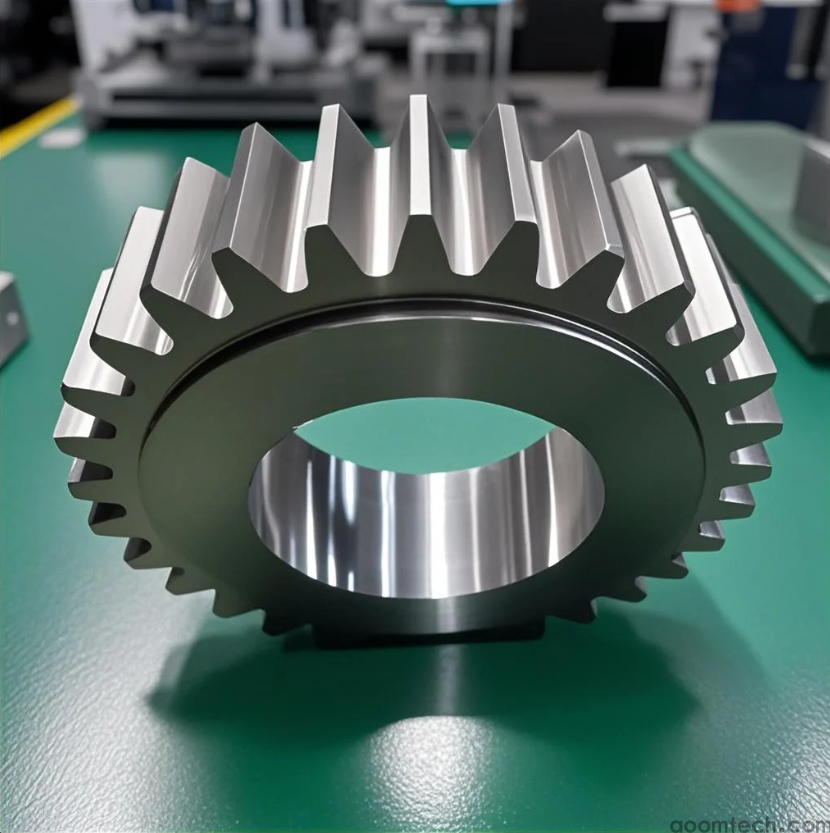
CNC Machining & Manufacturing of Worm Gears plays a key role in modern mechanical engineering. Worm gears are widely used in machines that need high torque reduction, smooth motion control, and sometimes self-locking capability. CNC (Computer Numerical Control) technology makes it possible to produce these complex parts with high precision, consistency, and efficiency.
Worm gears are commonly found in robotics, automotive systems, conveyor equipment, elevators, and industrial machinery. With CNC machining, manufacturers can ensure these gears meet strict performance requirements and operate reliably under load.
Introduction to CNC Machining & Manufacturing of Worm Gears
The Significance of Worm Gears and CNC Machining
Worm gears are essential components in many mechanical systems because they provide high reduction ratios in a compact design. They also offer self-locking ability, which helps prevent reverse motion in some applications. CNC machining provides an efficient and precise way to manufacture these gears, ensuring accurate geometry and smooth tooth surfaces.
By using CNC technology, manufacturers can produce worm gears that improve performance in industries such as robotics, automotive systems, industrial automation, and heavy machinery. These CNC-machined parts help machines run more smoothly, quietly, and efficiently.
Importance of CNC in Worm Gear Production
Precision and Accuracy
CNC machining enables extremely high precision in worm gear production. The computer-controlled process ensures that the complex helical tooth profiles are cut exactly according to design specifications. This accuracy is critical for smooth meshing, low vibration, reduced noise, and efficient power transmission.
For example, in a robotic joint system, a high-precision CNC-machined worm gear allows smooth and controlled movement. This improves the robot’s positioning accuracy and repeatability, which is essential for automation tasks.
Consistent Quality
Another major advantage of CNC machining is consistent quality. Every worm gear produced follows the same programmed instructions, reducing human error and variation. This is especially important in mass production environments.
For example, in automotive manufacturing, CNC-machined worm gears are used in transmission systems to ensure stable and consistent power transfer across thousands of vehicles. This uniformity helps improve reliability and reduce maintenance issues.
Process Steps of CNC Machining Worm Gears
Design and CAD/CAM Programming
The process begins with engineering design using CAD (Computer-Aided Design) software. Engineers create a detailed 3D model of the worm gear, considering load capacity, speed requirements, material selection, and system compatibility.
Next, CAM (Computer-Aided Manufacturing) software converts the model into CNC machine instructions. Programmers define toolpaths, cutting speeds, feed rates, and machining strategies. For complex worm gears with special tooth profiles, careful simulation is used to ensure accuracy before production begins.
For example, a customized worm gear used in a specialized industrial lifting system may require a non-standard tooth angle. Engineers must adjust toolpath programming carefully to ensure correct meshing with the worm wheel.
Material Selection and Preparation
Material choice is critical in worm gear performance. Common materials include alloy steel, carbon steel, and bronze. Steel is often used for high strength and wear resistance, while bronze is used for its low friction properties when paired with steel worms.
Before machining, raw materials are cut, cleaned, and sometimes heat-treated to improve hardness and stability. Harder materials require stronger cutting tools and slower machining speeds, while softer materials require careful control to avoid deformation.
Machining Operations
Turning
Turning is used to form the basic cylindrical shape of the worm shaft. The workpiece rotates while a cutting tool removes excess material to achieve the required diameter and surface finish. Carbide inserts are commonly used due to their wear resistance and ability to handle hardened materials.
Proper tool setup ensures concentricity and smooth surface finish, which are essential for stable gear operation.
Milling
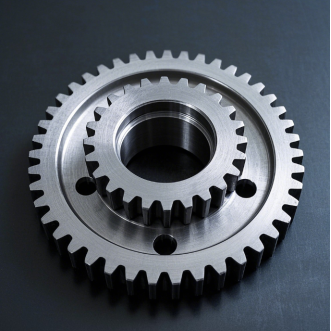
Milling is used to create the worm gear tooth profile. Specialized gear milling cutters shape the helical teeth as the tool follows a controlled path. Cutting speed and feed rate must be carefully adjusted to maintain profile accuracy.
For finishing operations, slower feed rates are used to achieve smoother tooth surfaces and improve meshing performance.
Grinding (if required)
For high-precision applications, grinding may be used after machining. This process improves surface finish and tooth profile accuracy. Grinding wheels are selected based on material type and required finish level.
Fine grinding helps reduce friction, noise, and wear, improving the overall lifespan of the worm gear system.
Heat Treatment and Finishing Operations
Heat treatment improves mechanical properties such as hardness, wear resistance, and fatigue strength. Common methods include carburizing, quenching, and tempering.
After heat treatment, finishing processes like deburring, polishing, or coating are applied. These steps remove sharp edges, improve surface smoothness, and enhance corrosion resistance.
For example, a carburized and polished steel worm gear can achieve significantly longer service life in heavy-load industrial applications.
Tooling for CNC Manufacturing of Worm Gears
Turning Tools
Carbide-tipped inserts are widely used for turning worm gears due to their hardness and heat resistance. Different insert shapes are selected depending on whether rough or finish machining is required.
A properly selected tool with an optimized nose radius helps achieve smooth surface finishes and stable cutting performance.
Worm Gear Milling Cutters
Specialized worm gear cutters are essential for producing accurate tooth profiles. These cutters are designed according to gear geometry, including helix angle and pitch.
Carbide-coated cutters are often used for high-volume production because they improve tool life and machining efficiency.
Grinding Wheels (if applicable)
Grinding wheels must be selected carefully based on grit size, hardness, and bonding type. Fine grit wheels are used for finishing operations to achieve high surface quality and precise tooth geometry.
Quality Control in CNC Worm Gear Machining
Dimensional Inspection
Dimensional accuracy is verified using tools such as micrometers, calipers, and coordinate measuring machines (CMM). These tools ensure that all dimensions match design specifications.
For example, if an in-process inspection detects a diameter deviation, CNC parameters can be adjusted immediately to prevent defective production.
Tooth Profile Inspection
Gear measuring machines are used to check tooth geometry accuracy. Even small errors in tooth shape can cause vibration, noise, and poor meshing performance.
Early detection of profile errors helps prevent defective gears from entering assembly lines.
Surface Finish Inspection
Surface roughness testers measure the smoothness of gear surfaces. A poor surface finish increases friction and wear, reducing gear life.
If surface quality is not acceptable, additional finishing operations such as polishing or fine grinding are performed.
Challenges in CNC Machining Worm Gears
Complex Tooth Profiles
Worm gears have complex helical tooth shapes that are difficult to machine accurately. Even small programming errors can lead to poor meshing and noise issues.
For example, manufacturing a double-enveloping worm gear requires highly precise CNC programming and advanced toolpath control to ensure correct engagement.
Heat Generation and Tool Wear
High-speed machining generates heat, which can lead to tool wear and reduced accuracy. Proper coolant use, optimized cutting speeds, and tool selection are necessary to control heat.
If heat is not controlled properly, tools may wear quickly, leading to inconsistent gear quality.
Material-specific Challenges
Different materials behave differently during machining. Bronze may deform under pressure, while hardened steel requires stronger tools and slower cutting speeds.
For example, when machining bronze worm gears, careful feed control is needed to prevent distortion and maintain dimensional accuracy.
Conclusion: Mastering CNC Machining & Manufacturing of Worm Gears
Summary and Key Takeaways
CNC Machining & Manufacturing of Worm Gears is a precise and highly controlled process that ensures high-performance mechanical components. From design and material selection to machining, heat treatment, tooling, and quality control, every step plays a critical role in final product quality.
Understanding the importance of CNC in worm gear production, following proper process steps of CNC machining worm gears, selecting correct tooling for CNC manufacturing of worm gears, applying strict quality control in CNC worm gear machining, and managing challenges in CNC machining worm gears will help achieve reliable and efficient gear systems.
Manufacturers are encouraged to continuously optimize CNC processes to improve accuracy, reduce costs, and enhance long-term performance of worm gear systems in real-world applications.
RELATED PRODUCTS
-
Medical Brass CNC Machining Parts
-
Precision CNC Machining PEEK Services
-
Precision Custom CNC Machined Car Parts
-
cnc machining optical housings
-
Precision CNC Casting Machining Services
-
Precision Gear CNC Machining Services
-
Precision Stainless Steel Parts CNC Mach
-
CNC Machining of Precision Aluminum Tube
-
CNC Machining of Large Precision Aluminu
-
CNC Machining & Manufacturing of Pre