CNC Machining Parts
Introduction to CNC Machining Parts
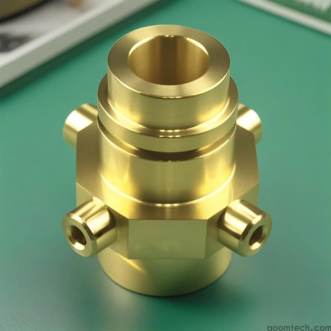
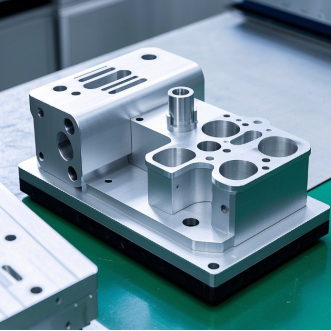
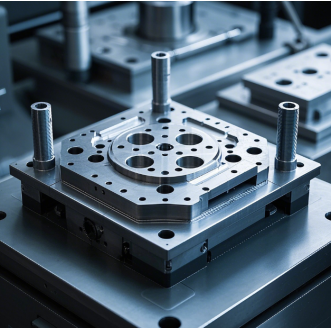
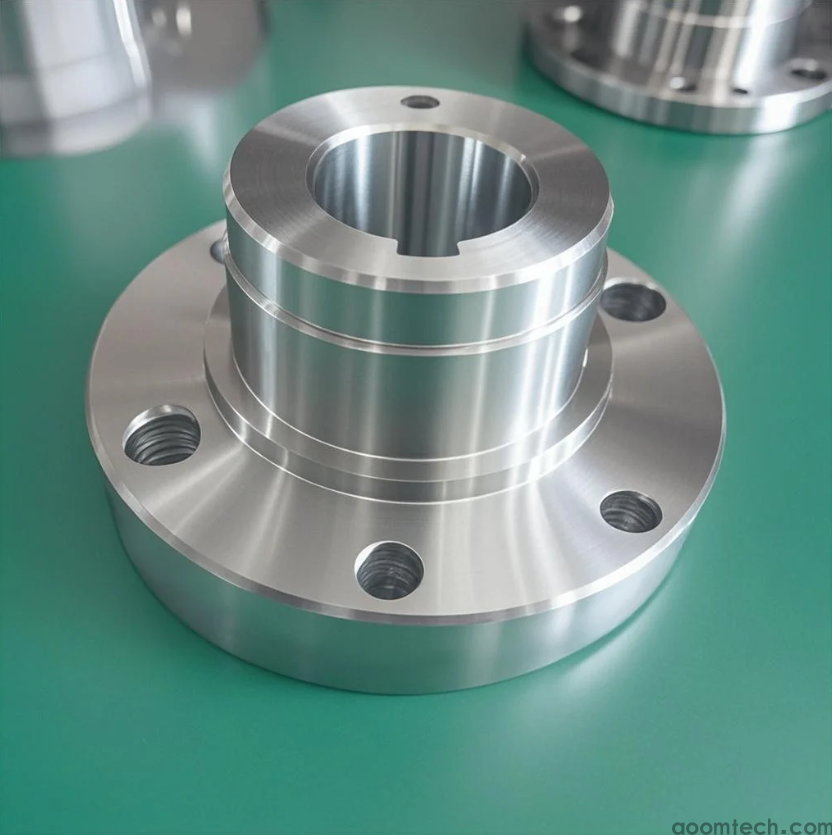
CNC Machining Parts are precision components manufactured using Computer Numerical Control (CNC) machines. These machines follow programmed instructions to cut, shape, and form raw materials into accurate and functional parts. CNC machining is widely used because it delivers high precision, repeatability, and efficiency for both simple and complex designs.
The Role of CNC Machining Parts in Various Industries
CNC (Computer Numerical Control) machining parts are essential in many industries, including automotive, aerospace, electronics, and general manufacturing. These parts ensure that machines and products function safely and efficiently.
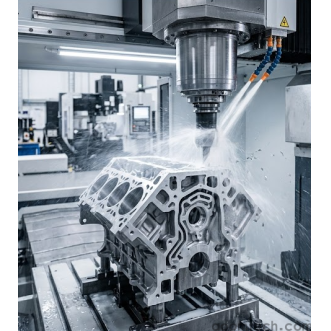
For example, in the automotive industry, CNC-machined engine components help ensure smooth and efficient power transfer, improving vehicle performance and fuel efficiency. In the aerospace industry, high-precision structural components are critical for safety and weight reduction. In electronics, precision-machined housings and connectors support reliable circuit performance and device durability.
Types of CNC Machining Parts
Structural Parts
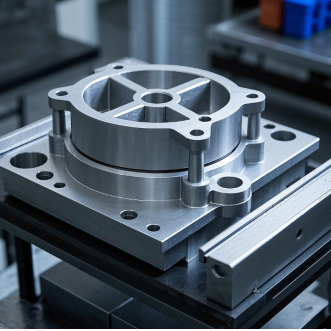
Structural parts provide support and form the framework of a product or machine. Examples include machine tool bases, columns, and support frames. These parts must be strong, stable, and rigid to ensure overall system performance.
CNC machining enables the production of structural parts with high dimensional accuracy. This ensures proper alignment and fit within assemblies, reducing mechanical stress and improving long-term durability.
Functional Parts
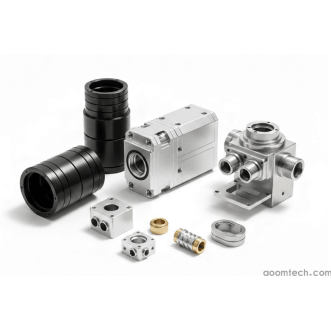
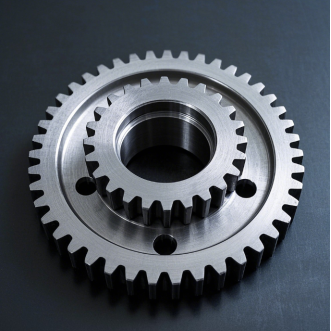
Functional parts perform specific mechanical tasks. Common examples include pistons, gears, shafts, and bearings. These components are critical to the movement and operation of machines.
CNC machining allows functional parts to be produced with tight tolerances and smooth surface finishes. For instance, a precisely machined gear ensures smooth power transmission, reducing noise, vibration, and wear during operation.
Custom-designed Parts
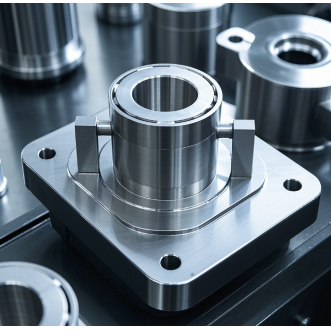
Custom-designed parts are created for unique applications, prototypes, or specialized equipment. These parts often have complex shapes and specific performance requirements.
CNC machining provides strong flexibility for producing custom components. Designers can create detailed 3D models, and CNC machines can accurately produce even highly complex geometries, supporting innovation and product development.
The CNC Machining Process for Parts
Design Phase
The process begins with a detailed design using CAD (Computer-Aided Design) software. Engineers create a 3D model that defines the part’s shape, size, and function. The design must consider load conditions, material behavior, and manufacturing feasibility. Accurate design is essential because even small errors can lead to part failure or poor performance.
CNC Programming
After design, the CAD model is converted into a CNC program using CAM (Computer-Aided Manufacturing) software. This program includes toolpaths, cutting speeds, feed rates, and machining depths. Proper programming ensures efficient machining and high-quality output, especially when working with different materials.
Machine Setup and Tooling
In this stage, the CNC machine is prepared with suitable cutting tools, fixtures, and work-holding devices. Tool selection depends on the material and required machining operations. For example, carbide end mills are commonly used for metals due to their hardness and durability. Machine settings such as spindle speed and feed rate are adjusted according to the CNC program.
Machining Operations
Milling
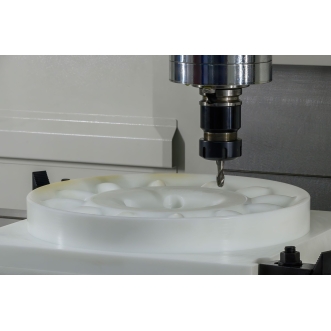
Milling uses a rotating cutting tool to remove material and create shapes such as flat surfaces, holes, slots, and complex 3D forms. Cutting parameters must be adjusted based on material type to ensure accuracy and surface quality.
Turning
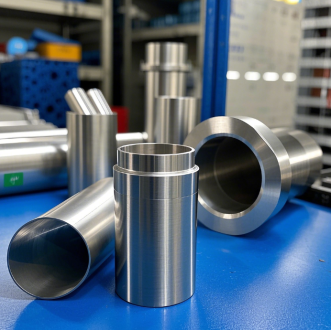
Turning is used to produce cylindrical parts. The workpiece rotates while the cutting tool removes material from the surface. This process requires precise control to maintain concentricity and achieve smooth surface finishes.
Drilling and Boring
Drilling creates holes in the workpiece, while boring refines and enlarges them to precise dimensions. These operations require correct tool selection and controlled cutting parameters to ensure accuracy and consistency.
Benefits of CNC Machining Parts
High Precision
CNC machining provides extremely high precision, allowing parts to be manufactured within tight tolerances. This is essential for applications where components must fit together perfectly or perform critical functions.
Efficiency
Once the CNC program is ready, production becomes highly automated. This reduces manual labor and speeds up manufacturing, especially for large production volumes.
Flexibility
CNC machines can produce a wide range of parts with different shapes and complexities. By simply changing the program, manufacturers can switch between different designs, making CNC machining suitable for both small batches and mass production.
Material Selection for CNC Machining Parts
Metals
Common metals include aluminum, steel, and titanium. Aluminum is lightweight and has good thermal conductivity, making it ideal for aerospace and electronics. Steel offers high strength and durability, commonly used in structural and mechanical parts. Titanium provides excellent corrosion resistance and strength-to-weight ratio, often used in aerospace and medical applications.
Plastics
Plastics such as ABS, nylon, and polycarbonate are widely used in CNC machining. ABS is cost-effective and impact-resistant, nylon offers high strength and wear resistance, and polycarbonate provides excellent toughness and transparency. Plastics are often chosen for lightweight or non-load-bearing components.
Composites
Composites combine two or more materials to achieve improved properties, such as high strength and low weight. They are commonly used in aerospace and advanced engineering applications. However, machining composites can be challenging due to tool wear and material layering, requiring specialized techniques.
Quality Control in CNC Machining Parts
In-process Inspection
In-process inspection ensures that parts remain within specification during manufacturing. Measurements are taken using tools such as calipers, micrometers, and optical instruments. This helps detect issues early and reduces waste or rework.
Final Inspection
After machining is complete, final inspection verifies that the part meets all design requirements. Coordinate Measuring Machines (CMMs) are often used to check dimensional accuracy and geometry. Surface finish and material quality are also evaluated. Non-conforming parts are either reworked or rejected based on quality standards.
Conclusion: Understanding CNC Machining Parts
CNC Machining Parts play a critical role in modern manufacturing across many industries. Understanding the types of CNC machining parts, the CNC machining process for parts, material selection in CNC machining parts, and quality control methods helps engineers and buyers make informed decisions.
By combining precise design, proper material selection, and strict quality control, CNC machining delivers reliable, high-performance components that meet demanding industrial requirements. This makes it one of the most important manufacturing technologies in today’s global economy.
RELATED PRODUCTS
-
Medical Brass CNC Machining Parts
-
Precision CNC Machining PEEK Services
-
Precision Custom CNC Machined Car Parts
-
cnc machining optical housings
-
Precision CNC Casting Machining Services
-
Precision Gear CNC Machining Services
-
Precision Stainless Steel Parts CNC Mach
-
CNC Machining of Precision Aluminum Tube
-
CNC Machining of Large Precision Aluminu
-
CNC Machining & Manufacturing of Pre