CNC Machining Services for Custom Mechanical Parts
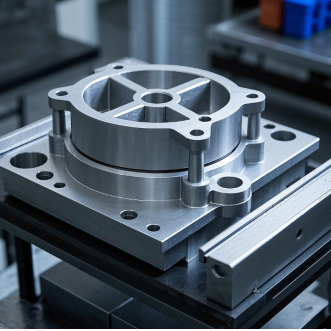
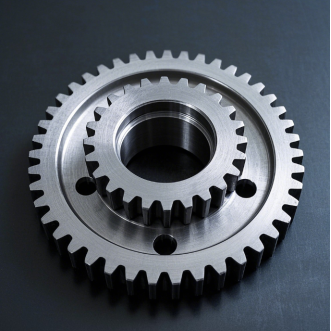
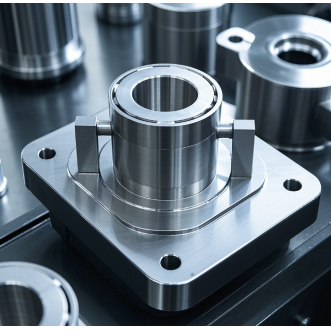
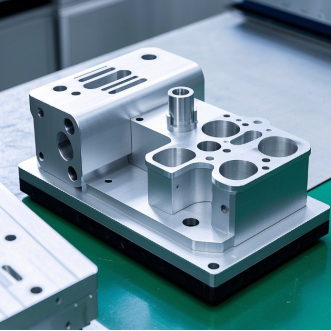
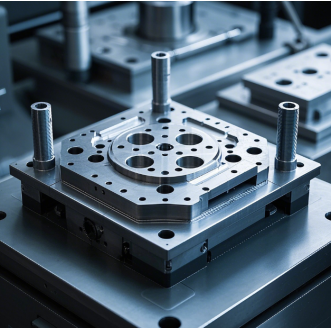
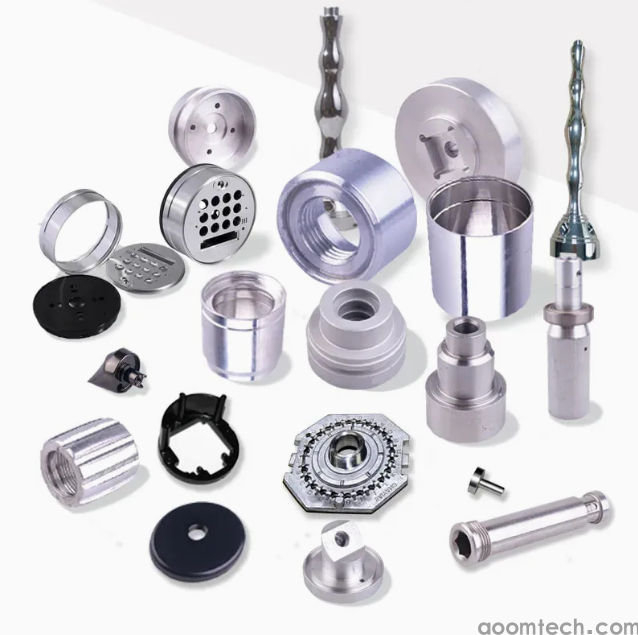
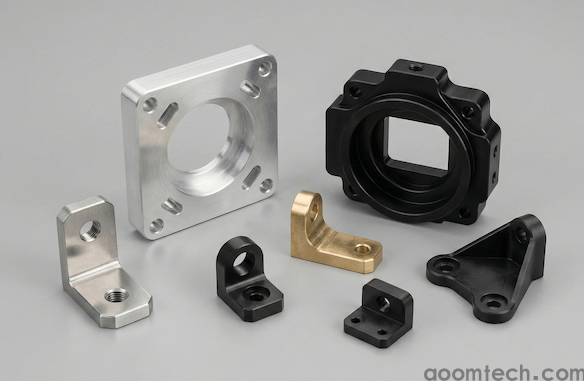
CNC Machining Services for Custom Mechanical Parts play an important role in modern manufacturing. These services help create highly precise, durable, and application-specific components used in industries such as automotive, aerospace, robotics, and industrial equipment. Unlike standard off-the-shelf parts, custom mechanical parts are designed for unique functions, making them essential for advanced engineering solutions.
Introduction to CNC Machining Services for Custom Mechanical Parts
The Significance of Custom Mechanical Parts
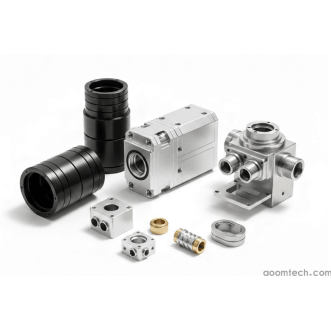
Custom mechanical parts are specially designed components made to meet exact functional, dimensional, or performance requirements. Many machines and systems cannot operate effectively using standard parts, so custom solutions are necessary.
For example, in the automotive industry, custom parts may be used for high-performance engine upgrades or specialized transmission systems. In aerospace, custom components are often required for aircraft structures, landing gear assemblies, and precision control systems. In general manufacturing, custom parts are used in automation equipment, robotics arms, and production lines where accuracy is critical.
Importance of CNC Machining for Custom Mechanical Parts
Precision and Accuracy
CNC machining uses computer-controlled systems to manufacture parts with extremely high precision. Every movement of the cutting tool is programmed in advance, ensuring the final product matches exact design specifications.
This level of control allows manufacturers to achieve very tight tolerances, which is essential for mechanical assemblies where parts must fit together perfectly. Even a small dimensional error can cause issues such as vibration, mechanical failure, or reduced efficiency in the final product.
Design Flexibility
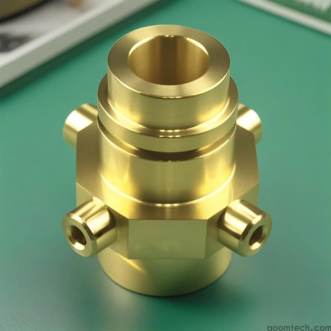
One of the key advantages of CNC machining is its ability to produce complex geometries. Whether a part includes curved surfaces, internal cavities, threaded holes, or intricate features, CNC technology can accurately bring the design to life.
This makes it possible to create innovative and optimized mechanical designs that improve performance, reduce weight, or enhance durability. Many engineers rely on CNC machining to turn advanced CAD designs into real, functional parts without major design limitations.
Consistent Quality
CNC machining ensures consistent production quality across multiple parts. Once the machining program is set, every component produced follows the same process and specifications.
This consistency is especially important in mass production, where identical performance is required for every unit. It reduces assembly issues, improves product reliability, and helps prevent costly recalls caused by inconsistent part quality.
CNC Machining Processes for Custom Mechanical Parts
Milling
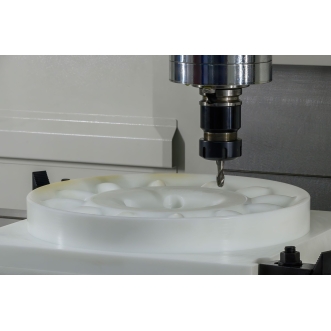
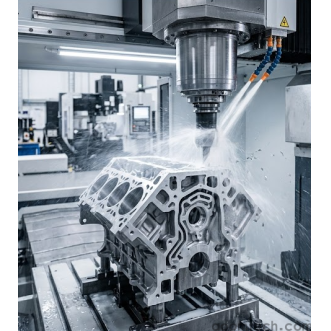
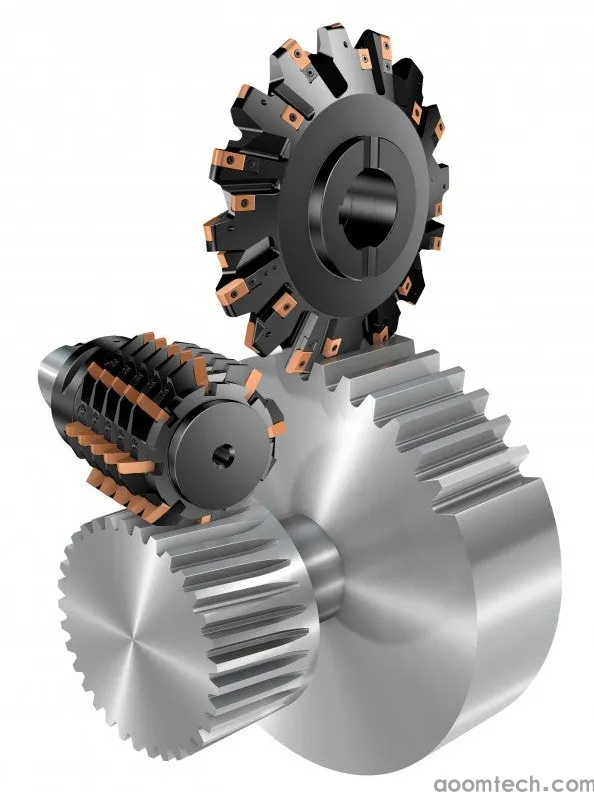
CNC milling for custom mechanical parts is one of the most common machining processes. In milling, a rotating cutting tool removes material from a stationary workpiece to create shapes such as flat surfaces, grooves, holes, and complex 3D structures.
The selection of cutting tools and machining parameters is critical. For example, harder materials like steel require slower speeds and stronger tools, while softer materials like aluminum allow faster machining speeds. Key parameters include spindle speed, feed rate, and cutting depth, all of which directly affect surface quality and tool life.
Turning
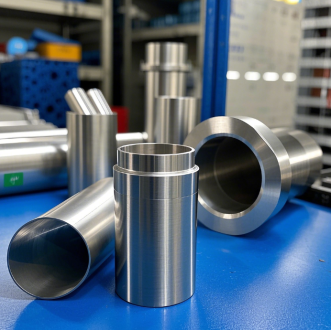
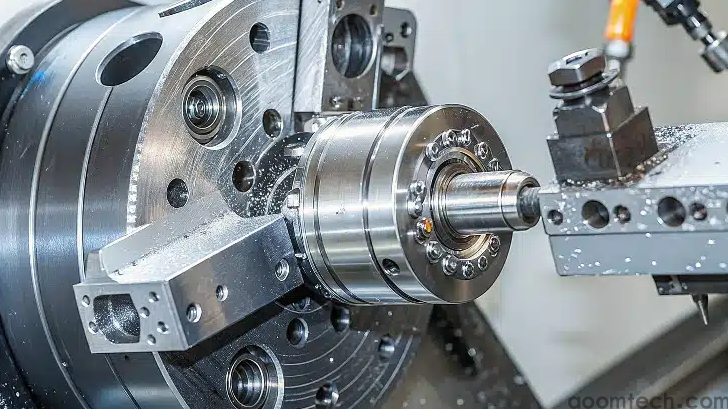
Turning is used for producing cylindrical components. In this process, the workpiece rotates while a cutting tool shapes its outer and inner diameters. It is commonly used for shafts, bushings, and threaded parts.
To achieve high accuracy, factors such as tool alignment, cutting speed, and feed rate must be carefully controlled. Proper setup ensures concentricity and smooth surface finishes, which are essential for rotating mechanical systems.
Drilling and Boring
Drilling is used to create holes, while boring is used to enlarge or refine existing holes to precise dimensions. These processes are important for parts that require assembly, alignment, or fluid flow.
Accurate hole placement and sizing are critical. Incorrect drilling can lead to assembly misalignment or structural weakness. Using the correct drill type and maintaining stable cutting conditions helps prevent issues like tool breakage or poor hole quality.
Materials Used in CNC Machining of Custom Mechanical Parts
Metals
Metals are widely used in CNC machining due to their strength and durability.
Aluminum: Lightweight, corrosion-resistant, and easy to machine. It is commonly used in automotive and aerospace applications where weight reduction is important.
Steel: Known for high strength and durability. Different types such as carbon steel, alloy steel, and stainless steel are selected based on performance requirements.
Titanium: Offers an excellent strength-to-weight ratio and strong corrosion resistance. It is widely used in aerospace and high-performance engineering applications.
Each metal requires different machining strategies. For example, titanium generates more heat during cutting and requires careful control of speed and cooling.
Plastics
Plastics are often used when lightweight, cost-effective, or low-friction materials are needed.
Nylon: Offers good wear resistance and low friction, suitable for moving parts.
Polycarbonate: Known for high impact resistance and transparency.
Acetal (POM): Provides excellent dimensional stability and low moisture absorption.
When machining plastics, it is important to control heat buildup to avoid melting, deformation, or poor surface finish.
Composites
Composite materials such as carbon fiber reinforced polymers combine high strength with low weight. These materials are used in advanced industries like aerospace and motorsports.
However, machining composites can be challenging. Issues such as fiber delamination can occur if incorrect tools or cutting methods are used. Specialized tools and optimized cutting strategies are required to maintain material integrity.
Choosing a CNC Machining Service Provider for Custom Mechanical Parts
Technical Expertise
A reliable provider of CNC Machining Services for Custom Mechanical Parts must have strong technical expertise. This includes experience with different materials, machining processes, and engineering requirements.
When evaluating a provider, consider the following:
Case studies of similar projects
Qualifications and experience of engineering staff
Quality and precision of sample parts
Quality Assurance
A strong quality assurance system ensures that every part meets required specifications. Professional CNC service providers use advanced inspection tools such as coordinate measuring machines (CMM), micrometers, and surface roughness testers.
A complete quality control process typically includes:
Incoming material inspection
In-process dimensional checks
Final inspection before delivery
Non-conforming parts should be identified, documented, and corrected before shipment. This ensures reliability and reduces the risk of failure in real-world applications.
Cost-effectiveness and Lead Times
While cost is important, it should be balanced with quality and reliability. The cheapest option is not always the best when dealing with critical mechanical parts.
When comparing providers, consider:
Detailed and transparent quotations
Production capacity and scalability
On-time delivery history
A dependable provider should also offer realistic lead times and maintain consistent communication throughout the production process.
Conclusion
CNC Machining Services for Custom Mechanical Parts are essential for producing high-precision, reliable, and application-specific components used across modern industries. With advanced CNC technology, manufacturers can achieve excellent accuracy, flexible design options, and consistent quality.
By understanding processes such as milling, turning, drilling, and the properties of different materials, businesses can make better decisions when developing custom parts. Choosing a skilled and reliable CNC machining provider ensures better performance, longer product life, and improved manufacturing efficiency.
RELATED PRODUCTS
-
Medical Brass CNC Machining Parts
-
Precision CNC Machining PEEK Services
-
Precision Custom CNC Machined Car Parts
-
cnc machining optical housings
-
Precision CNC Casting Machining Services
-
Precision Gear CNC Machining Services
-
Precision Stainless Steel Parts CNC Mach
-
CNC Machining of Precision Aluminum Tube
-
CNC Machining of Large Precision Aluminu
-
CNC Machining & Manufacturing of Pre