Mass partion Copper Parts CNC Machining
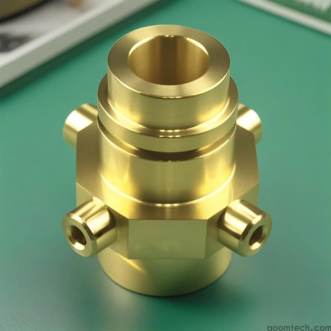
Mass Production Copper Parts CNC Machining plays an important role in modern manufacturing. Copper is widely used in industries such as electronics, plumbing, electrical systems, and renewable energy because of its excellent electrical conductivity, thermal conductivity, corrosion resistance, and good machinability. When demand is high, producing copper parts one by one is not efficient. This is why CNC (Computer Numerical Control) machining is used for mass production.
Mass production ensures that copper parts are made in large quantities with consistent quality, stable performance, and controlled cost. These mass-produced copper CNC-machined parts help industries build reliable and efficient products that can be manufactured at scale.
The Significance of Mass-Produced Copper Parts in CNC Machining
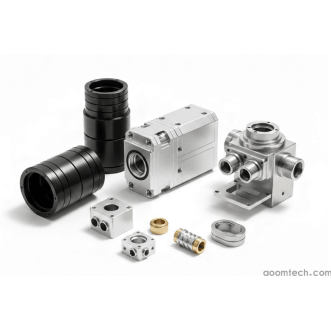
Copper parts are essential in many technical systems. In electronics, they are used in connectors, terminals, and heat dissipation components. In plumbing, they are used in pipes and fittings. In electrical systems, they are used for conductors and busbars.
Because these industries require large quantities of parts with precise specifications, mass production copper parts CNC machining becomes a key manufacturing method. It helps meet high-volume demand while maintaining stable performance and reducing overall production cost per unit.
Without mass production methods, industries would face delays, inconsistent quality, and higher manufacturing costs.
Advantages of Mass Producing Copper Parts via CNC Machining
High Precision and Consistency
One of the biggest advantages of mass production copper parts CNC machining is high precision. Once the CNC program is created, the machine can produce thousands of identical parts with very small tolerance differences.
For example, copper connectors used in electronic circuits must fit perfectly to ensure stable electrical flow. CNC machining guarantees that every connector in a large batch meets the same size and shape requirements, improving reliability and reducing failure rates.
Cost-Effectiveness in Volume
Although CNC machining requires setup time and programming, it becomes cost-effective in mass production. As more parts are produced, the cost per unit decreases.
For example, a plumbing manufacturer producing copper pipes and joints benefits from lower labor cost and efficient material usage. Waste is minimized, and production speed increases, making large-scale manufacturing more economical.
This is one of the main advantages of mass producing copper parts via CNC machining.
Design Flexibility for Customization
CNC machining allows manufacturers to produce complex and custom designs even in large quantities. This is important when different industries require specialized copper components.
For example, a custom copper heat sink used in electronic devices can have special fin shapes designed for better heat dissipation. CNC machining ensures that this complex design can still be mass-produced with high consistency.
Process of Mass Production CNC Machining for Copper Parts
Design and CAD/CAM Programming
The process starts with CAD (Computer-Aided Design), where engineers create a 3D model of the copper part. After that, CAM (Computer-Aided Manufacturing) software generates the machining instructions.
In this stage, toolpaths, cutting speeds, and feed rates are carefully planned. Copper’s softness and high thermal conductivity must be considered to avoid deformation and overheating during production.
This step defines the overall process of mass production CNC machining for copper parts.
Material Selection and Preparation
Different copper grades have different properties. Some offer higher conductivity, while others provide better strength or machinability.
Before machining, copper is often cut into blanks and may undergo annealing to improve workability. Proper material selection directly affects machining efficiency and final product quality.
Machining Operations and Automation
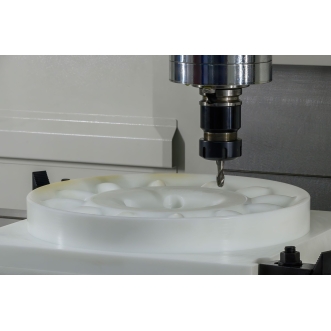
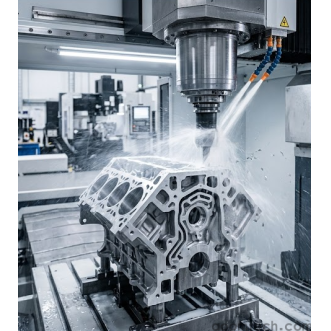
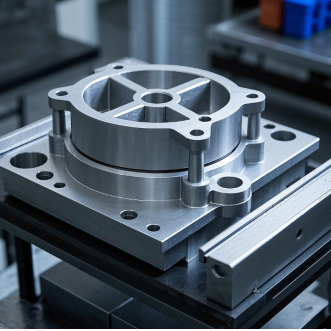
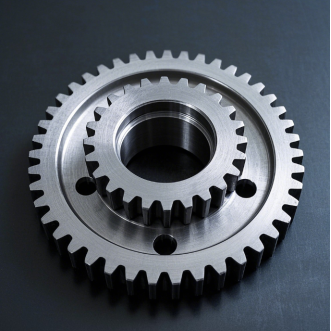
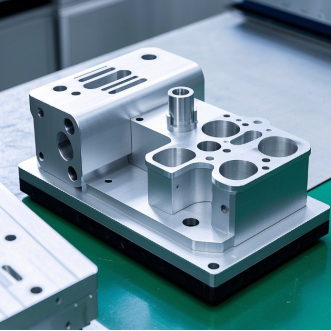
Milling: Used to create flat surfaces, grooves, and complex shapes. In mass production, automated milling machines with carbide tools are commonly used. Proper cutting speed helps avoid material sticking and ensures a smooth surface.
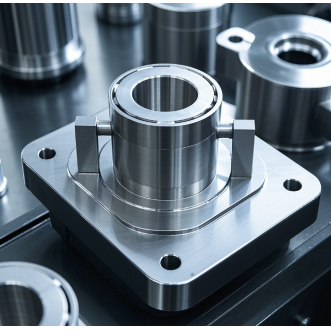
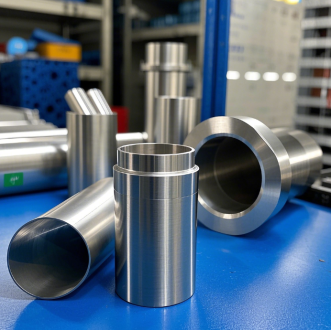
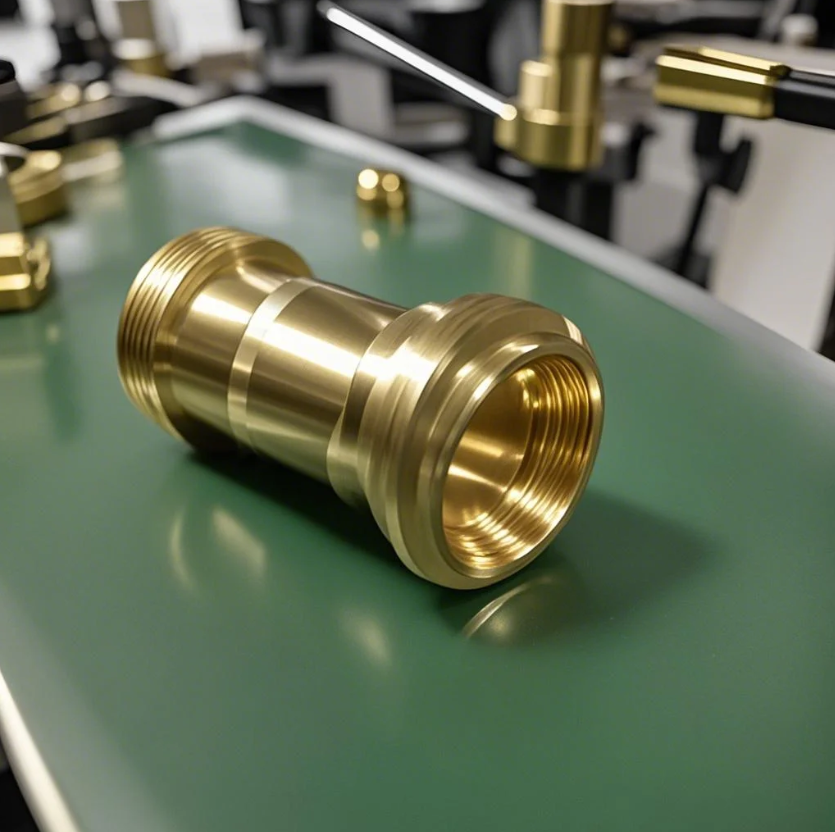
Turning: Used for cylindrical copper parts. The workpiece rotates while cutting tools shape it. Precision is critical to maintain roundness and smooth finish.
Automation: Modern factories often use robotic arms for loading and unloading parts. This reduces human error and increases production efficiency.
Quality Control and Inspection
During production, inspections are performed at different stages. This includes checking dimensions, surface finish, and functional performance.
Statistical process control (SPC) is often used to ensure the process stays stable during long production runs.
Benefits of Mass-Produced Copper CNC-Machined Parts
The benefits of mass-produced copper CNC-machined parts are significant for many industries:
Improved product performance due to high precision
Faster production cycles and reduced time-to-market
Stable quality across large production batches
Ability to scale production based on demand
For example, in high-end audio systems, copper connectors produced with CNC machining ensure excellent signal transmission, improving sound quality.
Challenges in Mass Production of Copper Parts by CNC Machining
Tool Wear and Breakage
Copper is soft but can still cause tool wear during long production runs. Cutting tools may need frequent replacement, increasing maintenance costs and downtime.
This is one of the key challenges in mass production of copper parts by CNC machining.
Heat Generation and Dimensional Changes
During machining, heat can build up and cause copper to expand. This may affect accuracy.
To solve this, manufacturers use coolants, optimize cutting speeds, and control machining conditions carefully.
Maintaining Consistent Quality
In large-scale production, small changes in material or tool condition can affect product quality. Even slight variations can lead to differences in final dimensions.
Continuous monitoring is required to ensure stability throughout the entire production batch.
Quality Control in Mass Production of Copper Parts through CNC Machining
Inspection of Dimensions
Precision tools such as calipers, micrometers, and coordinate measuring machines (CMM) are used to verify part dimensions. This ensures that every part meets design requirements.
Surface Finish Inspection
Copper parts must have smooth surfaces, especially in electrical and plumbing applications. Roughness testing tools and visual inspection are used to ensure proper finishing quality.
Performance Testing
Depending on application, copper parts undergo conductivity tests or pressure tests. This ensures that the parts function correctly in real working environments.
This is a key part of quality control in mass production of copper parts through CNC machining.
Conclusion: Mastering Mass Production of Copper Parts via CNC Machining
Mass production copper parts CNC machining is a critical process for industries that rely on copper components. It offers high precision, cost efficiency, scalability, and strong customization ability.
At the same time, manufacturers must manage challenges such as tool wear, heat control, and consistent quality monitoring.
By understanding the full process—from design and machining to inspection and testing—companies can achieve reliable and efficient mass production of copper parts that meet modern industrial demands.
Careful planning, proper material selection, and strict quality control are essential for long-term success in copper CNC machining production.
RELATED PRODUCTS
-
Medical Brass CNC Machining Parts
-
Precision CNC Machining PEEK Services
-
Precision Custom CNC Machined Car Parts
-
cnc machining optical housings
-
Precision CNC Casting Machining Services
-
Precision Gear CNC Machining Services
-
Precision Stainless Steel Parts CNC Mach
-
CNC Machining of Precision Aluminum Tube
-
CNC Machining of Large Precision Aluminu
-
CNC Machining & Manufacturing of Pre